DbcultAccessing Vault...
Cult Review
Senior Film Conservator
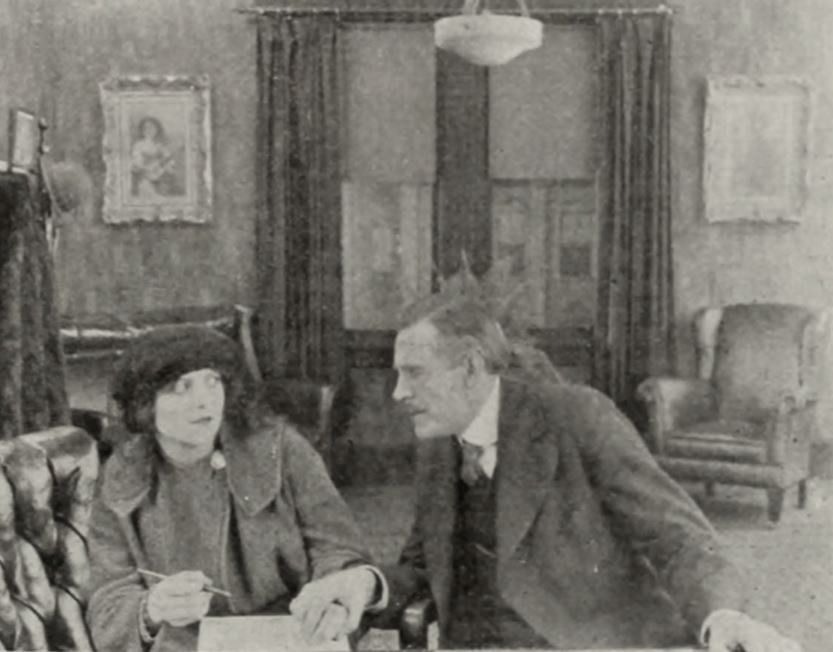
Klieg lights never forgave skin; they flay it. In The Labyrinth, director Warren F. Chandler wields that merciless illumination like a surgeon who enjoys the incision. We open on Café Fanchon’s final night—Polly Champlain’s Florence croons a chanson whose minor cadences feel piped in from Montmartre graveyards, while cigarette haze coils like incense around ankles. The camera glides past tableaux of trench-coated bohemians, each face a cameo of pre-Depression anxiety; you half-expect Children of Eve to wander in, coal-dust still under her nails. Yet the real proscenium is Florence’s gaze: downward, always, toward the sister whose wheelchair spokes catch spotlight like prison bars. This is silent cinema as lieder—every intertitle a haiku of dread.
Enter Oscar Morse—Edward Roseman prowls the role with Valentino eyebrows but the soul of a ledger book. His proposition is age-old: a berth in the chorus in exchange for after-hours “rehearsals.” Florence’s refusal ricochets through the shot like a bullet; Chandler jump-cuts to her silhouette forging a new weapon—paper. The forgery sequence, scored only by a metronome on the soundtrack, plays like Faust re-staged in a speakeasy. She intoxicates Morse, swaps documents, and by dawn owns a contract binding him to her. It’s the first twist of the maze, and the film’s feminist gauntlet thrown with such nonchalance you could miss it while blinking.
Rebranded as Flo Burke, our heroine ascends in a meteoric montage—posters bloom across the screen like poppies, ticket sales climb like mercury, and critics sprout superlatives that border on erotic. Chandler splices actual Broadway marquee footage, a meta-wink that collapses the screen’s fourth wall the way Fedora would decades later. Yet triumph tastes of nickel: Florence’s dressing-room mirror reflects not her face but Frances’s empty wheelchair, shipped off to a sanatorium where winter sun never reaches. The Green Goddess—a faux-Oriental operetta—becomes her gilded prison, every performance another cobblestone in the labyrinth.
Exhaustion sends Flo to a Catskills inn whose silence feels deafening after years of orchestra pits. There she meets Reverend Richard Neill’s Fenton—collar starched higher than his principles. He confesses, unaware, that his sermons shuttered Café Fanchon, thereby launching her spiral into Morse’s talons. The irony is biblical. Florence, smitten, introduces herself as “Miss F. Burgess, the actress’s sister,” and Chandler lets the deceit hang like an unexposed photograph. Their courtship unfolds in overexposed daylight—white linen, blueberry pies, hymnals—shot with such overcorrected virtue you sense damnation pooling just outside the frame. Love blooms inside the lie, a flower watered by guilt.
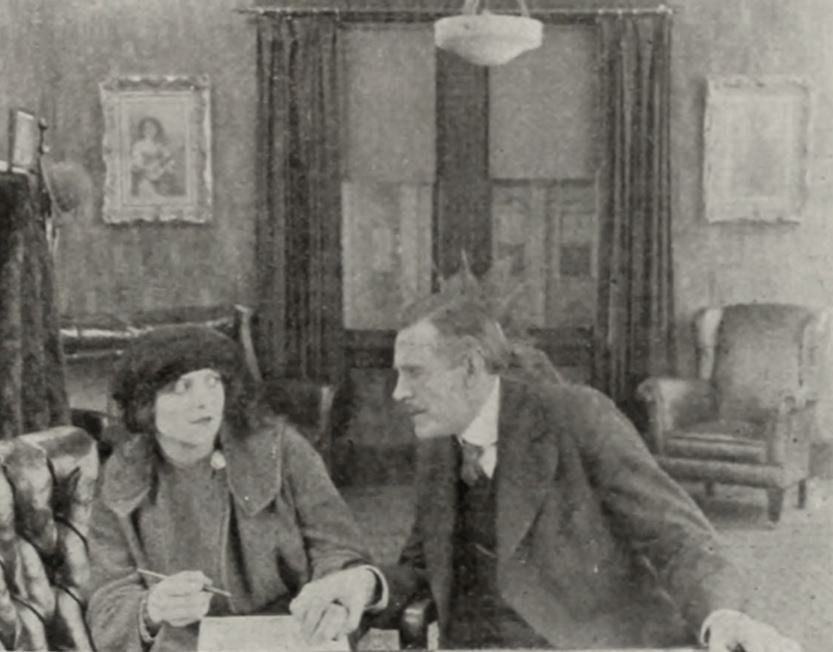
Narrative pivots arrive like switchblades. A locomotive leaps its tracks; cars somersault in miniature models that would make Keaton grin. In the morgue tent, identity becomes mutable—Flo Burke is declared dead because a crushed chorus girl clutched her calling card, while Florence Burgess survives unnamed. Our heroine, half-coherent in a charity ward, reads her own obituary and understands providence has slit a door in the maze. She slips through, marries Fenton, and donates her salary to build mission schools—penance laundered into philanthropy. But Oscar Morse, ever the creditor of souls, arrives brandishing her diary like Hamlet’s poisoned foil.
The final reel is a tour-de-force of chiaroscuro. Morse corners Florence in the rectory study; moonlight through stained glass fractures across their faces, a kaleidoscope of sin and sanctity. He demands the forfeiture sum—enough to bankrupt Fenton’s orphanage—or her return to Broadway’s flesh market. Chandler blocks the scene like a chess problem: every exit guarded by conscience. Florence’s solution is Shakespearean misdirection—she persuades Fenton to green-light Morse’s moralistic problem play, thereby channeling her wages back into her husband’s coffers while technically fulfilling the contract. It’s a gambit so elegant it almost works.
But melodrama demands catharsis. Morse, discovering the sleight-of-hand, storms back; the two men grapple amid hymn sheets and collection plates. A pistol drops, discharges—sound rendered by a single percussive frame enlargement, silent film’s equivalent of a scream cut short. Oscar crumples, blood a dark carnation on the ecclesiastical rug. Florence rushes in, not to mourn but to close the ledger. The labyrinth ends not in a Minotaur but in a mirror: she stares at her reflection—half-Flo, half-Florence—and for the first time the image holds steady. Fenton, unaware of the fiscal machinations, enfolds her in a forgiveness she has not yet granted herself.
Polly Champlain—oft-dismissed as a second-tier Swanson—delivers here a masterclass in micro-gesture. Watch her fingers tremble while signing the fraudulent contract, a tremor that vanishes the instant Morse’s back is turned; it’s the kind of detail Murnau would envy. Edward Roseman sidesteps mustache-twirling villainy, instead gifting Morse a weariness, a man who has monetized desire so long he’s forgotten its taste. When he begs for his life, you almost believe he’s the aggrieved party. Richard Neill’s Fenton could have been a cardboard shepherd; instead he plays doubt like a muted trumpet, especially in the final shot where he watches his wife—his entire wife—perhaps for the first time.
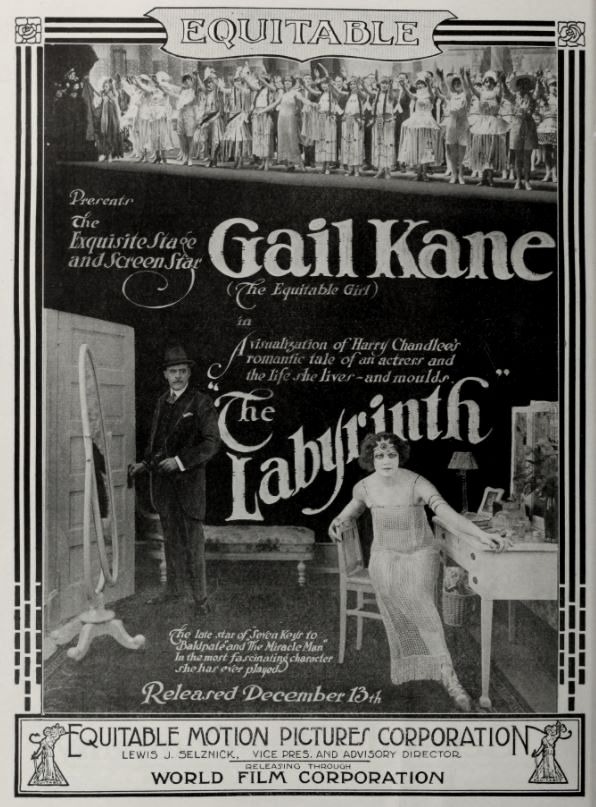
Chandler and cinematographer William Marshall shoot faces through beveled glass, fracting visages into cubist confessionals. When Florence confesses her deception to Fenton—off-screen, via intertitle—we cut to a close-up of a teacup cracking under boiling water: a visual synecdoche for matrimonial fracture. Compare this to the geometric moral absolutes of The Next in Command or the nautical claustrophobia of Over Niagara Falls; here the camera itself is Theseus’s thread, winding through corridors of deceit.
Writer Harry Chandlee salts the intertitles with slang that crackles (“I’ve danced on every dime in this burg, Reverend—tonight I’m waltzing on yours”), yet balances it with biblical cadence when Fenton preaches. The result is a linguistic fugue that anticipates the screwball patter of the early talkies. Note too the recursive motif of signatures: each act of writing—contract, diary, death certificate—erodes identity until the final unsigned moment where Florence simply is, no stage name required.
Though The Labyrinth sank into relative obscurity—overshadowed by Fedora’s more baroque intrigues—its DNA reappears everywhere from Sirk’s domestic mirages to Wilder’s acidic showbiz noirs. The film anticipates the #MeToo calculus of power and exposure, yet refuses a simplistic revenge arc. Florence’s triumph is not the defeat of Morse but the reclamation of narrative authorship; she exits the labyrinth carrying no trophy beyond the right to tell her own story.
A 4K restoration premiered at Pordenone last autumn, accompanied by a new score blending stride piano and chamber strings—seek it on the collector’s label ShadowSilents. If you crave a double bill, pair it with A World Without Men for a disquisition on gendered power, or counterbalance with Life and Passion of Christ to witness another tale where death and resurrection are matters of paperwork.
Viewed today, The Labyrinth feels less antique than cautionary. Each of us traffics in curated identities—Instagram handles, LinkedIn personas—trading splinters of truth for advance applause. Florence Burgess merely literalized the swap, then spent a lifetime clawing back her soul. The miracle is that Chandler lets her succeed without sanctimony. In the final frame, as Fenton leads her toward a sunrise that might be grace or mere exposure, the camera lingers on her eyes: wary, exhausted, yet fiercely unblinking. She has escaped the maze, yes, but carries its corridors inside her—an ouroboros of ink, desire, and the endless hunger for a self one can sign without forgery.
IMDb 6.2
1916
Community
Log in to comment.