DbcultAccessing Vault...
6.5/10
Senior Film Conservator
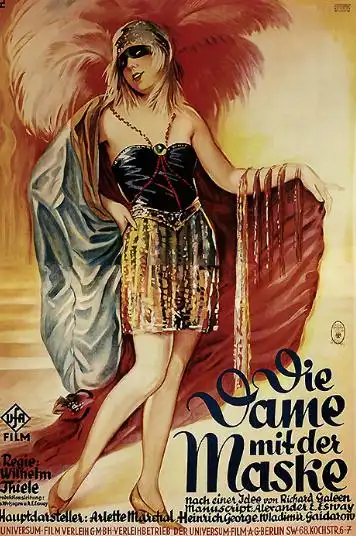
A definitive 6.5/10 rating for a film that redefined the boundaries of cult cinema. The Lady with the Mask remains a cornerstone of transgressive art.
For those with a genuine interest in silent cinema, particularly German productions of the mid-1920s, The Lady with the Mask (1926) is absolutely worth seeking out. It offers a fascinating glimpse into the social anxieties of post-WWI Europe, wrapped in a classic melodrama. Fans of Dita Parlo, in particular, will find her performance compelling. However, if your cinematic palate leans exclusively towards faster modern narratives, or if the conventions of silent-era storytelling — with its often heightened emotions and deliberate pacing — aren't to your taste, this film will likely feel slow and potentially unengaging.
The film opens with a sharp, almost brutal, depiction of societal collapse. We meet a young noblewoman, played by Dita Parlo, whose world is not gently eroding but violently ripped away by the economic realities of the era. The visual language here is strong: one moment, she inhabits spaces of quiet opulence, the next, the camera frames her against stark, empty rooms, stripped of their former grandeur. It’s a rapid descent, communicated less through dialogue (naturally, given it’s a silent film) and more through the physical absence of comfort and the visible distress on Parlo's face. Her initial attempts to navigate this new, impoverished existence are clumsy and heartbreaking, underscoring the vast chasm between her past and present.
Her transition into the world of acting feels less like a chosen vocation and more like a desperate scramble for survival. The early scenes of her auditioning and facing rejection are particularly effective. The director, Henrik Galeen, doesn't shy away from showing the grind: the crowded waiting rooms, the dismissive looks from casting directors, the sheer physical exhaustion of trying to appear confident when you are anything but. There's a particular shot of Parlo, after a failed audition, pulling a thread from a fraying cuff, a small detail that speaks volumes about her dwindling resources and pride.
Dita Parlo, even at this early stage of her career, commands the screen. Her strength lies in her eyes, which convey a remarkable range of emotions without ever feeling exaggerated. When her character is first introduced, there's a certain naive fragility, but as the film progresses and she endures hardship, a steeliness develops. This isn't a performance of grand gestures; instead, Parlo communicates through subtle shifts in posture, a slight tremor in her hands, or a prolonged gaze that speaks of inner turmoil. It’s a grounded performance, especially considering the often-theatrical demands of silent film acting. Her transformation from a sheltered noble to a stage performer is convincingly portrayed, not just as a change of costume, but as a deeper shift in self-perception.
The film's title, The Lady with the Mask, takes on a dual meaning through Parlo's portrayal. There's the literal mask of her stage persona, the glamour she projects, but also the metaphorical mask of composure she must wear to survive, hiding the fear and vulnerability beneath. When she finally steps onto the revue stage, the initial close-up on her face reveals a fleeting moment of genuine terror, almost imperceptible beneath the heavy stage makeup, before she finds her footing and embodies the role. This brief, humanizing flicker is a testament to Parlo's nuanced acting.
The pacing of The Lady with the Mask is largely dictated by the conventions of its era. The film takes its time establishing the noblewoman's initial plight, allowing the audience to fully grasp the weight of her predicament. The middle section, detailing her struggle to find work, occasionally feels protracted. While it effectively conveys the repetitive nature of her rejections, some sequences might test the patience of viewers accustomed to a quicker narrative drive. However, this deliberate pace also allows for moments of quiet reflection and a deeper appreciation of the visual storytelling.
The tone shifts quite dramatically once the Russian emigrant, portrayed by Vladimir Gajdarov, enters the picture. Gajdarov brings a quiet intensity to his role, acting as a catalyst for our protagonist's fortunes. His character introduces a layer of intrigue and subtle danger, a counterpoint to the more straightforward melodrama of the early acts. There's a memorable scene where he's introduced in a dimly lit, smoky establishment, and the way he slowly, almost ritualistically, lights a cigarette, observing the chaos around him with an unnervingly calm demeanor, immediately establishes him as a man of experience and perhaps hidden motives. This shift from social commentary to a more personal, almost noir-ish, drama is handled with surprising fluidity, even if the transition from the grandeur of the estate to the cramped, bustling backstage of a low-rent theater feels intentionally jarring in its immediate cut, emphasizing the harsh new reality.
Galeen's direction shines in its visual contrasts. The early scenes of the noble estate are shot with a sense of expansive, if fading, elegance, often using deep focus to emphasize the emptiness. In stark contrast, the theatrical world is depicted with dynamic, often chaotic, energy. Backstage scenes are a jumble of bodies, costumes, and props, shot with a more active camera that reflects the frantic pace. The lighting choices are particularly noteworthy; soft, natural light in the initial domestic scenes gives way to the harsh, artificial glare of stage lights and the moody shadows of the emigrant's world. The revue performances themselves are suitably flamboyant, providing a visual spectacle that highlights the protagonist's newfound, albeit manufactured, glamour.
While the film effectively uses its visual language, there are moments where the acting style of some supporting players feels a touch stiff, leaning into the broader gestures common to silent films, which can sometimes pull focus from Parlo's more restrained performance. For a contemporary comparison, one might look at a film like That Royle Girl from the same period, which also explored themes of social mobility and performance, albeit with a different cultural lens. While both films share a melodramatic core, The Lady with the Mask feels distinctly European in its understated anxieties.
The Lady with the Mask is a solid entry in early German cinema, offering more than just historical curiosity. It's a testament to Dita Parlo's nascent talent and a document of a society grappling with immense change. While its pacing won't appeal to everyone, and some of the narrative beats are undeniably conventional for the era, the film's visual storytelling, particularly its effective use of contrast and its central performance, makes it a rewarding experience for those willing to engage with its particular rhythms. It's a film that quietly reveals its strengths, providing a poignant window into a vanished world and the enduring human struggle for dignity and survival.
IMDb —
1919
Community
Log in to comment.