DbcultAccessing Vault...
Cult Review
Senior Film Conservator
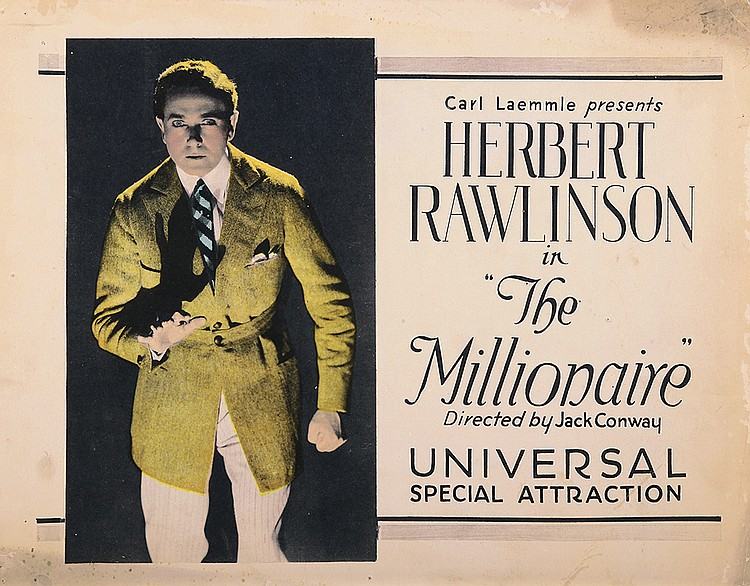
From the moment Jack Norman (Bert Roach) inherits the $80 million estate of the murdered Silas Gyde, *The Millionaire* (1930s) spirals into a labyrinth of identity crises. The film’s opening act—a disheveled office clerk, dismissed on a Tuesday morning, only to inherit a fortune moments later—sets a tone of absurdity laced with existential dread. This is not the whimsical rags-to-riches arc of *Deck Sports in the Celebes Sea* but a darker exploration of how sudden wealth fractures the self. Director Wallace Clifton and writer Hulbert Footner craft a narrative where every character wears a mask; the gang’s leader, the suave yet vengeful figure seeking Gyde’s fortune, and even Jack’s earnest love for Kate Blair (Mary Huntress), become players in a game of psychological chess.
Kate’s demand to witness the "effect" of Jack’s newfound wealth is a masterstroke of narrative tension. It reframes the inheritance not as a boon but as a moral litmus test. This dynamic recalls *The Perils of Divorce*, where societal expectations warp relationships, yet *The Millionaire* sharpens its focus on internal conflict. Jack’s decision to swap identities with his actor friend Bobo—a ruse that inverts their social roles—mirrors the duality in *The Adventures of Buffalo Bill*, but with a far more cynical edge. Bobo’s transformation into the "heir" is not a performance of power but a grotesque parody of it, his flamboyant antics clashing with the gang’s cold pragmatism. The film’s humor here is both camp and caustic, a tone that would later influence *More Trouble*’s satirical take on class divides.
The gang’s pursuit of Jack is less about the money than about restoring a sense of order to their own fractured world. Marion (Doris Pawn), the femme fatale who marries Bobo to exploit him, embodies the film’s most unsettling duality. Her shift from seductress to betrayer mirrors the moral ambiguity of *Witch’s Lure*, yet her arc lacks the mystical fatalism of that film—her actions are calculated, devoid of poetic justice. The gang’s unraveling is not a triumph of good over evil but a collapse of their own hubris. Jack’s final confrontation, with the police, is less a victory than a reckoning: the gang’s defeat is not poetic but procedural, a nod to the era’s growing faith in institutional justice.
Visually, *The Millionaire* leans into chiaroscuro lighting and shadow play, techniques later perfected in *The Strangler’s Grip*. The contrast between Jack’s dimly lit office and the neon-bright criminal hideouts underscores the film’s central theme: wealth as a disorienting force. The use of mirrors—both literal and metaphorical—is particularly striking. In one scene, Jack stares into a cracked mirror while posing as Bobo’s secretary, his reflection split between the man he was and the man he’s trying to become. This duality is echoed in the gang’s own fragmented identities; their masks are not just disguises but confessions of insecurity.
Though often overlooked in film history, *The Millionaire* presages the deconstructive narratives of *Deliverance* and *The Silence of the Dead*. Its skepticism toward wealth and identity aligns with *On the Inside*’s critique of capitalist exploitation, yet it does so through a far more lighthearted framework. The film’s influence is also visible in the meta-narratives of *Die Insel der Glucklichen*, where the pursuit of paradise becomes a trap. However, *The Millionaire*’s most enduring contribution is its treatment of love as a destabilizing force. Kate’s conditional acceptance of Jack—her refusal until she sees how he handles power—anticipates the complex romantic dynamics in *The Ghost Girl*, where trust is as much a commodity as the money Jack inherits.
Bert Roach’s portrayal of Jack is a study in restraint. Unlike the bombastic leads of *Wolves of the Street*, Roach’s Jack is defined by silence and stillness. His vulnerability—a stark contrast to the brashness of his actor friend Bobo—anchors the film’s emotional core. Mary Huntress’s Kate, meanwhile, is a far cry from the archetypal love interest. Her skepticism is not mere plot device but a reflection of the film’s broader interrogation of trust in a world where identities are fluid. The supporting cast, particularly Doris Pawn’s Marion, delivers performances that flirt with camp but never descend into caricature, a balance that would later define *The Flower of the North*’s exploration of gender roles.
*The Millionaire* is not a film that offers clean resolutions. Its final scene—Jack and Kate walking away from the chaos, the gang arrested in a matter-of-fact manner—suggests a world where justice is possible but never guaranteed. This ambiguity, coupled with its sharp critique of wealth’s corrupting influence, ensures its place among the classics of 1930s cinema. For modern audiences, its themes of identity fragmentation and the commodification of trust resonate with the same urgency as *Keep Moving*’s examination of societal mobility. In an era where the line between authenticity and performance is increasingly blurred, *The Millionaire* remains a sobering reminder that wealth, like identity, is a construct—one that can be both a mask and a weapon.
IMDb 5.8
1919
Community
Log in to comment.