DbcultAccessing Vault...
Cult Review
Senior Film Conservator
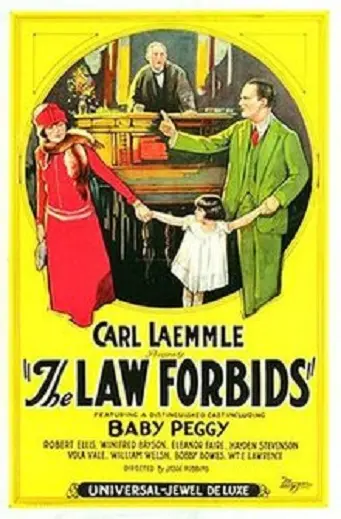
The Law Forbids, a 1922 cinematic endeavor, presents a sidesplitting exploration of matrimonial dissonance, replete with a plethora of comedic misadventures. This film, eschewing the conventions of melodrama, proffers a refreshingly nuanced portrayal of love, separation, and redemption.
The narrative revolves around Paul and Rhoda Remsen, a couple whose marital difficulties precipitate their separation. In a custody arrangement that bespeaks a nascent understanding of the importance of paternal and maternal involvement, they are each awarded their child, Peggy, for six months of the year. Rhoda relocates to a bucolic farm town, while Paul remains ensconced in the metropolis, collaborating with the actress Inez Lamont on a theatrical production.

The film's central conflict is precipitated by Peggy's peregrination to the city, where she endeavors to apprise her father of her mother's lingering ardor for him. This narrative thread serves as a catalyst for a series of comedic misadventures, replete with a demented rooster whose anarchic capers disrupt Paul's play. The Soldiers of Fortune and Flying Colors films, while not directly analogous, share a similar comedic tone, replete with physical humor and witty repartee.
The characterizations in The Law Forbids are multidimensional and richly textured, with each performer delivering a noteworthy portrayal. Baby Peggy, in particular, shines in her debut role, bringing a sense of vulnerability and determination to her character. The supporting cast, including William Welsh, Victor Potel, and Eva Thatcher, provide able performances that add depth and nuance to the narrative.
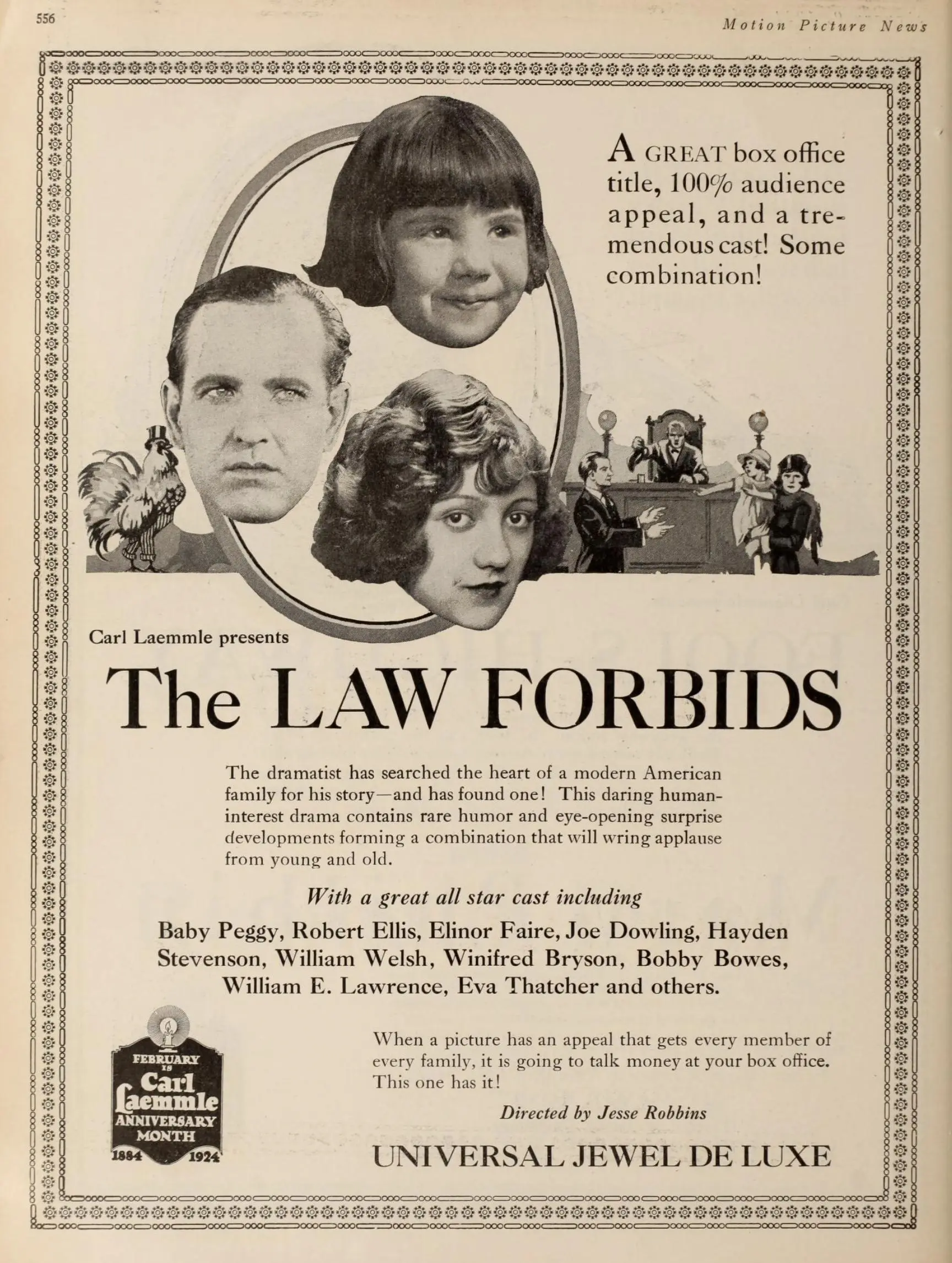
The Law Forbids can be situated within a broader cinematic context, alongside films like The Undercurrent and Blessée au coeur, which also explore themes of love, separation, and redemption. However, The Law Forbids distinguishes itself through its unique blend of physical humor and witty repartee, replete with a series of comedic set pieces that showcase the talents of the cast.
In a era marked by the ascendancy of screwball comedies, The Law Forbids stands as a testament to the enduring power of physical humor and witty repartee. This film, while not as well-known as some of its contemporaries, such as A Sailor-Made Man or He Who Gets Slapped, is a hidden gem that warrants rediscovery. The film's use of satire, while not as biting as some of its contemporaries, such as Other People's Money, adds a layer of complexity to the narrative, inviting viewers to reflect on the social mores of the time.
The film's themes of love, separation, and redemption are timeless, and its exploration of the complexities of human relationships continues to resonate with audiences today. The Law Forbids is a masterful example of the comedic genre, replete with a series of laugh-out-loud moments that showcase the talents of the cast. The film's use of physical humor, while not as pronounced as some of its contemporaries, such as Die Benefiz-Vorstellung der vier Teufel, adds a layer of complexity to the narrative, inviting viewers to reflect on the absurdity of human relationships.
In conclusion, The Law Forbids is a cinematic masterpiece that warrants rediscovery. Its unique blend of physical humor and witty repartee, replete with a series of comedic set pieces, makes it a standout in the comedic genre. The film's exploration of the complexities of human relationships, replete with a richly textured characterizations, invites viewers to reflect on the social mores of the time. As a work of comedic art, The Law Forbids continues to resonate with audiences today, its themes of love, separation, and redemption remaining as relevant now as they were upon its initial release.

IMDb 7.7
1924
Community
Log in to comment.