DbcultAccessing Vault...
6.7/10
Senior Film Conservator
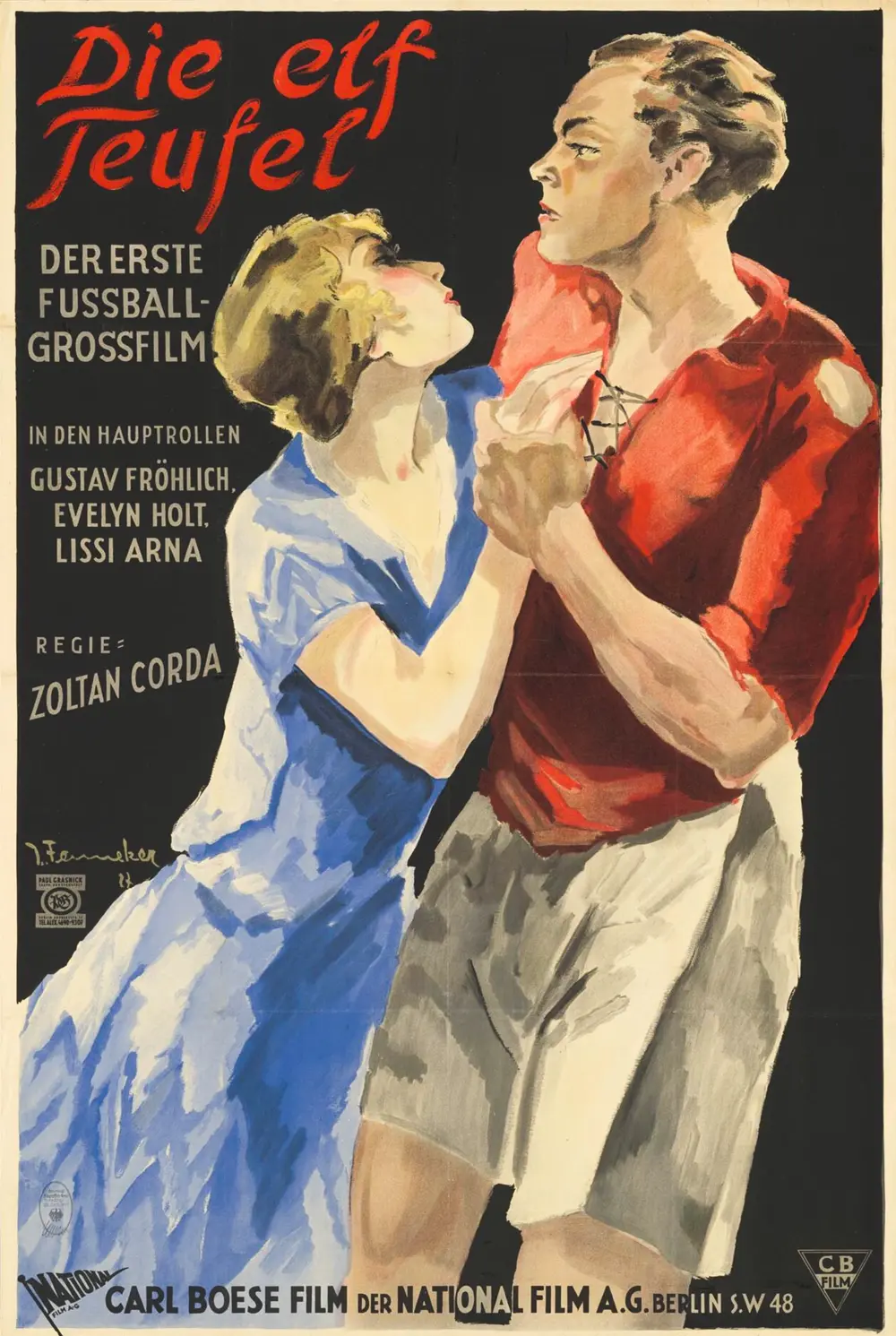
A definitive 6.7/10 rating for a film that redefined the boundaries of cult cinema. Die elf Teufel remains a cornerstone of transgressive art.
Is Die elf Teufel worth watching today? Short answer: yes, but with significant caveats that depend entirely on your cinematic palate. This 1926 German silent drama, a fascinating relic from the Weimar Republic era, offers a unique glimpse into early sports cinema and the nascent art of visual storytelling, making it a valuable watch for cinephiles, historians, and those curious about the evolution of the moving image. However, it is decidedly not for those seeking fast-paced action, modern narrative conventions, or a purely escapist viewing experience devoid of historical context.
This film works because of its surprisingly resonant themes of loyalty and integrity, its pioneering use of sports spectacle, and the earnest, often nuanced performances that manage to transcend the silent era's often broad acting styles. This film fails because of its occasionally ponderous pacing, some melodramatic excesses typical of its time, and a narrative structure that, while effective, lacks the psychological depth and character development modern audiences have come to expect. You should watch it if you appreciate historical cinema, are curious about the evolution of sports films, or enjoy silent dramas that prioritize emotional conflict over dialogue. Avoid it if you have little patience for older filmmaking conventions or prefer contemporary storytelling that rarely asks for active interpretation.
Die elf Teufel, or 'The Eleven Devils,' presents a narrative as old as competition itself: the struggle between personal ambition and collective loyalty. Our story centers on a formidable goalscorer, a titan on the field for his small, working-class club. His prowess, however, catches the covetous eye of a more affluent, professional team. What unfolds is a classic tale of temptation, where a lavish contract and the allure of a sophisticated woman are deployed as instruments to sway him from his humble roots. It’s a battle not just for a player, but for the very soul of sport, pitting the purity of amateur dedication against the burgeoning pragmatism of professionalism.
The film cleverly uses the 'woman' not merely as a romantic interest, but as an embodiment of the high-society world the professional club represents. She is a symbol of the glamour and ease that contrasts sharply with the gritty, working-class environment of his current team. This dual temptation—financial and romantic—creates a potent internal conflict for the protagonist, making his eventual choice resonate with broader implications about identity and community. The city cup, then, becomes more than just a trophy; it's a crucible where these ideals are tested, a tangible representation of the stakes involved.
Directed by Jaap Speyer and Rudolf Walther-Fein, Die elf Teufel offers a fascinating lens into German filmmaking of the mid-1920s. While not a product of the Expressionist movement that defined much of its contemporaries, the film nonetheless showcases a keen understanding of visual storytelling. The directors expertly balance the grand spectacle of the football matches with the intimate, often psychologically charged scenes of temptation and internal struggle. There's a particular skill in how they capture the energy of the crowd, using wide shots that convey a genuine sense of communal excitement, a feat not easily achieved in an era before advanced camera technology.
Consider the sequence where the goalscorer is first approached by the professional club's representatives. The framing often isolates him, emphasizing the weight of the decision. In contrast, the match scenes burst with a surprising dynamism. While the editing cannot compete with modern rapid-fire cuts, Speyer and Walther-Fein utilize clever camera placement and a focus on key moments of action—a powerful kick, a desperate save—to maintain a sense of forward momentum. It’s a testament to their craft that these sequences feel genuinely engaging, rather than merely documentary, especially given the technical limitations of 1926.
In silent cinema, acting is a language of gestures, expressions, and physicality, and the cast of Die elf Teufel largely rises to this challenge. Harry Nestor, as the conflicted goalscorer, carries much of the film's emotional weight. His performance is particularly strong in conveying internal turmoil; a furrowed brow, a hesitant gaze, or a subtle slump of the shoulders speak volumes about his moral dilemma without a single intertitle. His athletic prowess on the field is also convincingly portrayed, lending credibility to his character's reputation.
Evelyn Holt, playing the woman who represents the professional club's allure, embodies sophistication and a hint of calculated charm. Her movements are graceful, her expressions often enigmatic, allowing her to serve as both a romantic interest and a more abstract symbol of the protagonist's tempting alternative future. While her role could easily have slipped into caricature, Holt brings a certain understated elegance that makes the temptation feel genuine. Supporting players like Willi Forst and Gustav Fröhlich add depth to the ensemble, particularly in their portrayal of the camaraderie and loyalty within the workers' club. Their reactions to the protagonist's dilemma ground the film in a relatable sense of community.
The black and white cinematography of Die elf Teufel is undeniably a product of its time, yet it possesses a surprising clarity and effectiveness. The use of light and shadow, while not as starkly dramatic as in Expressionist films, is employed to differentiate environments and moods. The rough-and-tumble world of the workers' club is often depicted in more natural, sometimes grittier light, contrasting with the slightly softer, more glamorous lighting of the professional club's milieu. Close-ups are used sparingly but effectively to highlight emotional beats, particularly during moments of decision or distress for Nestor's character.
The film's most innovative aspect for its era lies in its depiction of the football matches themselves. Rather than static, distant shots, the cinematographers employ a variety of angles, including what appears to be some handheld work (or at least clever camera placement) to convey the speed and chaos of the game. A particular shot of the ball soaring through the air, followed by a cut to the determined faces of the players, effectively builds tension. As with all silent films, the original score is often lost to time, but one can imagine a rousing orchestral accompaniment enhancing the drama of the matches and the emotional weight of the personal conflicts. The absence of a specific score in modern viewings places a greater emphasis on the visual storytelling, which thankfully, largely holds up.
Pacing is often the most challenging aspect for modern audiences engaging with silent films, and Die elf Teufel is no exception. The film unfolds with a deliberate, almost stately rhythm that is characteristic of its era. This isn't necessarily a flaw, but it demands a different kind of patience from the viewer. The build-up to the final match, and indeed to the protagonist's decision, is a slow burn, allowing the emotional and ethical stakes to simmer rather than explode. For some, this will feel like a welcome immersion into a bygone era of storytelling; for others, it might occasionally drag.
The tone of the film is largely earnest and melodramatic, but in a way that feels authentic to its period. There's a clear moral compass guiding the narrative, celebrating loyalty and integrity over mercenary ambition. While this moral simplicity might strike some as naive today, it lends the film a certain charm and a clear thematic through-line. There are moments of genuine tension, particularly in the football sequences, balanced by quieter scenes of contemplation and camaraderie. The film manages to avoid becoming overly preachy, instead allowing the power of the protagonist's choice to speak for itself. It works. But it’s flawed.
Yes, for specific audiences. Die elf Teufel offers a unique historical perspective on sports cinema. Its narrative can feel dated by modern standards. It provides insight into early German filmmaking techniques. The pacing requires patience. It's a valuable watch for silent film enthusiasts. It's not for those who prefer modern blockbusters or dialogue-driven narratives. Consider it a historical document as much as entertainment.
Die elf Teufel is not a film for everyone, nor does it attempt to be. It is a product of its time, steeped in the storytelling conventions and technical limitations of 1926 German cinema. Yet, to dismiss it as merely an artifact would be a disservice. What it lacks in modern narrative complexity, it often makes up for in earnestness, thematic clarity, and a surprisingly vigorous depiction of the beautiful game. The tension between the purity of amateur sport and the corrupting influence of professional ambition feels as relevant today as it did nearly a century ago. Frankly, the 'temptress' subplot, while central to the narrative's conflict, often feels more like a convenient plot device than a deeply explored psychological struggle, a minor misstep in an otherwise focused moral tale.
For those willing to adjust their viewing pace and immerse themselves in the rich tapestry of silent film, Die elf Teufel offers a rewarding experience. It’s a testament to the enduring appeal of sport and the timeless human struggle between what is easy and what is right. While it may not leave you breathless with cinematic innovation, it certainly leaves an impression as a significant, if imperfect, piece of film history. It's a film that deserves to be seen, not just studied, by those who appreciate the roots of our cinematic language. It’s a quiet victory, a goal scored against the odds of time.
IMDb —
1916
Community
Log in to comment.