DbcultAccessing Vault...
5.5/10
Senior Film Conservator
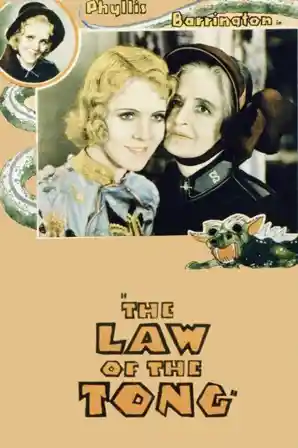
A definitive 5.5/10 rating for a film that redefined the boundaries of cult cinema. The Law of the Tong remains a cornerstone of transgressive art.
Alright, so The Law of the Tong. Is this one worth digging up today? Honestly, probably not for most folks.
If you're really into obscure early talkies, or if you just have a soft spot for pre-Code crime pictures with a slightly janky charm, then yeah, you might find something here.
But for anyone else expecting a slick plot or modern pacing, you're going to have a rough time. This one’s a curio, not a masterpiece. 😅
The story throws us right into the grimy world of Mae (Phyllis Barrington), a dance-hall girl just trying to make ends meet. Suddenly, she's mixed up in this whole deal to smuggle Chinese immigrants.
It escalates pretty fast, almost too fast, making you wonder how she got so deep, so quick. The way she kinda just slides into the criminal underworld feels less like a choice and more like she stumbled into it.
Phyllis Barrington, as Mae, does her best with what she’s given.
There are moments where she really tries to convey fear or desperation, but then the camera holds on her for just a beat too long, and it becomes a little… flat.
Richard Alexander plays a tough guy, a detective I think, and he’s got that classic gruff, no-nonsense delivery that feels straight out of a ’30s serial. He just kind of *is* there.
Jason Robards Sr. shows up too, doing his thing. His presence always feels a bit more solid, even in these smaller, stranger films. You can almost feel the movie trying to lean on him for some gravitas.
Now, about the "Tong" aspect. Look, this film is from 1931. So, yeah, you're going to get some pretty dated and frankly stereotypical portrayals.
The Chinese characters are mostly presented as a mysterious, shadowy, and often menacing force. It's a product of its time, for sure, and it can be a bit jarring to watch now.
The whole smuggling operation feels more like a stage play than a real criminal enterprise. You see a few guys sneaking around, and it's supposed to be super tense, but it just comes off as a bit *clumsy*.
The pacing of The Law of the Tong is… well, it’s all over the place. Sometimes it rushes through important plot points like it’s late for dinner.
Then, suddenly, a scene will just linger on a character staring off into space, and the silence starts to feel awkward rather than emotional. It's an interesting rhythm, if you can call it that.
One shot where Mae is running through a back alley looks like they only had about three extras, and two of them were just kinda walking slowly. The "crowd" scenes have this oddly empty feeling.
The dialogue is often very direct, almost like a stage play where everyone has to project. You don't get much subtlety here, which is kinda charming in its own way.
There’s a moment where a character tries to deliver a really dramatic line about honor, but they trip over the words just a little. It felt very human, actually. Like a real person messing up a take.
The film stock itself has that lovely, scratchy, flickering quality that only adds to its old-school vibe. It’s like watching history unfold, technical imperfections and all.
The ending kinda just… happens. It wraps things up, but it doesn't feel earned, or particularly impactful. It’s more like they ran out of film and just said, "Okay, that’s enough."
So, is it good? Probably not in the way we usually define "good" cinema.
But is it interesting? Absolutely. It’s a messy, fascinating look at early sound cinema, with all its awkwardness and earnest attempts at storytelling.
It’s like finding an old, slightly broken toy in an attic. You wouldn’t play with it every day, but you’d definitely pick it up and examine it with a smile. ✨
IMDb 5.6
1935
Community
Log in to comment.