DbcultAccessing Vault...
Cult Review
Senior Film Conservator
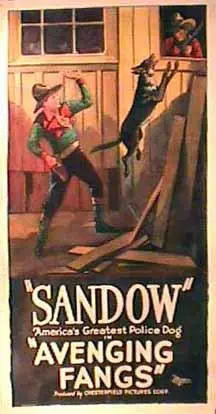
Is Avenging Fangs worth watching today? Short answer: Yes, but only if you have a deep-seated appreciation for the historical evolution of the 'animal hero' subgenre. This film is specifically for silent film completionists and those who find the primitive mechanics of 1920s Westerns charming rather than tedious. It is certainly NOT for anyone looking for a complex, morally grey narrative or modern production values.
1) This film works because Sandow the Dog delivers a performance with more emotional clarity and physical presence than most of the human actors combined.
2) This film fails because the plot relies on a level of law enforcement incompetence that stretches the limits of even the most forgiving suspension of disbelief.
3) You should watch it if you want to see the DNA of the modern 'man-and-his-dog' action flick, stripped down to its barest, most primal bones.
In the late 1920s, the 'dog hero' was a massive box office draw, pioneered by icons like Rin Tin Tin. In Avenging Fangs, Sandow isn't just a sidekick; he is the narrative's moral compass. While Jack Richardson’s Dick Mansfield is the nominal lead, the camera frequently favors Sandow’s reactions. There is a specific scene during the tracking sequence where the camera lingers on the dog’s snout as he picks up Ludlow’s scent near a stream. This is effective, direct visual storytelling that bypasses the need for intertitles. It works. But it’s flawed. The reliance on the dog to bridge gaps in the script is obvious, yet Sandow’s screen presence is undeniable. He possesses a stoicism that contrasts sharply with the often-exaggerated pantomime of his human counterparts.
Comparing this to other films of the era, such as the more domestic-focused Little Miss Mischief, the stakes here feel significantly higher because they are rooted in blood-debt. Sandow represents a raw, animalistic justice that the human legal system—represented by a gullible sheriff—fails to provide. The dog doesn't care about the sheriff's warrants; he only cares about the scent of the man who killed his master.
The central conflict of Avenging Fangs hinges on a classic Western trope: the hero being mistaken for the villain. Robert Ludlow, played with a slick, almost oily menace by Kenneth MacDonald, manages to convince the sheriff that Dick Mansfield is the actual criminal mastermind. This plot point is handled with a bluntness that is typical of George W. Pyper’s writing. It lacks the psychological nuance you might find in a film like Vanina, which explored themes of obsession and power with much more depth. Here, the frame-up is merely a mechanism to get the hero into a position of vulnerability. It’s a bit clunky, but it serves the pacing of the film’s brisk runtime.
The sheriff’s character is arguably the most frustrating element of the film. His immediate pivot from arresting Trigger Kincaid to believing Ludlow’s accusations against Mansfield is a moment of pure narrative convenience. It reminds me of the broad, almost farcical characterizations in The Infant at Snakeville, though here it is intended to be taken with complete seriousness. This gullibility is what allows the middle act to function, but it leaves the viewer feeling that the 'law' in this world is essentially useless without a dog to guide it.
Jack Richardson plays Dick Mansfield with a rigid, square-jawed intensity. He is the quintessential silent Western hero—less a character and more a vessel for righteous indignation. His performance doesn't have the lightness seen in A Young Tenderfoot; instead, he carries the weight of his brother's death in every frame. However, the real standout among the humans is Kenneth MacDonald. As Robert Ludlow, he avoids the trap of being a cartoonish villain. There is a coldness to his manipulation of Mary Kirkham that feels surprisingly modern. He isn't just a robber; he is a man who discards people when they no longer serve his purpose.
Helen Lynch’s Mary Kirkham provides the emotional catalyst for the third act. Her role as the 'jilted woman' is a common trope, yet Lynch brings a sense of weary desperation to the part. When she identifies Ludlow at the cabin, it isn't just a plot resolution; it's a moment of personal reclamation. This type of female agency, while limited, is more satisfying than the passive roles often seen in films like The Princess's Dilemma. She isn't being rescued; she is the one providing the evidence that ensures the villain’s downfall.
Directorially, Avenging Fangs is functional. It doesn't possess the grand, sweeping ambition of Paradise Lost, nor does it have the experimental flair of some European silents like Das Todesgeheimnis. The cinematography by the uncredited crew is standard for a B-Western of 1927. The lighting in the cabin sequence is particularly noteworthy, however. The use of shadows to obscure Ludlow’s face during the final confrontation adds a layer of tension that the script alone doesn't provide. It creates a claustrophobic atmosphere that contrasts well with the wide-open spaces of the tracking scenes.
The pacing is one of the film's strongest assets. Unlike Infatuation, which can feel like a slow-burn slog, Avenging Fangs moves with the speed of a pulp novel. The transitions between Mansfield’s escape and the final cabin showdown are handled with an efficiency that keeps the momentum high. Every scene serves a purpose, even if that purpose is just to show Sandow jumping over a fence or Mansfield looking sternly into the distance.
Yes, if you enjoy the 'dog-as-detective' trope and can overlook a highly predictable plot. Avenging Fangs is a lean, 60-minute slice of 1920s action that delivers exactly what it promises: a dog, a gun, and a grudge. It is an excellent example of how silent cinema used animal performers to bridge the gap between action and emotion without the need for complex dialogue.
Pros:
Cons:
When placed alongside other films from the same period, Avenging Fangs occupies a middle ground. It lacks the moral complexity of Honesty - The Best Policy, which tackled the ethics of truth-telling with much more nuance. Similarly, it doesn't have the nostalgic warmth of Not So Long Ago. However, it is significantly more engaging than the stagey, static presentation of Cleaning Up. It is a film that knows its audience: people who wanted to see a good dog bite a bad man. In that regard, it succeeds where more ambitious films of the era often failed by over-complicating their narratives.
Even the romantic subplot, as brief as it is, feels more grounded than the saccharine elements of The Apple-Tree Girl. In Avenging Fangs, the marriage is a union of two people who have been wronged by the same man—it’s a partnership born of shared trauma rather than just a 'lickpenny' attraction as seen in A Lickpenny Lover. This gives the ending a slightly grittier edge, even if it still follows the mandatory 'happy ending' template of the time.
Avenging Fangs is a fascinating artifact of a time when Hollywood was obsessed with the heroic potential of man's best friend. It is not a masterpiece of cinema, but it is a masterclass in efficient B-movie storytelling. The film relies on the audience’s inherent sympathy for animals to carry a plot that would otherwise fall apart under the slightest scrutiny. Sandow is the heart, soul, and muscle of the production. While the humans stumble through a series of convenient misunderstandings, the dog remains focused, fierce, and undeniably the smartest character on screen. If you can tolerate the tropes, you’ll find a surprisingly tight revenge thriller that still has some bite left in it.
"A testament to the era when a dog's snarl was more powerful than a hero's monologue."
IMDb 6.7
1934
Community
Log in to comment.