DbcultAccessing Vault...
5.9/10
Senior Film Conservator
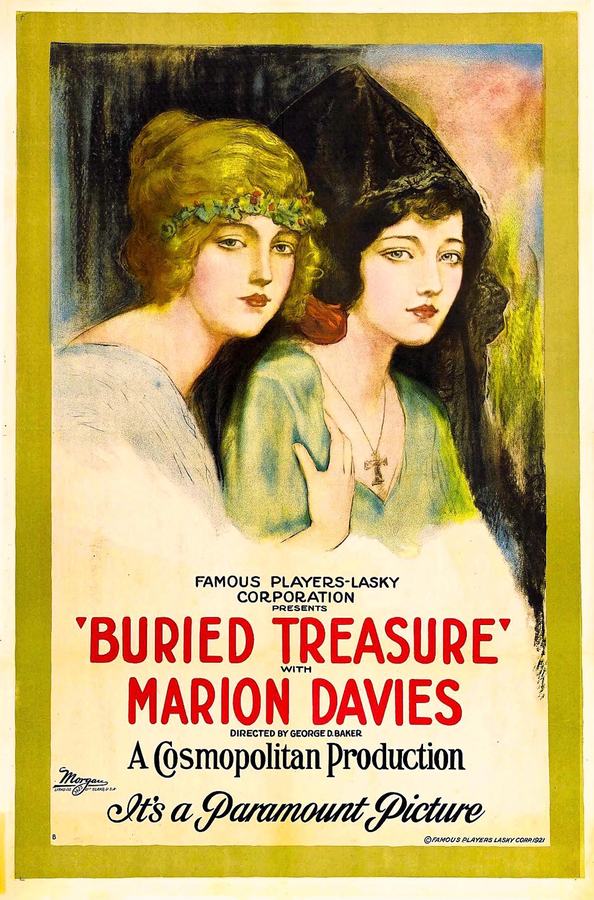
A definitive 5.9/10 rating for a film that redefined the boundaries of cult cinema. Buried Treasure remains a cornerstone of transgressive art.
Treasure is only dirty money until memory polishes it into a mirror.
In the flicker of a tungsten lamp, Buried Treasure feels less like a single film than like a ghost ship that has sailed through three centuries of cinema and refuses to sink. Shot in 1925, released in ’26, and buried by bankruptcy before the decade closed, this 35,000-foot sprawl of nitrate survives today in a 9,200-foot 16mm abridgement—scarred, water-stained, yet incandescent. What remains is a palimpsest: a pirate yarn, a reincarnation thriller, a Jazz-Age morality play, and—most improbably—a love letter to the very idea that movies can remember for us when we refuse to remember ourselves.
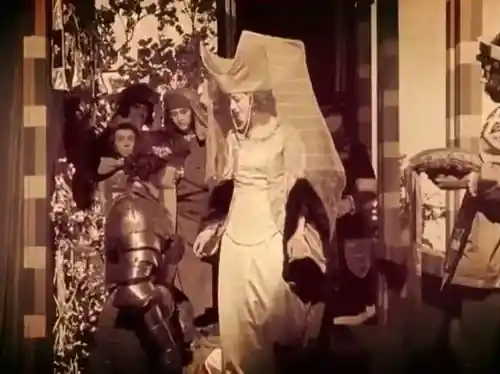
Baker and screenwriter F. Britten Austin slice time like citrus on a blade. The first image is not the galleon but a 1925 diving suit—helm riveted like a Martian’s skull—bobbing in the Gulf Stream. Inside sweat-slick Norman Kerry mutters intertitles that dissolve into 1650s Madrid. Davies enters cloaked in novice’s white, eyes already older than her vows. Within sixty seconds we have tasted saltpeter, incense, and bootleg gin. The effect is vertiginous: you sense reels missing yet paradoxically feel the lacunae, as though your own past lives had been censored.
History remembers Davies as Hearst’s protégé and The Right to Happiness comedienne; here she is something rawer. As Isabella de Rojas she wields a fan like a fencing foil, taunts a pirate captain until he questions the price of every coin he steals. As modern-day Sylvia Vane she lounges on a Daytona pier, cigarette ember syncing with the lighthouse beam, knowledge of centuries pooling in her pupils. Davies’ eyes perform the cut—no dissolve needed—between eras. Watch the moment she recognizes Kerry’s reincarnated scoundrel: her irises contract like a camera shutter, and the entire frame seems to inhale.
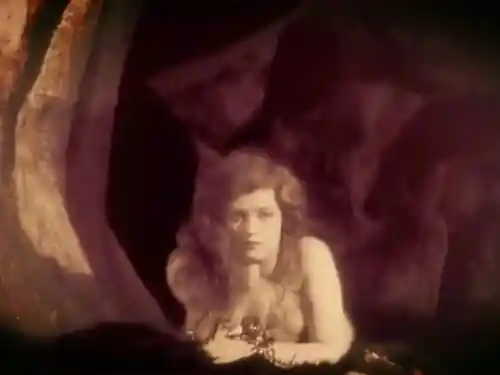
Kerry, often dismissed as a pretty swashbuckler, carries the narrative’s moral rust. His Captain Rodrigo is all velvet and venom, but his 1920s incarnation, antiquarian Roderick Kildare, sports pince-nez that fail to mask the rapier gleam behind them. The performance is a duet of arpeggios: a single raised eyebrow in the past becomes a nervous tic in the present. When he finally unearths the chest, his laugh is not triumph but recognition—he is greeting his own grave.
Most pirate films treat gold as MacGuffin; here it is a mnemonic device. Each doubloon is stamped with the face of its owner at the moment of death—an idea lifted from Jungian daguerreotypes and slammed into pulp mythology. When Sylvia brushes the coins underwater, the silt clears to reveal her own 17th-century silhouette. The film argues, with perverse sincerity, that capital is merely congealed memory, interest compounded by suffering.
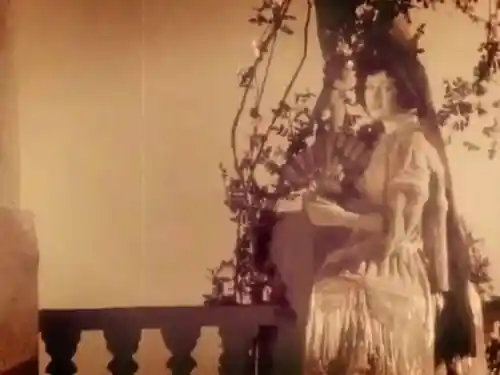
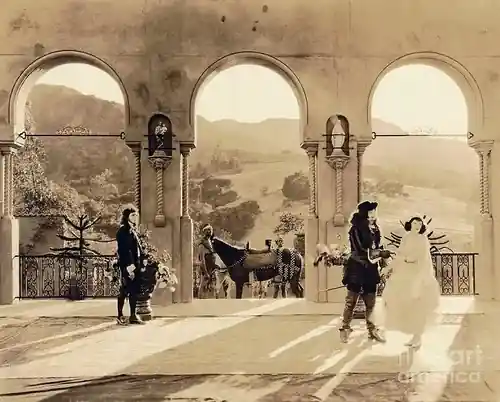
Cinematographer Edward Paul shot day-for-night by marrying a #25 red filter with under-cranked 18 fps, turning waves into obsidian slabs. Moonlight is not white but ur-yellow, the color of old parchment. Interiors of the galleon were constructed at ¾ scale to elongate silhouettes; beams drip with studio-hosed glycerin so every surface appears sperm-whale slick. In the modern sequences, Florida’s sun is overexposed two stops, bleaching skies until human skin becomes the only color refuge. The clash—sump-oil blacks vs. solar flares—creates a dialectic between epochs.
Sample card, handwritten by Austin in walnut ink: "I have pawned my soul to a chest whose lock is rusted by tears." Another, superimposed over a skull-and-crossbones: "The Jolly Roger laughs because it remembers what we choose to forget." The titles are not exposition but incantations, equal parts Hamlet and penny dreadful.
Place it beside Queen X and you see two silent films unafraid of female agency, yet Davies’ Sylvia is more haunted than triumphant. Stack it against The Golden Fleece and notice how both equate gold with spiritual bankruptcy, but Buried Treasure refuses redemption. Its closest cousin might be With Serb and Austrian—not in plot but in fatalistic circularity, history as ouroboros.
Production files at LOC reveal two deleted sequences: a shot of Rodrigo kissing the boy cabin-priest (coded queerness too blatant for the Hays office) and a finale where Sylvia, possessed by Isabella, stabs Kildare with the same dagger once used on Rodrigo—only to discover the blade is now gold-plated, bending harmlessly. Test audiences laughed; the studio clipped both. The surviving print ends on an ambiguous beach: coins scattered, lovers’ footprints dissolving under tide. We are denied both damnation and absolution, left with salt on our lips and the suspicion that the next tide will carry the curse to us.
No original score survives. Modern festivals pair it with everything from Max Richter to Cuban son. Try "The Partisan" by Leonard Cohen segueing into "O Magnum Mysterium"—the collision of profane and sacred mirrors the film’s temporal whiplash.
Anders Randolf as the galleon’s quartermaster steals every scene with a face like a chipped figurehead; one close-up—eyes reflecting a burning sail—lasts 28 frames yet burns longer than most epics. Dorothy Vernon as the piratical nun turned barkeep supplies comic relief so dry it feels like desiccated limes. Earl Schenck’s mute cabin boy communicates solely through a toy music box that plays "La Folia"; when the mechanism jams, it is the film’s first death rattle.
The 16mm abridgement resurfaced at a Jacksonville estate sale in 1987; a 35mm reel labeled "Treasure—Reel 5" sits mislabeled as Tootsies and Tamales in the CNC archive. A 4K scan of the 16mm was released on blu-ray by Kino Lorber in 2022, accompanied by a 40-page booklet that includes Austin’s shooting script fragments—coffee rings and all.
It will not reassure that love transcends epochs; it hints instead that love is the same wound reopened by a rusted key. It denies karma as cosmic justice, proposing instead a Ponzi scheme of pain. And it laughs at the notion that buried things stay buried—every frame insists the past is a coral polyp, alive and calcifying.
Because your streaming queue is bloated with algorithmic comfort food. Because the first time Davies’ eyes meet Kerry’s across centuries you will feel a chill that has nothing to do with air-conditioning. Because in an age of digital immortality, here is a film that remembers forgetting. Because every doubloon you ever coveted glints brighter when you realize it already carries your fingerprint from a life you cannot recall. And because, as the intertitle sneers: "The only thing deeper than the ocean is the mirror."
Watch Buried Treasure on Kanopy’s silent cinema hub, or catch a 35mm print at the San Francisco Silent Film Festival this October—projected at variable speed with live accompaniment by Guenter Buchwald’s ensemble. Bring a handkerchief; the salt spray is imaginary but the tears won’t be.

IMDb —
1928
Community
Log in to comment.