DbcultAccessing Vault...
Cult Review
Senior Film Conservator
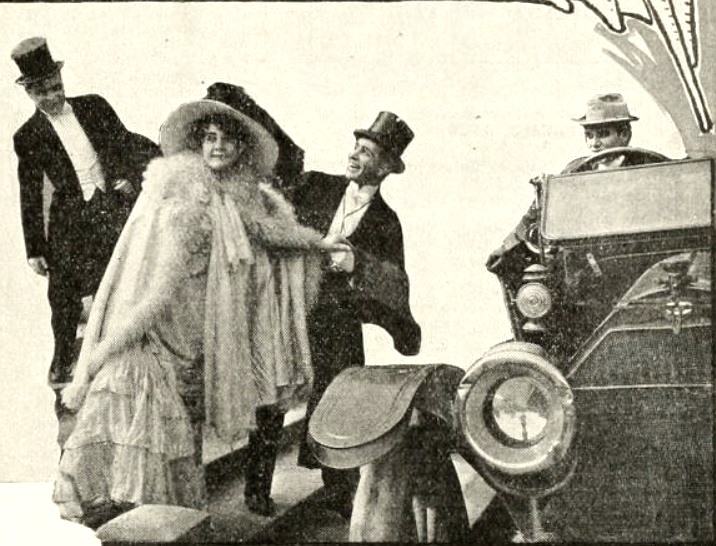
Picture, if you can, a nitrate reel flickering inside a converted church in 1914: the projector’s carbon arc spits blue comets across tobacco haze while a house orchestra grinds out a tango that sounds like regret set to tempo. The Return of Helen Redmond unspools like a fever dream stitched from frayed silk—equal parts cautionary sermon and backstage valentine—its intertitles glowing like cigarette tips in the dark. Fred Montague’s scenario may read as Victorian boilerplate today, yet under the patient gaze of a contemporary spectator it morphs into something far pricklier: an early indictment of the have-it-all myth sold to women long before the phrase was coined.
The film’s DNA is double-helixed with contradictions. On the surface it moralizes—domesticity good, footlights bad—but every aesthetic choice subverts the sermon. Helen’s first re-entry into the cabaret is shot in lingering medium-wide frames: chandeliers drip prisms over gartered legs, a saxophone glints like a golden eel, and the camera—usually nailed to the floor in 1914—tilts slightly upward, as though the lens itself can’t resist peering under the tablecloth of propriety. Montague and director B. Reeves Eason (years before he’d orchestrate the cyclonic chariot race of Ben-Hur) let the viewer gorge on the same hedonism that will later damn our heroine. The result is a moral tale told by a town drunk—slurring, winking, contradicting itself between hiccups.
Helen’s off-screen decade of abandonment is elided—no montage of train wheels or calendar pages. Instead, the film collapses time through a single match-cut: the child’s chalk drawing of a dove dissolves into Helen’s cigarette case engraved with the same bird, now wing-tipped in diamonds. The implication lands like a slap: art becomes artifact, innocence becomes accessory. When Helen finally kneels at the bedside of the stranger who is her daughter, the child’s bedside lamp prints a halo on the wall—yet the shadow Helen casts is horned, forked, enormous. The film doesn’t ask us to forgive; it asks us to recognize how motherhood itself is being re-shot in real time, re-framed by social workers, clergymen, and eventually the flickering new apparatus of cinema.
Violet Knights, tasked with embodying Helen, carries the impossible burden of rendering both magnetic siren and penitent Magdalene without the aid of spoken nuance. She solves the problem physically: her shoulders operate on ball-bearings of self-contempt. Watch the way she enters the minister’s parlour—spine erect, chin lifted like a dancer about to plié—then, once the door shuts, the corset seems to unlace itself; she crumples an inch at a time until her hat brim grazes her kneecaps. The performance is built on micro-surrenders, a slow leak of bravado that feels uncannily modern beside the semaphore emoting of many 1914 contemporaries.
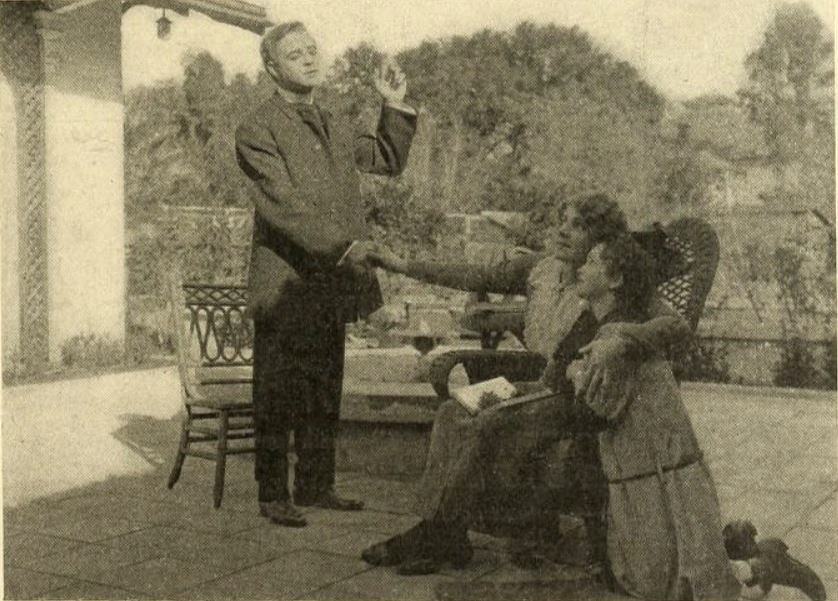
Reverend Forrester—played with granite-jawed rectitude by George Field—is less a character than a walking production code, the Hays Office before Hays. His accusatory monologue delivered across a mahogany table functions like a title-card manifesto: “Better a dead saint in a child’s memory than a living sinner at the supper table.” The line drew reported applause in certain Midwestern parishes and hisses in Lower-East-Side nickelodeons. Yet the film complicates his zeal: when he bars Helen from the house, the camera stays outside the window, peering in with the mother. We witness his tenderness toward Marjorie—braiding her hair while humming “Rock of Ages”—and the image is doubly framed, both by the lattice of mullioned glass and by our own voyeuristic hunger. The minister is both jailer and nurturer; the film refuses to grant the audience the comfort of uncomplicated villainy.
The picture’s boldest stroke arrives midway: a premonitory hallucination rendered through double exposure and hand-tinted frames. In a palette of bruise-violet and arsenic-green, we watch Marjorie age a decade in ninety seconds—powdering her cheeks with the same reckless swipe Helen once used, eloping with a straw-hatted stage-door Johnny who sports the identical carnation Helen’s lover wore. The sequence predicts not merely the character’s fate but the entire star-system arc that would consume actresses like Olive Thomas and Virginia Rappe a decade later. Silent cinema here becomes Delphic, warning its own off-screen muses of the machinery grinding behind the klieg lights.
Restorationists at Eye Filmmuseum recently salvaged a 35mm Dutch print, revealing tinting notes previously misread as “amber” to be a lurid orange-cinnamon—the shade of cheap stage gel. When Helen’s renunciation unfolds, the very same hue now bathes her cramped music studio, turning the pigment of sin into the glow of atonement. Color, Montague hints, is context; morality a matter of lighting direction.
Helen’s archetype—the chorus girl with a heart both gold-plated and bullet-riddled—was already shopworn by 1914. Yet The Return arrived at a hinge moment: the year Margaret Sanger began printing The Woman Rebel, the year the Avatar of Ziegfeld started recruiting nation-wide chorines into a standardized army of smiles. Audiences thronged the picture palaces precisely to calibrate their own anxieties: could the New Woman pirouette between autonomy and maternity without snapping her ankles? The film’s answer is equivocal—yes, if she agrees to live in reduced circumstances, instructing scales to pudgy-fingered pupils while wearing last-year’s coat. The compromise feels so punitive that modern viewers may exit muttering “Give me the tango and the cigarettes.”
Compare the conclusion to that of Our Mutual Girl (1914), where the heroine escapes ruin via timely inheritance, or The Adventures of Kathlyn, whose serial perils always reset like a carnival game. Helen’s fate offers no reset, only a muted reconciliation staged in a parlour too dim to read the sheet music. The camera retreats to the hallway, lingering on a coat-rack: two scarves—one child-sized, one fox-trimmed—hang side by side. Fade to black. No iris, no superimposed biblical quote, just the click of a door latch echoing like a gunshot in an empty theatre.
Edward Coxen, as the doomed Neil Forrester, has the thankless role of dying of a broken heart off-screen. Yet in the single flashback granted him—shot, curiously, as a rear-projection against a rippling aquarium—he conveys dissolution via the tremor of a champagne flute. The watery backdrop distorts his visage, turning the image into an impromptu Impressionist canvas. It’s a flourish so cine-literate one suspects Montague visited the French avant-garde screenings at the Little Theatre of Riverside Drive.
Child actress Dollie Lester (Marjorie) was borrowed from a touring Little Lord Fauntleroy company for one week of shooting. Her close-ups evince none of the coached cutesiness that mars many silent kids. When Helen claims to have known her “dead” mother, Lester’s pupils dilate not with wonder but with suspicion—an unscripted physiological response the editor kept, letting the splice linger four frames longer than advisable. The moment tunnels through a century of celluloid and still feels like a cold finger on the viewer’s spine.
Trace the genealogy and you’ll spot Helen’s DNA recombining in Stella Dallas, in Mildred Pierce, even in the acid-bathed maternal self-sacrifice of noir. The film invents the template: mother as auteur of her own ostracism, staging grand renunciations while the patriarchal world applauds the nobility of her disappearance. Hitchcock once claimed that “silent pictures got one thing absolutely right: guilt looks better in shadows.” Helen’s final silhouette—half-lit by a parlour lamp, her face obscured by the brim of a hat once bought with chorus wages—could be spliced seamlessly into the closing shot of Notorious without disturbing a single frame.
Only a Dutch Desmet print and a 9.5mm Pathé baby reel survive, both vaulted at Eye Filmmuseum and Library of Congress Packard Campus. A 2K restoration premiered at Il Cinema Ritrovato in 2022, accompanied by a new score for string quartet and toy piano that underscores the story’s brittle whimsy. Blu-ray release remains elusive; however, a 1080p stream circulates on the archival service ArteKino (geo-blocked to EU IPs). For North Americans, the best bet is an imported Region-B disc from Edition-Films, which bundles the picture with Entre ruinas for a curious double feature of maternal despair across hemispheres.
Great films are not those that answer cultural questions but those that keep the wound open, salted by ambiguity. The Return of Helen Redmond ends with mother and daughter reunited, yet the last image is a closed door, not an embrace. The camera refuses to cross the threshold, as though cinema itself were barred from the very domesticity it insists upon. That refusal resonates louder than any moral platitude. A century on, we still queue at the velvet rope, clutching tickets that promise admittance to the inner sanctum of certitude. The door, steadfastly shut, whispers a different promise: “Stay restless, stay hungry, keep dancing.”

IMDb —
1919
Community
Log in to comment.