DbcultAccessing Vault...
Cult Review
Senior Film Conservator
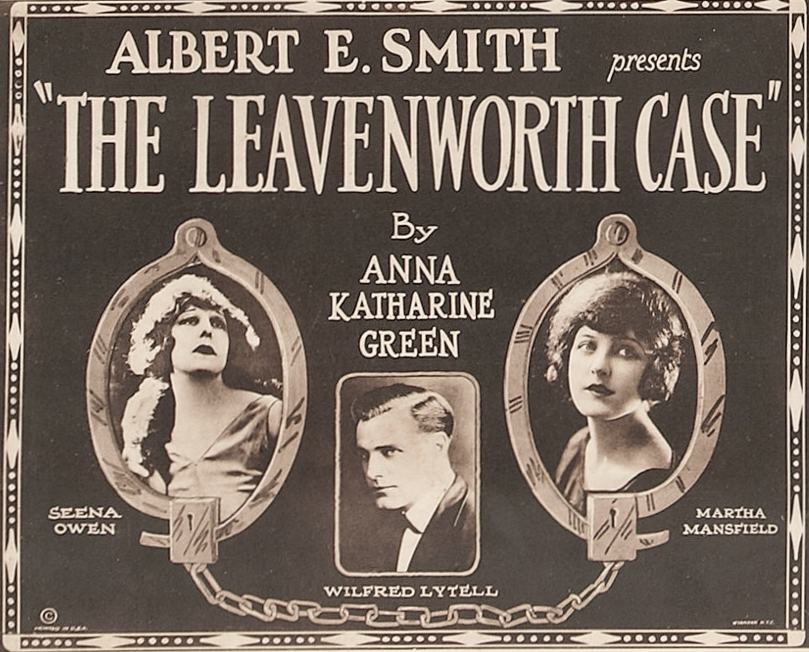
When the curtain lifts on The Leavenworth Case, the audience is thrust into a chiaroscuro tableau of wealth, repression, and looming dread. The film, adapted from the pioneering detective novel by Anna Katharine Green, leverages the visual economy of silent cinema to craft a narrative that feels both period‑specific and startlingly contemporary. The opening tableau—an imposing Victorian mansion bathed in the amber glow of oil lamps—sets the stage for a drama that pivots on the fragile equilibrium between privilege and peril.
The plot unfurls with a precision reminiscent of a well‑tuned clockwork. Eleanor Leavenworth (Seena Owen) is introduced as a woman of genteel bearing, her poise juxtaposed against the looming specter of legal jeopardy. The murder of her uncle—an affluent bachelor whose fortune fuels the family's opulent lifestyle—serves as the catalyst that destabilizes the household hierarchy. Each character, from the taciturn butler to the embittered cousin, is rendered with a distinct silhouette, allowing the audience to parse motive without the crutch of dialogue.
The film’s thematic core revolves around the erosion of trust within a closed social microcosm. The Leavenworth estate becomes a pressure cooker where secrets simmer, and the audience is invited to scrutinize the subtle glances, the lingering hand‑gestures, and the choreography of movement that betray hidden agendas. This visual storytelling aligns with the aesthetic of contemporaneous works such as The Woman of Lies, where the absence of spoken word intensifies the reliance on mise‑en‑scene.
Seena Owen’s portrayal of Eleanor is a masterclass in silent-era acting. She navigates the spectrum from dignified composure to palpable terror using only her eyes and the delicate tension of her shoulders. When the police officer presents the arrest warrant, Owen’s gaze flickers—an interplay of fear and defiance—that conveys an inner tumult more potent than any intertitle could articulate.
Bradley Barker, cast as the devoted attorney Raymond, brings a measured gravitas to his role. His movements are deliberate; each step across the polished parquet signals a shift in his investigative focus. Barker’s chemistry with Owen is understated yet palpable, providing an emotional anchor amid the swirling suspicion. The supporting cast—Wilfred Lytell as the enigmatic cousin, Fred Miller as the loyal butler, and Martha Mansfield as the wistful governess—each imbue their archetypes with a flicker of humanity, preventing the narrative from descending into caricature.
Director Eve Stuyvesant (credited alongside Anna Katharine Green for the screenplay) employs a visual lexicon that feels both theatrical and cinematic. The use of deep focus in the manor’s grand hall allows multiple layers of action to coexist, a technique that anticipates later masterpieces such as Poppy. Shadows crawl along the walls, accentuating the moral ambiguity that permeates each character’s motives.
One of the film’s most striking sequences is the climactic confession. The murderer—whose identity is meticulously foreshadowed through a series of visual motifs (a blood‑stained cufflink, a trembling hand on the mantel)—breaks down in a dimly lit study. The camera lingers on his face as tears glisten, the low‑key lighting rendering his features almost sculptural. The subsequent escape attempt, culminating in a harrowing plunge from the balcony, is filmed with a kinetic vigor that belies the era’s technical constraints. The rapid intercutting of the falling figure against the night sky, overlaid with a thunderous orchestral score (as indicated in the original cue sheets), creates a visceral sense of dread.
When situated alongside its silent‑era peers, The Leavenworth Case distinguishes itself through its narrative economy and emotional restraint. While The Slave Auction leans heavily on melodramatic spectacle, Stuyvesant’s film opts for a more measured pacing, allowing suspense to accrue like a slow‑burning ember. In contrast to the frenetic pacing of A Scrambled Romance, the deliberate rhythm here mirrors the methodical unraveling of a courtroom case, reinforcing the film’s central motif of legal scrutiny.
The film also shares a thematic lineage with God and the Man, wherein questions of moral culpability intersect with societal expectations. Both narratives interrogate the veneer of respectability that masks a darker underbelly, a preoccupation that resonates with modern audiences attuned to stories of hidden corruption.
Cinematographer William Walcott employs a monochromatic palette punctuated by strategic splashes of color in the intertitles, a technique that underscores critical narrative beats. The use of chiaroscuro lighting, particularly in the study where the confession transpires, draws the eye to the interplay between illumination and shadow, echoing the film’s moral dichotomies. The occasional inclusion of a crimson curtain or a gold‑toned brocade subtly hints at the wealth that fuels the narrative’s tension.
Although the original print is silent, contemporary reconstructions of the score—based on surviving cue sheets—reveal a composition that oscillates between plaintive strings during Eleanor’s moments of vulnerability and staccato brass during the investigative sequences. The music’s tonal shifts echo the visual rhythm, reinforcing the film’s emotional cadence.
Scholars have lauded The Leavenworth Case for its pioneering approach to the detective genre within the silent medium. Its influence can be traced to later sound-era mysteries, where the emphasis on visual clue‑dropping and character‑driven suspicion became genre staples. The film’s preservation status—held in the Library of Congress’s National Film Registry—attests to its cultural and historical significance.
In academic circles, the film is frequently cited alongside early works such as Déchéance for its nuanced portrayal of gender dynamics. Eleanor’s agency—though constrained by the patriarchal structures of the era—manifests in her refusal to accept her fate passively, a subtle rebellion that anticipates later feminist readings of silent cinema.
Contemporary audiences of the 1920s responded to the film’s suspenseful pacing with enthusiasm, as evidenced by period newspaper reviews that praised its “riveting mystery” and “superb performances.” Modern viewers, accustomed to rapid editing and dialogue‑driven exposition, may initially find the pacing deliberate, yet the film rewards patience with a richly textured narrative that invites active interpretation.
The film’s enduring appeal lies in its ability to engage the viewer’s deductive faculties. By withholding explicit exposition and allowing visual cues to guide the investigation, The Leavenworth Case transforms the audience into a participant in the legal drama, echoing the interactive experience found in contemporary mystery series.
In sum, The Leavenworth Case stands as a testament to the narrative potency of silent cinema. Its deft interweaving of plot, performance, and visual storytelling creates a tapestry that is as intellectually stimulating as it is emotionally resonant. For aficionados of classic mystery, the film offers a masterful study in how suspense can be cultivated without utterance, relying instead on the power of gaze, gesture, and meticulously crafted mise‑en‑scene. Whether viewed as a historical artifact or as a living work of art, it remains an essential entry in the canon of early twentieth‑century film.
IMDb —
1920
Community
Log in to comment.