DbcultAccessing Vault...
4.8/10
Senior Film Conservator
A definitive 4.8/10 rating for a film that redefined the boundaries of cult cinema. The Legacy of Happiness remains a cornerstone of transgressive art.
Stepping back into the annals of early cinema, we encounter "The Legacy of Happiness," a fascinating cinematic artifact that, despite its vintage, resonates with timeless themes. This film, a product of an era when storytelling on screen was still finding its voice, offers a surprisingly sophisticated exploration of human desires, the perils of avarice, and the true wellsprings of contentment. It’s a narrative that, at first glance, might appear straightforward, yet it unfolds with an allegorical depth that belies its simplicity, inviting audiences to ponder the true cost of their ambitions.
At the core of this moral fable is Allen Gordon, a character whose initial portrayal by Howard Missimer captures the widespread dissatisfaction of the common man yearning for more. Gordon isn't merely a clerk; he embodies a universal human condition: the restless spirit perpetually gazing beyond the horizon of his current circumstances. His discontent isn't born of abject poverty but rather a simmering envy, a belief that true happiness lies exclusively in the accumulation of immense wealth. This yearning, a powerful undercurrent in many societies, becomes the central pivot of the film's dramatic tension. It's a desire so potent that it overshadows his genuine affection for his sweetheart, compelling her to sever their engagement. Lily Branscombe, in her role as the discerning sweetheart, conveys a quiet strength, her decision not one of pique, but of profound foresight, recognizing that Gordon's nascent materialism would inevitably render her miserable, irrespective of any external opulence. This early conflict establishes the film's central philosophical inquiry: can wealth truly buy contentment, or does it merely amplify one's inherent character?
The narrative truly ignites with Gordon's startling dream, a masterstroke of early cinematic storytelling that allows for a rapid, fantastical progression of events without demanding extensive exposition. This dream sequence is not merely a plot device; it serves as a psychological crucible, a testing ground for Gordon's character. The sudden inheritance of a million dollars from a long-lost Italian uncle catapults him into a world he only previously imagined. This instantaneous transformation from a humble clerk to a man of leisure, adorned in expensive clothes and ushered into high society by his lawyer, is depicted with a swiftness that mirrors the intoxicating rush of newfound fortune. It’s a moment of wish fulfillment, a fantasy made tangible within the confines of his subconscious. This segment of the film, though brief, effectively establishes the superficial allure of wealth and the ease with which one can be drawn into its orbit, reminiscent perhaps of the transformative journeys seen in more elaborate productions like The Prodigal Son, where characters undergo significant shifts in circumstance and morality.
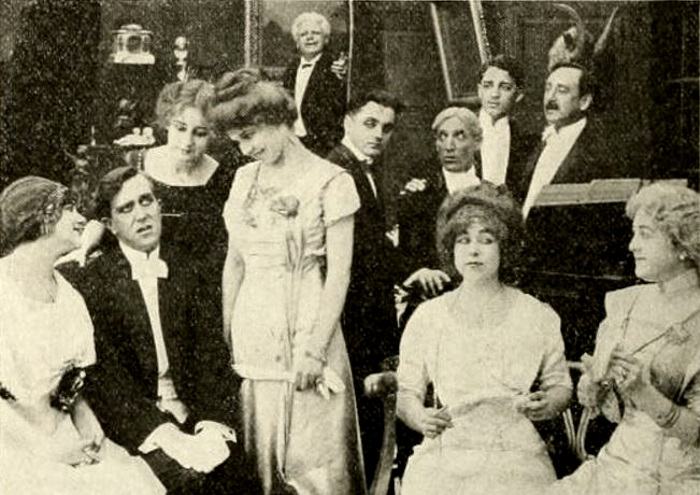
The dream's landscape quickly introduces the antithesis of genuine affection: the opportunistic Graft family. Will Graft, brought to life with a suitable air of foppish cunning by Dwight Mead, embodies the predatory nature of social climbers. His instant scheme to marry his sister to Gordon, purely for his newfound fortune, is a stark commentary on the transactional relationships that often fester within the upper echelons of society. Beverly Bayne, portraying Will's sister, delivers a performance that oscillates between enchanting allure and calculated artifice. Her every trick and charm are deployed with a singular purpose: to ensnare Gordon in a web of matrimony predicated solely on his wealth. The brilliant social function at the Graft home, where Gordon is paraded as the guest of honor, becomes a stage for this cynical performance. The visual splendor, though undoubtedly modest by today's standards, would have conveyed an atmosphere of sophisticated deception to audiences of the time. Gordon, enraptured by her charms, places an engagement ring upon her finger, a gesture of commitment that, unbeknownst to him, is entirely hollow. This scene powerfully illustrates how easily genuine emotions can be manipulated when material gain is the ultimate prize.
The film's most pivotal moment, and indeed the turning point in Gordon's dream-induced journey, arrives with brutal clarity. Moments after his engagement, he is shocked to overhear the Graft sister boasting of her "conquest" to her mother and brother, their congratulatory remarks confirming the cynical nature of their scheme. This eavesdropping moment is a narrative punch, shattering Gordon's illusions and exposing the base motivations beneath the veneer of charm. It’s a classic dramatic reveal, effective in its immediate impact. The subsequent decision by Gordon to orchestrate a fake telegram, announcing the catastrophic loss of his fortune, is a stroke of genius, both narratively and thematically. It’s a test, a desperate measure to ascertain the true nature of his fiancée’s love, or rather, the lack thereof. This dramatic pivot, where the protagonist actively seeks to expose the truth rather than passively suffer deception, elevates Gordon beyond a mere victim, showcasing a nascent wisdom. The scene where the telegram is delivered, and the engagement is immediately broken, is a stark indictment of the mercenary nature of the Graft family, a rapid unmasking that leaves no room for ambiguity. This sequence resonates with the moral lessons often found in literature, akin to the harsh realities faced by characters in works like Oliver Twist, where the true colors of individuals are revealed under pressure.
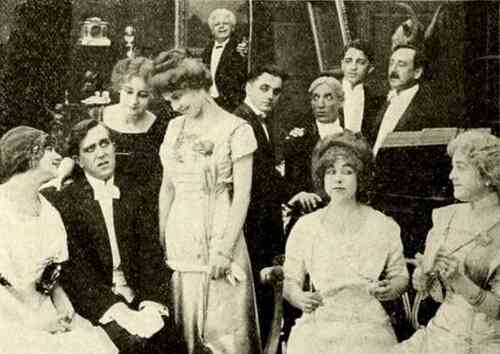
With his eyes now wide open to the insidious nature of greed, Gordon undergoes a profound internal shift. His stern rebuke of the sneering Will Graft, culminating in a symbolic strike across the face with his glove, is not an act of mere vengeance but a powerful assertion of newfound self-respect and moral clarity. This gesture, a defiance against the very forces that sought to exploit him, marks his complete disillusionment with the superficial world of wealth and status. It is a moment of catharsis, not just for Gordon but for the audience, who witness his transformation from a naive seeker of fortune to a man of principle. The dream’s abrupt end, as Gordon awakens with a start, is a brilliant narrative device. The relief he experiences upon realizing it was all a fancy is palpable, and the film masterfully uses this revelation to underscore its central message. His journey in the dream has been a transformative one, a vivid lesson learned without the real-world consequences of financial ruin or a disastrous marriage. This use of a dream to impart a life-altering lesson is a recurrent motif in storytelling, found in narratives from ancient myths to more contemporary films like Dante's Inferno, where a protagonist’s journey through a symbolic realm leads to profound enlightenment.
Cured of his discontent and the corrosive lust for money, Gordon’s first conscious act is to hasten to his sweetheart’s home, restoring the ring to her finger and, in doing so, reinstating their bond. This final act of reconciliation is the film’s unequivocal declaration: true happiness resides not in material possessions but in genuine human connection, in love and contentment. The joy that once more fills their lives is not a manufactured joy, bought with a million dollars, but an authentic, deeply felt emotion earned through self-discovery and the rejection of false idols. Beverly Bayne, though not given extensive screen time as the sweetheart, imbues her character with a quiet grace that makes her eventual reunion with Gordon feel earned and deeply satisfying. Her character serves as the moral compass throughout, a constant reminder of what Gordon initially risked losing. The film's conclusion is a powerful affirmation of enduring values, a gentle yet firm reminder that the pursuit of wealth for its own sake is a hollow endeavor. It’s a sentiment that echoes through the ages, finding resonance in countless tales of redemption and moral awakening, much like the thematic journey of The Redemption of White Hawk.
Considering its place in the nascent years of cinema, "The Legacy of Happiness" showcases a remarkable understanding of visual storytelling. Without the benefit of spoken dialogue, the actors relied heavily on exaggerated expressions, gestures, and the staging of scenes to convey emotion and plot. Howard Missimer's portrayal of Gordon's initial yearning, his dream-induced arrogance, and ultimate contrition is quite effective, communicating a complex character arc through visual cues alone. The direction, though uncredited, demonstrates an intuitive grasp of narrative pacing, moving swiftly through the dream sequence to maximize its impact as a cautionary tale. The use of intertitles would have provided necessary exposition, but the core emotional journey is carried by the performances and the visual grammar of the film. This early cinematic work serves as a testament to the power of film to convey profound moral lessons, even in its infancy. It highlights the enduring human fascination with stories of transformation, where characters confront their flaws and emerge enlightened. The simplicity of its plot allows the allegorical weight to shine through, making it a valuable piece for understanding the foundational principles of cinematic narrative. In an era where films were still largely novelty, this production managed to weave a tale that was both entertaining and thought-provoking, standing alongside other early moral explorations like Les Misérables, albeit on a different scale of grandeur.
The film’s message remains strikingly relevant even in our contemporary, consumer-driven world. The temptation of quick wealth, the superficiality of social climbing, and the deceptive allure of material possessions are themes that continue to resonate deeply. "The Legacy of Happiness" serves as a poignant reminder that true affluence is not measured by the contents of one’s bank account, but by the richness of one’s relationships and the integrity of one’s character. It champions the virtues of humility, genuine affection, and self-awareness over the fleeting glamour of ostentation. The film, in its quiet power, encourages introspection, prompting viewers to consider what they truly value and what constitutes a life well-lived. It’s a narrative that, despite its black-and-white presentation and silent delivery, speaks volumes about the human condition, proving that the most impactful stories often draw from the simplest, most universal truths. This humble film, therefore, is not just a relic of a bygone era; it is a timeless mirror, reflecting back the eternal struggle between avarice and contentment, proving that some legacies are indeed more precious than any amount of gold. Its straightforward yet profound ethical core aligns it with other cautionary tales of the time, such as those exploring power and ambition in films like The Black Chancellor, demonstrating a shared cultural interest in moral instruction through cinematic art.
In conclusion, "The Legacy of Happiness" stands as a testament to the foundational strength of narrative in cinema. It's a film that, through its compelling plot and clear moral compass, transcends its historical context to offer enduring insights into the human heart. It reminds us that sometimes, the greatest treasures are found not in distant dreams of opulence, but in the quiet, steadfast realities of love and self-acceptance.

IMDb 6.1
1931
Community
Log in to comment.