DbcultAccessing Vault...
6.8/10
Senior Film Conservator
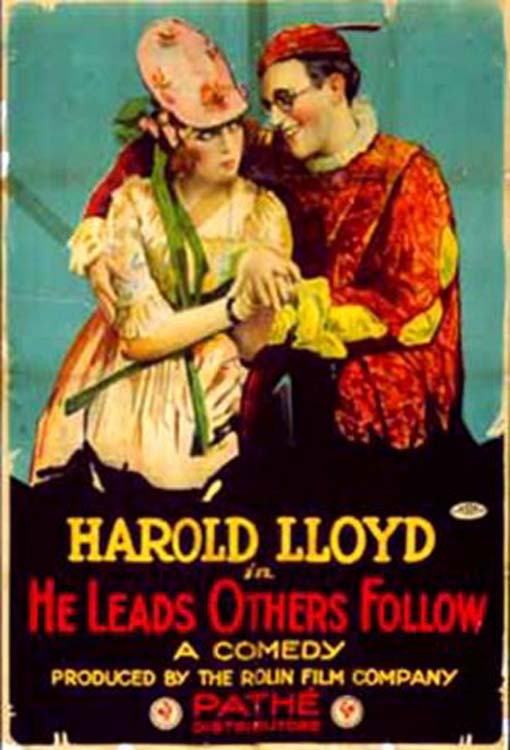
A definitive 6.8/10 rating for a film that redefined the boundaries of cult cinema. He Leads, Others Follow remains a cornerstone of transgressive art.
Stepping back into the flickering glow of a bygone cinematic era, one unearths treasures that, despite their age, resonate with startling contemporary relevance. Such is the case with H.M. Walker's meticulously crafted narrative, 'He Leads, Others Follow,' a silent film from 1919 that, through its compelling performances and nuanced storytelling, offers a profound meditation on the intoxicating allure of charisma and the perilous pitfalls of uncritical devotion. This isn't merely a historical artifact; it's a vibrant, insightful commentary on human nature, an enduring examination of the delicate balance between inspiration and manipulation.
The film introduces us to Arthur Penhaligon, portrayed with a captivating blend of boyish charm and subtle menace by the inimitable Harold Lloyd. Lloyd, often celebrated for his 'glasses character' and death-defying stunts, here delivers a performance that, while still imbued with his characteristic energy, delves into a more complex psychological landscape. Penhaligon is not a villain in the traditional sense; rather, he is a man whose ambition outstrips his capability, whose vision is grand but ultimately hollow. His arrival in Harmony Creek is less an entrance and more a seismic event, disrupting the placid rhythms of small-town life with promises of an elevated existence, a community transformed by his unique brand of leadership.
Penhaligon’s modus operandi is one of dazzling rhetoric and vague, yet compelling, pronouncements. He speaks of 'synergy' and 'progress,' of 'collective destiny' and 'unleashed potential,' painting vivid pictures of a future where Harmony Creek transcends its humble origins. The townsfolk, weary of the mundane and yearning for something more, find themselves irresistibly drawn into his orbit. This phenomenon of mass appeal to a charismatic figure, especially one promising an escape from the ordinary, is a theme that echoes throughout cinematic history, from the more dramatic explorations in films like Fritz Lang's Metropolis to the more comedic and satirical takes on cults of personality. Walker's screenplay, even without spoken dialogue, masterfully conveys the seductive power of such figures.
Central to this unfolding drama is Eleanor Vance, brought to life with remarkable vivacity and emotional depth by Bebe Daniels. Daniels, a versatile actress who seamlessly transitioned from comedies to dramas, imbues Eleanor with an initial earnestness that makes her subsequent disillusionment all the more poignant. She is not a gullible fool, but a young woman of idealism and spirit, genuinely moved by Penhaligon's vision. Her journey from fervent believer to discerning skeptic forms the emotional core of the film, providing the audience with a relatable anchor in a narrative that could otherwise feel abstract. Her wide, expressive eyes, a hallmark of silent film acting, convey a complex tapestry of hope, doubt, and ultimately, resolve. One can see parallels in the way Daniels portrays Eleanor's awakening to characters in films like The Woman Who Gave, where female protagonists grapple with societal expectations and personal truths.
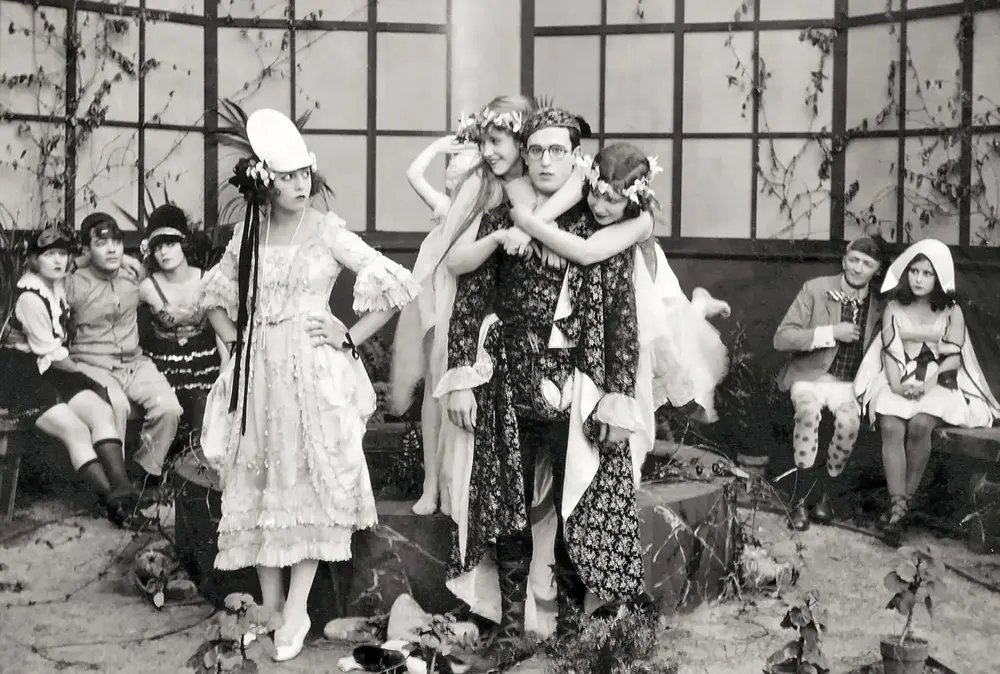
The brilliance of 'He Leads, Others Follow' extends beyond its two leads, manifesting in the rich tapestry woven by its supporting cast. Sammy Brooks, Charles Inslee, Noah Young, and 'Snub' Pollard, stalwarts of the silent era, each contribute to the film's nuanced portrayal of a community under Penhaligon's spell. Brooks, with his often bewildered expressions, might represent the everyman, swept along by the tide. Inslee, perhaps a more established figure in Harmony Creek, initially lends credibility to Penhaligon's schemes, only to find his own reputation eroding. Young, often cast as a strongman or a stoic presence, could embody the unquestioning loyalist, his physical presence reflecting his mental adherence. Pollard, known for his comedic timing and distinctive 'snub' nose, might serve as a more overtly skeptical voice, his facial contortions telegraphing doubt even when his words are unheard. Their collective performances create a vibrant microcosm, a dynamic interplay of belief, skepticism, and gradual disillusionment that feels remarkably authentic.
Marie Mosquini, often a delightful presence in comedies, could be seen here as an early voice of dissent, perhaps a cynical neighbor or a rival for influence, providing an essential counterpoint to Penhaligon’s growing sway. Gus Leonard and Lige Conley, with their venerable visages, likely represent the old guard, the traditionalists who resist the siren call of radical change, their quiet skepticism a subtle undercurrent to the pervasive enthusiasm. Fred C. Newmeyer, a director himself, showcases his acting chops possibly as a more formal authority figure, like a mayor or sheriff, initially swayed by Penhaligon’s charm but ultimately forced to confront the escalating chaos. Estelle Harrison, Billie Oakley, George Marks, Dee Lampton, and H.L. O'Connor round out this diverse cast, each contributing to the film's rich social fabric, embodying various facets of a community grappling with the intoxicating promises of a charismatic, yet ultimately flawed, leader.
H.M. Walker's screenplay for 'He Leads, Others Follow' is a masterclass in silent film construction. The reliance on visual storytelling, exaggerated expressions, and carefully composed intertitles necessitates a precision that often eludes modern cinema. Walker understands that the unsaid can be as powerful as the spoken word, allowing the audience to infer motives and emotions through subtle gestures and reactions. The film’s narrative arc—from initial fascination to burgeoning doubt, culminating in a spectacular unraveling—is meticulously paced, building tension and emotional resonance with each frame. The use of dramatic irony, as the audience is often privy to Penhaligon’s true nature before the townsfolk, adds another layer of engagement, creating a sense of impending doom that keeps viewers captivated.
Thematically, the film explores universal truths that transcend its specific period. It is a cautionary fable about the dangers of blind faith, the fragility of public perception, and the enduring human need for purpose and direction, even if that direction comes from a dubious source. The film prompts us to consider the responsibility of leadership and the critical role of individual discernment. In an age where information (and misinformation) spreads with unprecedented speed, the lessons imparted by 'He Leads, Others Follow' are more vital than ever. It encourages a healthy skepticism, a questioning of authority, and a deep appreciation for genuine, rather than performative, leadership. This thematic depth positions it alongside other thoughtful silent films that tackled complex social issues, such as The Bells or even the dramatic undertones in comedies like Day Dreams, which often explored deeper human conditions beneath the surface humor.
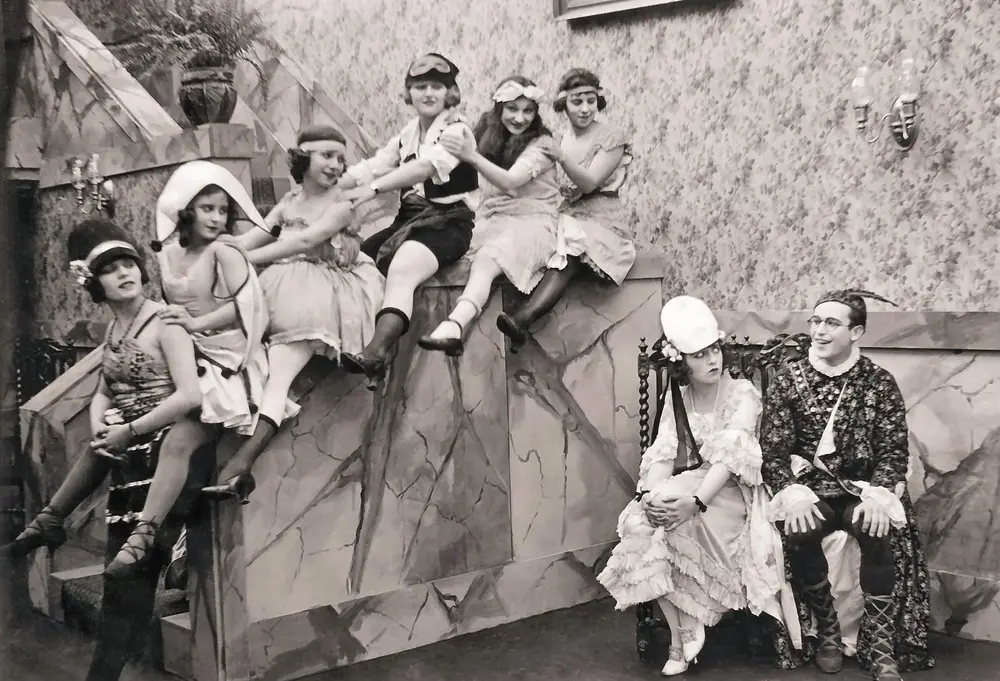
The film's crescendo arrives in a truly spectacular fashion, a masterclass in comedic chaos and dramatic revelation. Penhaligon, perhaps in a last-ditch effort to solidify his crumbling authority, orchestrates a grand public spectacle—a 'Festival of Future Prosperity' or an ambitious, ill-conceived public works project. This event, meant to be his crowning glory, instead becomes his spectacular undoing. Imagine a towering, rickety structure, perhaps a hastily constructed monument to 'progress,' designed by Penhaligon himself, collapsing under its own weight amidst a throng of bewildered townsfolk. Or a meticulously planned parade, meant to showcase Harmony Creek's 'new era,' descending into utter pandemonium as Penhaligon's lack of practical foresight becomes glaringly apparent. The visual comedy here, undoubtedly enhanced by Lloyd’s physical prowess and the reactions of the ensemble, would be both uproarious and deeply symbolic. The collapse of the physical structure mirrors the collapse of Penhaligon's carefully constructed facade.
The immediate aftermath is a cacophony of shattered illusions. The townsfolk, previously captivated by Penhaligon's rhetoric, are now confronted with the tangible, often messy, consequences of their blind allegiance. It is in this moment of crisis that Eleanor Vance's transformation is fully realized. No longer the starry-eyed devotee, she emerges as a beacon of genuine leadership, her quiet strength and practical wisdom contrasting sharply with Penhaligon's bluster. She doesn't preach or grandstand; instead, she begins the arduous task of rebuilding, both physically and metaphorically, demonstrating that true leadership lies not in grandiose promises, but in tangible action and empathetic understanding. This shift in dynamic, where the initially passive follower becomes the active agent of change, is a powerful narrative device that elevates the film beyond mere entertainment.
'He Leads, Others Follow' stands as a testament to the sophistication of silent cinema and the enduring power of well-crafted storytelling. It's a film that, despite its lack of spoken dialogue, speaks volumes about the human condition. The performances by Harold Lloyd and Bebe Daniels are exemplary, showcasing their range beyond their more typical comedic or romantic roles. Lloyd's portrayal of Penhaligon is subtly chilling, a man who, while not overtly malicious, is nevertheless dangerous in his self-delusion and his capacity to mislead. Daniels' Eleanor is a beautifully rendered portrait of growth and resilience, a character who finds her voice and her strength in the face of adversity. The film's message, that true progress comes from within and not from the blind adherence to external, unverified authority, remains strikingly relevant in any era.
Comparing it to other films of the period, one might draw parallels with the social commentary often embedded in comedies like Lost on Dress Parade, where characters navigate societal expectations and the desire for status. The theme of a community grappling with an outsider's influence can also be seen in films like The Haunted House, albeit with a supernatural twist, or even the more dramatic The Hero of the Hour, where a protagonist's true character is tested under pressure. 'He Leads, Others Follow' distinguishes itself by its nuanced exploration of the *dynamics* of leadership and followership, rather than just the individual's journey. It’s a film that encourages introspection, urging viewers to critically examine the figures they choose to elevate and the narratives they choose to believe.
In conclusion, 'He Leads, Others Follow' is far more than a historical curiosity. It is a vibrant, thought-provoking piece of cinema that offers a timeless critique of unchecked ambition and the seductive power of empty promises. Its intricate plot, compelling characters, and profound thematic depth ensure its place as a significant work in the silent film canon. For anyone interested in the foundational elements of cinematic storytelling, the evolution of performance, or simply a captivating narrative that holds a mirror to enduring human tendencies, this film is an absolute must-see. It reminds us that while the medium may have evolved dramatically, the core stories of humanity—our aspirations, our vulnerabilities, and our capacity for both greatness and folly—remain eternally compelling. The film's quiet power resonates long after the final frame, prompting a re-evaluation of the leaders we choose to follow and the personal agency we all possess to forge our own paths.
IMDb 8.6
1918
Community
Log in to comment.