DbcultAccessing Vault...
5.7/10
Senior Film Conservator
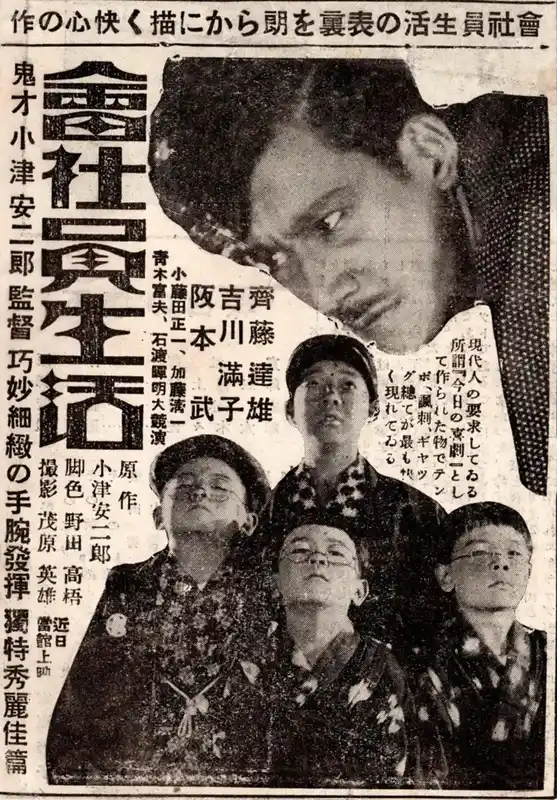
A definitive 5.7/10 rating for a film that redefined the boundaries of cult cinema. The Life of an Office Worker remains a cornerstone of transgressive art.
Is 'The Life of an Office Worker' even worth a look today? Honestly, yeah, for a specific kind of person. If you're into those quiet, observational films, especially older ones, that just watch people be, then pull up a chair. But if you need big drama or explosions, you'll probably just find yourself checking your watch. For the cinephiles, the curious, or anyone who appreciates Ozu’s early work, it's a real treat. Everyone else? Maybe grab a coffee first. ☕
The film just drops you right into this office, no real fuss. It’s 1929 Tokyo, and these guys in their suits are just… working. You see their desks, all neat but cramped, and the way they move with this peculiar, almost choreographed rhythm. It’s fascinating how universal the office dynamic feels, even after all these years.
Tomio Aoki plays our main guy, Mr. Hiroshi, I think. He’s got this really expressive face, even without words. You catch him sighing, or trying to sneak a peek at the newspaper when the boss isn't looking. It's those small, human moments that stick. Like, one scene, he’s just sharpening a pencil, and it feels like a whole little story in itself – the tiny ritual of it all. ✏️
There's a bit where the boss, played by Tatsuo Saitō, comes around, and everyone suddenly looks super busy. It's a classic office move, right? The way they all snap to attention, it’s almost funny. You can feel the tension, even though it’s all very understated. The film doesn't scream; it just kinda murmurs these truths.
I really noticed the way the camera just sits and watches. It doesn't swoop or zoom a lot. It’s almost like you’re another co-worker, just observing from a corner. This gives it a very intimate, almost documentary-like feel. You get to just soak in the atmosphere.
The pacing, for sure, is *slow*. But it’s not boring slow, if that makes sense? It's a deliberate kind of slow, letting you really sink into the routine. You see the same faces day in and day out, the same motions. It gives you a sense of their lives, these little cogs in a bigger machine. There's a moment where Hiroshi just stares out a window for a beat too long. You wonder what he's thinking. Escaping, probably.
Mitsuko Yoshikawa pops up as his wife, and their home scenes are a nice contrast. It’s where he can finally relax, or at least try to. The domestic bits feel warm, a stark difference from the stiff office environment. She seems to understand him without a word, which is sweet. You get a real sense of their quiet connection.
There’s this one sequence, very brief, where Hiroshi and a colleague are walking home, and they share a laugh over something silly. It's a tiny thing, but it feels so genuine. It's like, *that's* the stuff that gets you through the day, those small connections with people. Not the big, important work stuff, just the human interaction. It's a very Ozu thing to highlight, even this early in his career.
The film is silent, of course, but the expressions and body language of the actors really carry it. You don't need dialogue to understand the weariness, the small joys, or the subtle frustrations. The way someone holds their shoulders, or the slight slump in their posture after a long day. It’s all there.
One odd detail: the sheer number of pen holders on some desks. Like, a whole little army of them. It just stuck out to me as a weirdly specific artifact of the era. They really valued their writing tools, I guess. 🖋️
Did it need to be this long? Maybe not, a few scenes felt like they just lingered a tad, but it also kinda adds to the whole 'slice of life' vibe. It’s not trying to rush you anywhere. It just wants you to sit with these people for a while.
The ending isn't a huge crescendo. It just kind of… ends. Like another day passing. You're left with this feeling of having peeked into someone's existence, a quiet observation. It's not profound in a shouty way, but in a very gentle, lingering one. It’s a good reminder that even the most ordinary lives have their own subtle dramas.
If you've ever felt the daily grind, the quiet longing for something more, or just appreciated the small moments that make up a life, you’ll find something to connect with here. It’s a testament to how Ozu, even way back then, understood people so well.
IMDb —
1927
Community
Log in to comment.