DbcultAccessing Vault...
Cult Review
Senior Film Conservator
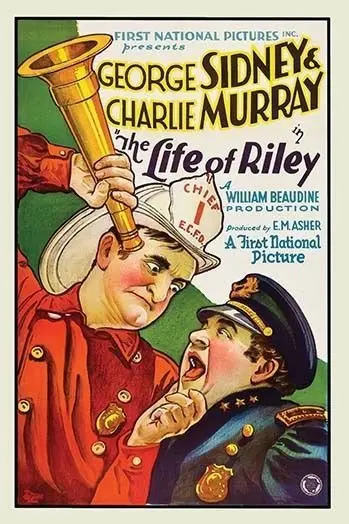
Is The Life of Riley worth watching today? Short answer: yes, but with significant caveats that demand a certain cinematic palate. This 1927 silent comedy, while undeniably a product of its era, offers a fascinating glimpse into the nascent forms of narrative filmmaking and the enduring appeal of broad, character-driven humor.
It's a film for those with a genuine appreciation for silent cinema, for film historians, and for anyone curious about the foundational elements of American comedy. Conversely, it is emphatically not for audiences seeking fast-paced plots, complex character arcs, or the polished production values of modern filmmaking.
Let’s cut straight to the chase with what works and what doesn't in The Life of Riley.
This film works because: It perfectly captures the innocent charm and physical comedy of its period, offering a delightful escape into a simpler storytelling style centered on relatable human foibles.
This film fails because: Its narrative is thin, predictable, and lacks the depth or innovative techniques that would elevate it beyond a standard comedic offering of its time.
You should watch it if: You are a silent film enthusiast, enjoy character-driven physical comedy, or appreciate cinema as a historical artifact.
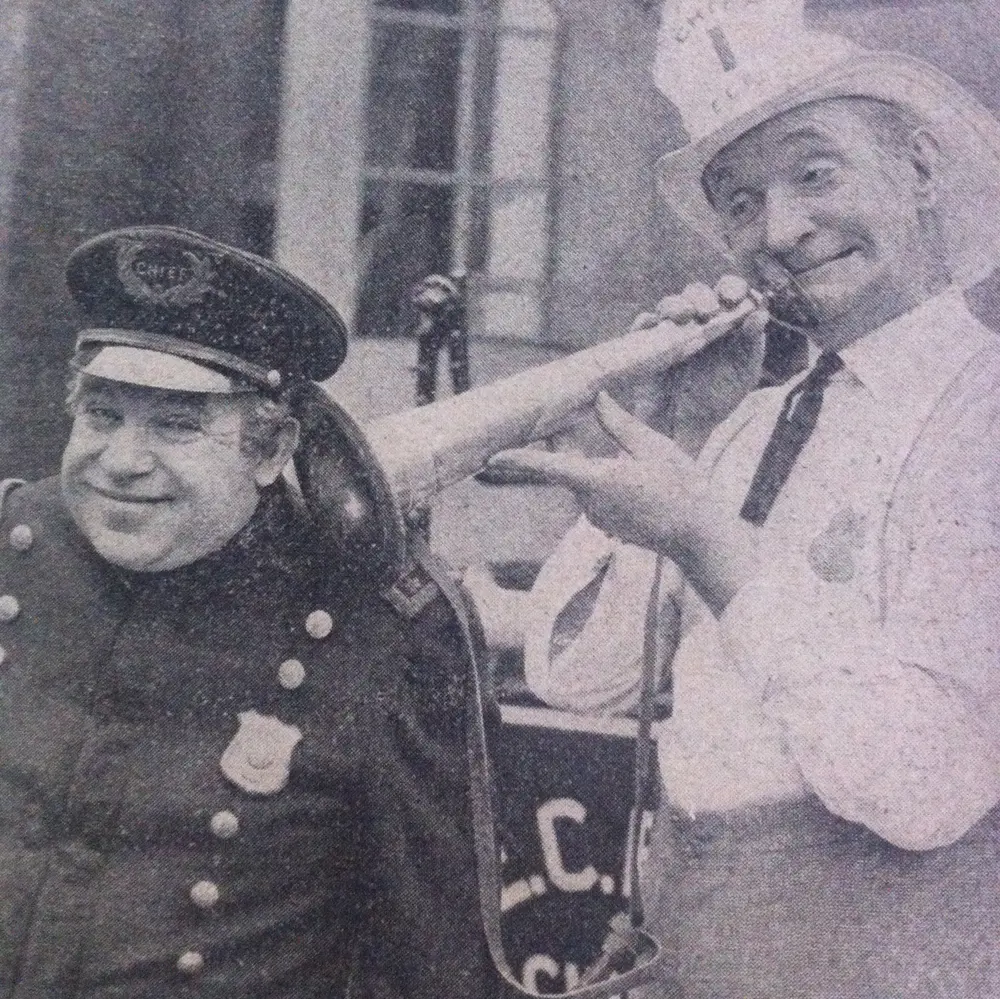
At its heart, The Life of Riley is a romantic comedy, albeit one steeped in the conventions of the late silent era. The premise is simple: two upstanding, if somewhat bumbling, town officials — Police Chief Meyer (Charles Murray) and Fire Chief Riley (Bert Woodruff) — find themselves competing for the affections of the recently widowed, and notably wealthy, Penelope (Myrtle Stedman).
Their rivalry is less about genuine malice and more about a charming, almost childlike, desire to win the lady’s hand. This dynamic is the film’s initial strength, grounding the humor in universal themes of courtship and competition.
The introduction of Montague (Sam Hardy), the quintessential con artist, shifts the film’s tone slightly. His purely avaricious intentions provide a villainous counterpoint to the chiefs’ more honorable, if misguided, pursuits. It’s a classic comedic setup: the good-hearted fools versus the cunning opportunist.
The plot, penned by Mann Page, Howard J. Green, Gene Towne, Curtis Benton, and Sidney Lazarus, unfolds with a leisurely pace. The central conflict is established early, and the narrative progresses through a series of escalating, though rarely surprising, comedic set pieces.
The sequence at the local carnival, where Meyer and Riley attempt to out-charm each other while escorting Penelope, is a prime example of this. It’s a predictable scenario, yet one that allows for maximum physical comedy and exaggerated expressions, which were the bedrock of silent film humor.
What strikes me as an unconventional observation is how the film, despite its age, manages to convey a certain timelessness in its portrayal of small-town gossip and social maneuvering. The chase for Penelope isn't just about love or money; it's about status and the unspoken rules of Elmdale society. This subtle undercurrent elevates it slightly above pure slapstick.
The success of any silent film hinges almost entirely on the expressiveness of its cast, and The Life of Riley is no exception. Charles Murray, as Police Chief Meyer, delivers a performance that is both endearing and comically robust. His physicality is key, with every gesture, every wide-eyed stare, communicating volumes without a single word.
Murray, a veteran of countless silent comedies, understands the medium’s demands. His exasperation, his clumsy attempts at gallantry, and his eventual frustration with Montague are all conveyed through masterful pantomime. There’s a particular scene where he attempts to impress Penelope with his strength at a carnival game, which, despite its simplicity, elicits genuine chuckles through Murray’s committed, over-the-top effort.
Bert Woodruff, as Fire Chief Riley, provides an excellent foil. Woodruff’s portrayal is slightly more understated than Murray’s, offering a quieter, perhaps more cynical, brand of humor. Their on-screen chemistry, built on a foundation of friendly rivalry, feels authentic. They don't just compete; they exist in a believable, if exaggerated, shared world.
Sam Hardy's Montague is a delightful villain. Hardy oozes slimy charm, his smirks and furtive glances perfectly telegraphing his nefarious intentions. He’s not a complex character, but he doesn't need to be. His role is to be the catalyst for chaos, and Hardy fulfills this admirably, particularly in scenes where he subtly manipulates the chiefs against each other.
Myrtle Stedman, as Penelope, navigates the role of the desirable widow with grace. Her performance is less about overt comedy and more about being the elegant, slightly oblivious object of desire. She embodies the archetype of the 'prize' in these romantic farces, her reactions ranging from polite amusement to mild distress. Her role, while central to the plot, feels more reactive than proactive, which is a common characteristic of female leads in this genre and time.
The direction in The Life of Riley, while not groundbreaking, is competent and serves the comedic narrative well. The camera work is largely static, relying on medium shots and occasional close-ups to capture the actors’ expressions. This approach, typical of the era, places the emphasis squarely on the performances and the clarity of the action.
One could argue that the direction lacks the visual flair or innovative shot composition seen in contemporaries like F.W. Murnau or even some of Charlie Chaplin’s more ambitious works. There are no sweeping crane shots or daring tracking movements. Instead, the film prioritizes functional storytelling, ensuring the audience can follow the comedic beats without confusion.
However, this simplicity is not necessarily a flaw. It allows the charm of the narrative and the actors to shine through unencumbered by overly complex visual language. The cinematography, while not 'visually stunning' by modern standards, effectively captures the aesthetic of a small American town in the 1920s. The sets, though rudimentary, feel lived-in, and the outdoor sequences, particularly those at the carnival, possess a genuine sense of bustling activity.
There's a scene where Montague orchestrates a misunderstanding between Meyer and Riley at the carnival, framed in such a way that the audience is privy to Montague's machinations while the chiefs remain comically oblivious. This simple visual staging is effective, even if it doesn't push any cinematic boundaries.
My strong, debatable opinion here is that the film's unassuming direction actually contributes to its enduring, if niche, appeal. It doesn't try to be something it's not. It embraces its identity as a straightforward silent comedy, and in doing so, achieves a certain purity of form that more ambitious, but less successful, films often miss.
The pacing of The Life of Riley is deliberate, characteristic of silent films that often allowed scenes to play out longer to ensure comprehension without spoken dialogue. Modern audiences accustomed to rapid-fire editing might find it slow. However, this slower pace allows for the physical comedy to breathe, giving the audience time to absorb the visual gags and the actors' expressions.
The tone is consistently light-hearted and comedic. Even when Montague’s schemes become more elaborate, there’s never a real sense of danger or genuine threat. The stakes remain low, reinforcing the film’s identity as a feel-good farce. This unwavering commitment to a jovial tone is one of its strengths; it never deviates into melodrama or heavy-handed moralizing, unlike some of its contemporaries, such as the social realism of Ingeborg Holm.
Comparing it to other films of the period, The Life of Riley fits comfortably within the tradition of character-driven silent comedies. It lacks the anarchic energy of a Buster Keaton vehicle or the poignant humanity of a Charlie Chaplin short, but it shares a lineage with the ensemble comedies often produced by studios like Hal Roach. It’s less about one central comedic genius and more about the interplay between a cast of well-defined archetypes.
The humor, while broad, is effective. It relies on misunderstandings, exaggerated reactions, and the inherent absurdity of its characters’ predicaments. The film showcases a particular brand of humor that prioritized clarity and visual impact over subtle wit. It works. But it’s flawed.
For example, a moment where Meyer and Riley accidentally swap hats, leading to a brief, confused exchange of identities, is simple yet effective. It's a testament to the power of visual storytelling when executed with precision, even if the 'precision' here is more about earnest effort than artistic innovation.
Absolutely, but with a clear understanding of what you're getting into. The Life of Riley is a valuable historical document, showcasing the comedic sensibilities and filmmaking techniques of the late silent era.
It offers a charming, if somewhat unsophisticated, viewing experience. Its strengths lie in its dedicated performances and its ability to deliver simple, effective physical comedy.
However, its predictable plot and lack of cinematic ambition mean it won't appeal to everyone. This is not a film that will redefine your understanding of cinema, nor will it offer profound insights.
It is a pleasant diversion, a window into a bygone era of entertainment, and a testament to the enduring power of character-driven humor.
The Life of Riley is not a lost masterpiece, nor is it a film that will resonate deeply with a broad contemporary audience. It is, however, a genuinely enjoyable slice of silent film history, offering a heartwarming, albeit simple, comedic experience. Its value lies less in its narrative ingenuity and more in its ability to transport viewers to a different cinematic age, where physical humor and expressive performances reigned supreme.
For those willing to adjust their expectations and embrace the charms of early cinema, The Life of Riley offers a pleasant, if fleeting, diversion. It’s a film that reminds us of the foundations upon which all modern comedy is built, a gentle reminder that sometimes, simple pleasures are the most enduring. Consider it a recommended viewing for the curious and the committed cinephile, but perhaps not for a casual Friday night.
IMDb —
1918
Community
Log in to comment.