DbcultAccessing Vault...
Cult Review
Senior Film Conservator
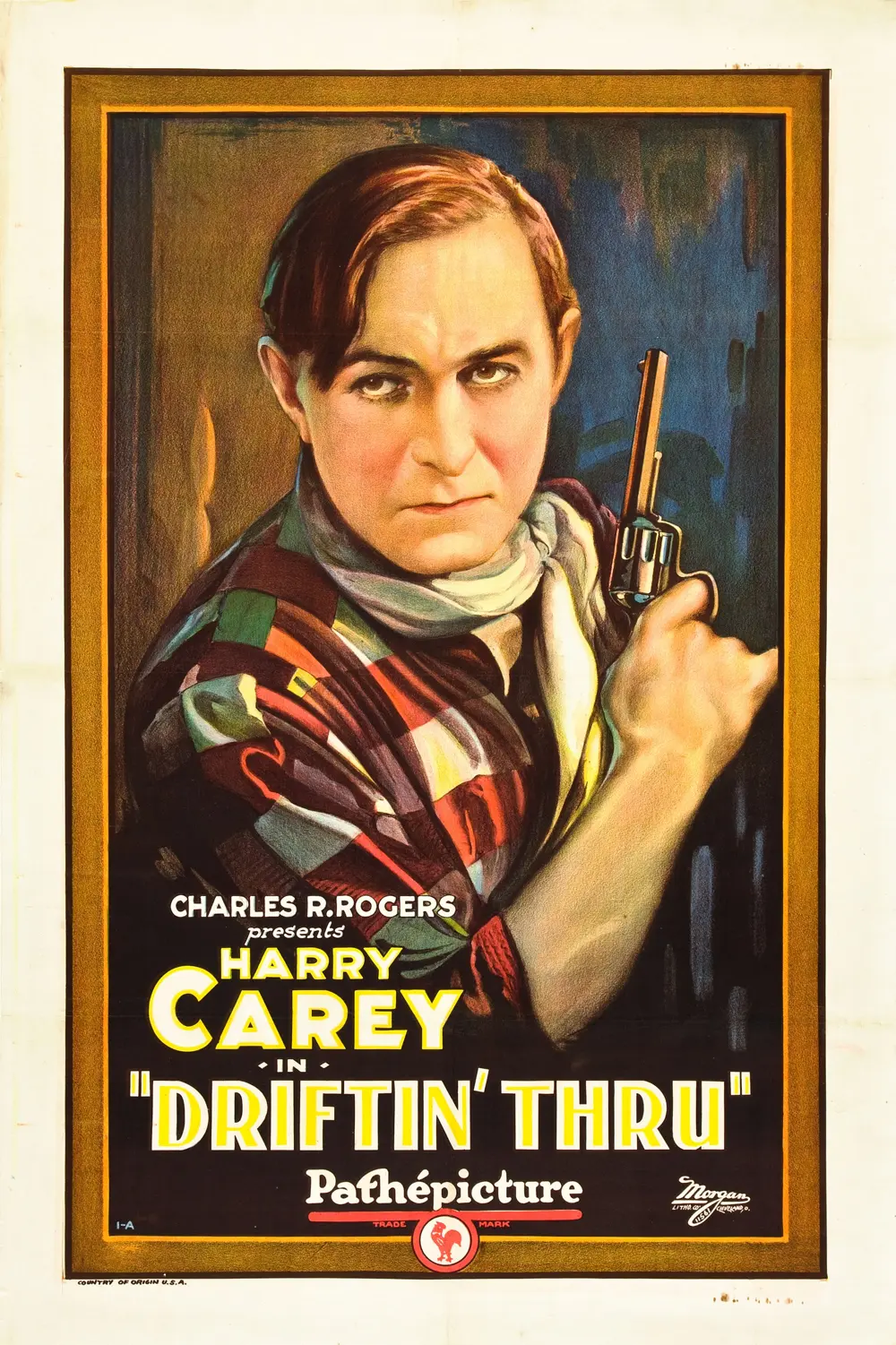
Is Driftin' Thru a silent Western worth your time in the modern era? Short answer: Yes, but only if you appreciate the raw, unpolished DNA of the genre before it became a factory for clean-cut heroes.
This film is for the cinephile who wants to see the bridge between the Victorian melodrama of early film and the rugged individualism that would later define the 1930s. It is NOT for those who require high-speed editing or a clear-cut moral binary; this is a story where the hero starts his journey wanting to kill his best friend—a donkey—out of mercy.
1) This film works because Harry Carey avoids the theatrical overacting common in the 1920s, providing a grounded, empathetic performance that feels surprisingly modern.
2) This film fails because the resolution relies on a sudden, convenient confession that feels more like a script requirement than a natural character evolution.
3) You should watch it if you want to see a Western that prioritizes the bond between man and animal over the typical 'save the damsel' tropes found in films like Tiger Rose.
The opening of Driftin' Thru is deceptively quiet. Unlike the bombastic introductions of contemporary films like The Firing Line, we meet Daniel Brown in a moment of profound sadness. His donkey, Kentuck, is wounded. The stakes aren't global; they are personal. This immediately separates Dan from the 'superhero' cowboys of the era. He isn't looking for a fight; he's looking for bullets to perform a grim duty.
Harry Carey’s face is a landscape of its own. He doesn't need title cards to convey the weight of his decision. When he enters the gambling parlor, the atmosphere shifts from a personal tragedy to a social thriller. The accusation of murder against him feels inevitable—the 'drifter' is always the easiest person to blame. This setup is a classic noir trope dressed in a Stetson.
The relationship between Dan and Kentuck is the emotional spine of the first act. It’s a bold choice. By making the hero's primary motivation the welfare of an animal, the writers (Haven, Dickey, Gates, and Anthony) bypass the usual romantic clichés. It makes Dan’s later transition into a protector of the ranch owner feel earned rather than obligatory. He is a man who protects what is vulnerable.
Let’s talk about the train sequence. In 1926, there were no green screens. When Daniel Brown steals a horse and leaps onto a moving Pullman, that is real physics at work. It’s a sequence that rivals the kinetic energy found in Gridiron Glory, yet it feels more desperate here. The camera placement during the jump emphasizes the danger, capturing the dust and the precariousness of the maneuver.
Once inside the train, the film shifts tone again. The interaction between Dan and the girl (Harriet Hammond) in her compartment is handled with a delicate tension. It’s a moment of forced intimacy that the film uses to humanize Dan further. He isn't just a fugitive; he's a man capable of being helped. This vulnerability is what makes him a compelling lead.
The pacing here is tight. Unlike the wandering narrative of Josselyn's Wife, Driftin' Thru understands that a chase must lead somewhere significant. The train isn't just a getaway vehicle; it's a bridge to the second act’s conspiracy. It’s efficient storytelling that respects the viewer's time.
The second half of the film moves into the territory of land-grab drama. The discovery of gold on the girl's ranch is a standard Western plot point, but the execution here is elevated by the villainy of Joe Walters (Stanton Heck). Walters represents the internal rot of the West—the foreman who betrays his employer. He is a much more grounded threat than the cartoonish villains found in Tut! Tut! King.
The conspiracy between Walters and Stella Dunn (Ruth King) introduces a proto-noir element to the film. Stella, the widow of the man Dan was accused of killing, is the true architect of the chaos. Her character is a sharp contrast to Hammond’s 'girl' archetype. Stella is driven by a cold, calculating greed that makes her the most interesting person on screen. She isn't a victim of circumstances; she is the circumstance.
The prospector character, played by Bert Woodruff, provides the necessary exposition and a bit of levity. His role is functional, helping Dan piece together the value of the ranch. However, the film wisely keeps the focus on the tension between the drifter and the corrupt power structures of the town. It’s a battle of the individual against the institution.
If you are looking for a foundational text of the Western genre, then yes, it is essential. While it lacks the epic scale of later John Ford films, it contains the seeds of everything that would make the genre great. The cinematography by the uncredited cameramen captures the Southwest with a starkness that feels authentic. It doesn't look like a set; it looks like a place where people struggle to survive.
However, if you struggle with the limitations of silent film—the reliance on title cards and the occasionally static staging—you might find it a chore. It doesn't have the experimental flair of something like Les gaz mortels. It is a meat-and-potatoes Western. It’s reliable. It’s sturdy. But it isn't revolutionary.
The visual style of Driftin' Thru is one of its most underrated aspects. The film uses deep focus in several outdoor shots, allowing us to see the vastness of the landscape behind Dan as he flees. This visual choice reinforces his isolation. He is a small man in a very large, uncaring world. This is a stark contrast to the more theatrical, indoor-heavy production of The Ragamuffin.
The use of shadows in the gambling hall scene is also noteworthy. It leans into an aesthetic that would later be called 'noir.' The darkness isn't just a lack of light; it’s a representation of the moral ambiguity of the characters within. When 'Bull' Dunn is murdered, the confusion and the lighting work together to make Dan’s predicament feel claustrophobic, despite the open setting of the town.
One specific scene that stands out is Dan’s refuge with the prospector. The lighting in the shack is warm and flickering, providing a rare moment of safety in a film defined by movement and threat. It’s a brief respite that allows the characters to breathe and the audience to invest in the stakes of the gold discovery. Without this quiet moment, the final confrontation would feel hollow.
Driftin' Thru is a testament to the power of the 'Everyman' hero. Harry Carey doesn't play Daniel Brown as a legend; he plays him as a survivor. The film’s willingness to ground its hero in the mundane tragedy of a sick animal makes the eventual heroics feel more significant. It’s a grounded piece of cinema that avoids the trap of being a mere spectacle.
"It works. But it’s flawed. The film’s heart is found in its first twenty minutes, while its brain is found in the final twenty. The middle is a dusty, entertaining ride that proves why Harry Carey was the king of the silent range."
While the ending is a bit too tidy for my taste—Stella Dunn’s confession is a narrative shortcut that robs the film of a more complex moral resolution—the journey there is well worth the ride. It’s a film that understands the Western isn't just about gunfights; it's about the character of the man holding the gun. Driftin' Thru remains a solid, if slightly conventional, pillar of 1920s cinema.
IMDb —
1920
Community
Log in to comment.