DbcultAccessing Vault...
Cult Review
Senior Film Conservator
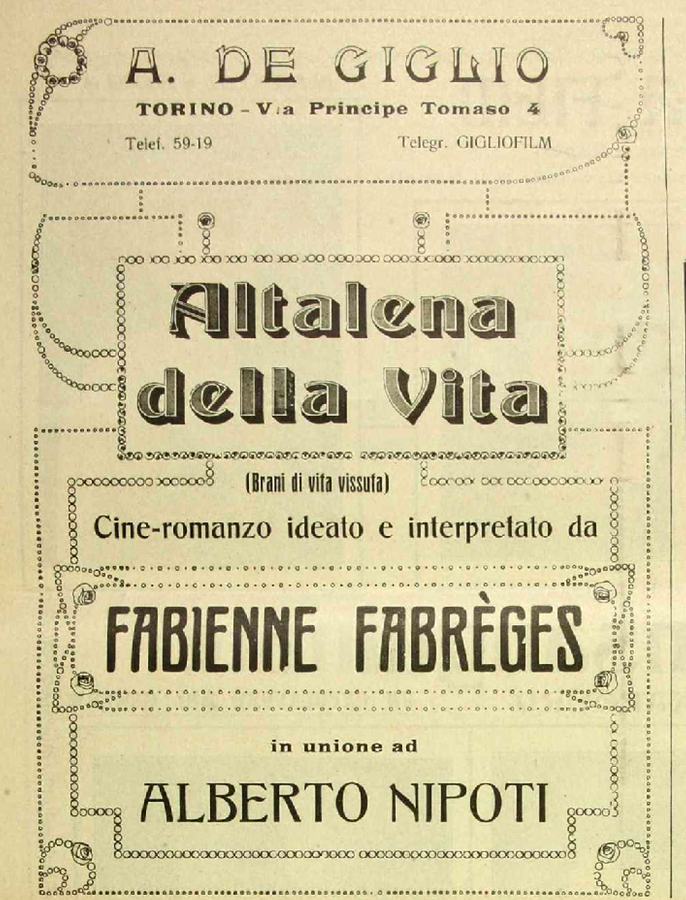
To witness L'altalena della vita is to engage with a cinematic language that has largely been swallowed by the relentless maw of time. This 1918 Italian production, featuring the luminaries Alberto Nepoti and Fabienne Fabrèges, serves not merely as a relic of a bygone era but as a sophisticated anatomical study of human frailty. The title itself—translating to 'The Swing of Life'—is a masterstroke of thematic foreshadowing, suggesting a kinetic energy that is both playful and profoundly dangerous. In the silent era, where the absence of dialogue necessitated a heightened visual vocabulary, this film stands as a testament to the power of the frame to convey the unspoken anxieties of a world teetering on the edge of modernity.
The film’s narrative structure is less a linear progression and more a series of oscillations. It avoids the simplistic moralizing often found in contemporary American imports like The Blindness of Divorce, opting instead for a more European, fatalistic texture. Where Hollywood often sought resolution, the Italian 'divismo' films sought the sublime in suffering. Fabrèges, an actress of immense gravitational pull, navigates this landscape with a face that acts as a canvas for the soul's turbulence. Her performance isn't just acting; it is an exorcism of the Victorian constraints that still lingered in the post-war consciousness.
Fabienne Fabrèges occupies a space in this film that is almost transcendental. In the hierarchy of silent cinema, the 'Diva' was a goddess of the silver screen, and in L'altalena della vita, she utilizes her physical presence to dictate the film's internal rhythm. Every gesture is elongated, every glance heavy with the weight of a thousand unwritten pages. Unlike the more action-oriented heroines seen in The Jungle Trail, Fabrèges finds her power in stillness and the agonizingly slow realization of her character’s social displacement.
Her character’s journey from the gilded salons of the aristocracy to the shadowy periphery of respectability mirrors the tragic trajectories explored in La belle Russe. However, there is a specific Italianate flavor here—a sense of 'verismo' that grounds the melodrama in a tangible reality. The set designs, though theatrical, use the depth of the frame to create a sense of entrapment. The swing, appearing at pivotal moments, is a recurring visual motif that strips away the artifice of adulthood, returning the characters to a state of primal vulnerability. It is a brilliant use of a mundane object to symbolize the precariousness of the human condition.
Opposite Fabrèges, Alberto Nepoti provides a performance of remarkable restraint. In an era often criticized for its histrionics, Nepoti’s portrayal is grounded and deliberate. He represents the rigid societal structures that the 'swing' threatens to disrupt. His interactions with Fabrèges are charged with a tension that is almost palpable, a dance of attraction and repulsion that defines the film's second act. His character arc provides the necessary friction that makes the central conflict so compelling. While Fabrèges is the wind that moves the swing, Nepoti is the iron frame that holds it in place—and eventually, the one that breaks under the strain.
Comparing his performance to the archetypes found in Under False Colors, one notices a distinct lack of artifice. Nepoti isn't playing a hero or a villain; he is playing a man caught in the machinery of tradition. This nuance is what elevates L'altalena della vita above the standard fare of 1918. The chemistry between the leads is not based on romantic tropes but on a shared sense of impending doom, a thematic resonance that echoes through other works of the period like L'ira.
The cinematography of L'altalena della vita is a masterclass in the use of natural light and shadow. The director (whose vision remains remarkably coherent despite the collaborative nature of the era) utilizes the Italian landscape not just as a backdrop, but as a psychological extension of the characters. The outdoor scenes possess an airy, almost impressionistic quality, contrasting sharply with the claustrophobic, heavily shadowed interiors. This visual dichotomy reinforces the 'swing' metaphor—the movement between the light of public life and the darkness of private despair.
In one particularly striking sequence, the camera lingers on a reflection in a pool of water, a technique that predates the more celebrated uses of such imagery in later European cinema. This focus on the ephemeral and the distorted is a far cry from the straightforward narrative delivery of A Tale of the Australian Bush. Here, the image is meant to be felt as much as it is seen. The grain of the film itself seems to pulse with the characters' heartbeats, creating an immersive experience that transcends the technical limitations of 1918 equipment.
When we place L'altalena della vita alongside its contemporaries, its sophistication becomes even more apparent. While Ave Caesar! dealt in historical grandiosity and Trompe-la-Mort focused on the macabre, this film settles into the uncomfortable reality of domestic and social decay. It shares a thematic DNA with Other Men's Wives, yet it approaches the subject of infidelity and social disgrace with a much more poetic lens. The 'swing' is not just a plot device; it is a philosophical statement on the circularity of fate.
Furthermore, the film’s exploration of identity and the masks we wear in polite society invites comparison with Kærlighedsleg. Both films dissect the performative nature of love, but L'altalena della vita adds a layer of existential dread that is uniquely its own. It is a film that understands that the greatest tragedies are not found in grand battles, as one might see in Outwitting the Hun, but in the quiet moment when one realizes that the life they have built is sliding away, inch by agonizing inch.
What truly sets this film apart is its refusal to provide easy catharsis. The melodrama is subverted by a cold, almost clinical observation of its characters' downfalls. This is not the populist entertainment of A Ripping Time or the frontier grit of The Lily of Poverty Flat. Instead, it is a high-art exploration of the psyche. The pacing is deliberate, allowing the audience to sit with the discomfort of the characters' choices. The 'swing' slows down, but it never stops; the momentum of their past actions continues to carry them forward into an uncertain future.
The film also touches upon the themes of isolation and the harshness of the natural world, much like The Place Beyond the Winds, but it transposes these themes into the urban and domestic sphere. The 'wilderness' here is the social landscape of post-war Italy, a place where one's standing is as fragile as a pane of glass. The Sky Hunters (The Sky Hunters) might seek their destiny in the clouds, but the characters of L'altalena della vita are tethered to the earth, forced to endure the repetitive motions of their own errors.
In the final analysis, L'altalena della vita is a haunting reminder of the emotional depth achievable in the infancy of cinema. It is a film that demands much from its viewers—patience, empathy, and a willingness to confront the darker aspects of the human soul—but it rewards them with a visual and emotional experience that is rare in any era. The collaboration between Alberto Nepoti and Fabienne Fabrèges remains one of the high-water marks of silent Italian drama, a perfect alignment of talent, theme, and technique.
As the final frames flicker and fade, the image of the swing remains burned into the mind’s eye. It is a symbol of our own lives—the constant movement, the momentary highs, the inevitable lows, and the terrifying realization that we are often not the ones doing the pushing. This is cinema as philosophy, a moving image that moves the spirit. It is a work that deserves to be rescued from the shadows of the archives and placed back into the light of critical appreciation, for the swing of life never truly ceases to move, and its lessons are as relevant today as they were in 1918.
To watch this film is to step into a dream that is both beautiful and harrowing. It is a journey through the corridors of memory and the alleyways of regret. In the grand lexicon of silent cinema, L'altalena della vita is a profound exclamation point, a work of art that captures the essence of what it means to be human in a world that is constantly shifting beneath our feet. It is, quite simply, essential viewing for anyone who wishes to understand the origins of the cinematic soul.

IMDb 6.9
1921
Community
Log in to comment.