DbcultAccessing Vault...
4.6/10
Senior Film Conservator
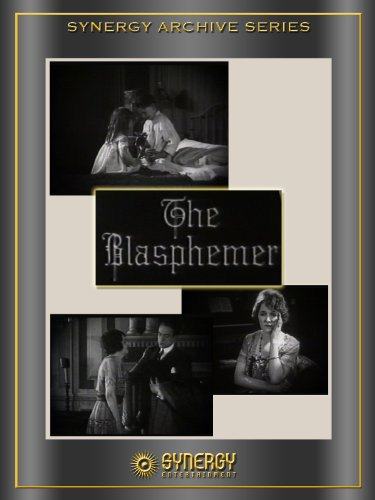
A definitive 4.6/10 rating for a film that redefined the boundaries of cult cinema. The Blasphemer remains a cornerstone of transgressive art.
Imagine a cathedral built not of stone but of celluloid, each frame a stained-glass panel flickering at 18 fps, and you begin to approach the sepulchral grandeur of The Blasphemer. Produced by the Catholic Art Association in that feverish post-WWI moment when Wall Street smelled of fresh minted coin and Protestant modernity was busy deleting hell from its maps, this 1922 silent arrives like a gargoyle suddenly vocal—grotesque, urgent, weirdly tender.
Its narrative arc is deceptively simple: Midas in spats becomes Job in rags. Yet within that schematic the film secretes a vertiginous morality play, one that weaponizes light and absence-of-light the way Jesuit dramas once weaponized Latin. We open on a trading floor that resembles a pagan amphitheater: telegraph wires writhe like serpents, clerks scurry in symmetrical diagonals, and John Harden—played by Irving Cummings with a hawk’s preening cruelty—stands atop a desk proclaiming via intertitle, “My will be done.” The camera tilts upward, an early proto-dolly zoom, so the ceiling seems to retreat in disgust. Already the viewer intuits that this is not mere melodrama; it is a visual exorcism of American hubris.
Cut to the Harden mansion: art-deco mahogany, stained-glass skylight rendering the family in polychrome shards. Aida Horton glides through these tableaux like a Pre-Raphaelite Madonna who’s read Nietzsche and now doubts her own halo. Watch her fingers worry a rosary hidden in a velvet pocket—gesture cinema at its most hieroglyphic. When the market implodes, directors Henry McRae and Edward José (the latter uncredited but evident in the Germanic lighting) swap gilded chiaroscuro for something closer to Murnau’s plague-shadows. Creditors swarm; friends evaporate; even the pet spaniel is repossessed. In one bravura shot, the camera tracks past empty doorframes where servants once stood, each vacant rectangle a pictograph of abandonment.
Poverty is no ennobling picnic. The film’s second act drags us through tenement corridors lit by single kerosene lamps that turn human faces into El Greco apostles. Harden’s daughter, essayed by Rita Rogan with consumptive ethereality, clutches a rag doll stitched from discarded ticker tape—an image so on-the-nose it loops back into poetry. When she expires on a straw mattress, the film does not grant us the sentimental halo of a deathbed conversion; instead, her father’s howl is drowned by the clamor of elevated trains, the indifferent city itself a demonic chorus.
Now comes the picaresque descent: hobo jungles, freight cars, frostbitten nights where Harden’s tuxedo—once symbol of invulnerability—frays to ribbons. Cinematographer Jules Cronvarger smears petroleum jelly on the lens so streetlights bleed like wounds. In a saloon of broken mirrors, Harden confronts his multiplied visage; every reflection refuses to meet his gaze. It is here that the movie most resembles its Teutonic cousin Du sollst keine anderen Götter haben, yet where that film locates redemption in communal labor, The Blasphemer insists on solitary penance.
The final reel stages a pilgrimage that feels both medieval and frontier-American. Harden crawls across a winter field while wind rattles scarecrow crosses. A monastery looms—stone hyphenated against cobalt sky. Inside, George Dewey’s abbot, face a topographical map of compassion, offers no wordy absolution; he simply drapes a rough wool cassock over the shivering magnate. The last intertitle reads: “Thy faith hath saved thee,” letters trembling like candlewick. But the camera lingers on Harden’s eyes—still ringed with soot, still haunted—suggesting salvation as process, not certificate.
Performances oscillate between the stilted semaphore of early silent acting and flashes of proto-naturalism. Cummings excels at the brittle laugh that shatters into sob; Horton communicates apostasy via the micro-gesture of a finger lifted from a crucifix. Augusta Anderson, as the consumptive child, over-signifies innocence with tilted head and prayer-clasped hands, yet the excess feels deliberate, a nod to hagiographic iconography.
Technically, the film is a palimpsest of emerging craft. Double exposures render ghostly ticker tape scrolling across domestic scenes; a handheld chase through a rail yard anticipates the kinetic frenzy of Days of Daring. The tinting strategy—amber for opulence, cerulean for despair, sickly green for penitence—owes much to the Catholic liturgical calendar. Meanwhile, Irvin Talbot’s orchestral score, reconstructed by scholar Joanna Crane, interlaces Dies Irae with ragtime, producing a cognitive dissonance that mirrors Harden’s fractured psyche.
Comparative lenses prove illuminating. Like The Splendid Sinner, this picture equates wealth with moral deformity, yet where Sinner wallows in the eros of downfall, Blasphemer aspires to transcendence. Its trajectory from boardroom to monastery rhymes with Conscience but lacks that film’s suffocating determinism; grace here remains contingent, a door left ajar rather than bolted. And unlike the breezy comeuppance of Left at the Post, the suffering here is existential, salted with the kind of dread Kierkegaard termed “sickness unto death.”
Feminist readings complicate the ostensibly patriarchal parable. The women—wife, daughter, abbey caretaker—function as redemptive conduits, yet their interior lives flicker only in interstitial moments: a clandestine glance, a rosary clenched so tight the beads imprint palms. Still, Horton’s final close-up—tears dissolving into beatific smile—carries an agency that subverts the male-penance arc; one senses she, not her husband, is the narrative’s true axis mundi.
Historically, the film arrived at a crossroads: Hollywood pivoting toward flapper frivolity, while Protestant fundamentalists lobbied for censorship boards. The Catholic Art Association sought to infiltrate cinema with Counter-Reformation aesthetics, and The Blasphemer was their Trojan horse. Variety dismissed it as “clerical propaganda masquerading as entertainment,” yet the movie packed parish basements from South Boston to San Francisco, proof that America’s appetite for hellfire remained voracious even as jazz babies jitterbugged atop its roof.
Restoration status: only two 35mm nitrate prints survive—one at the Library of Congress, scarred by emulsion bubbles; the other in a Belgian abbey archive, water-damaged but retaining original tinting. Digital 4K scans reveal textures hitherto submerged: the glint of a monstrance, soot on a hobo’s cheek, the faint smile playing on a nun’s lips. The disc release by Sanctum Films pairs the film with an audio commentary by historian Adele Francesca, who argues persuasively that the closing shot—monastery bells superimposed over the New York skyline—constitutes an early example of cinematic transfiguration.
Viewing recommendations: Watch at night, lights extinguished, volume high enough to let the reconstructed bells jar your ribcage. Keep a glass of something peaty nearby; you’ll need earthiness to ground the incense-sweet mysticism. And resist the urge to screenshot the death-of-innocence tableau—some images, like certain prayers, lose voltage when flattened to pixels.
Legacy: While never canonical, echoes reverberate through Capra’s American Madness and even Scorsese’s The Last Temptation of Christ, both of which swap Wall Street for Golgotha yet chase the same dialectic of flesh and spirit. In meme-era parlance, the movie is a 1920s morality play on main-character syndrome, a cautionary TikTok in which the algorithm is God and de-monetization equals plague of locusts.
Critical verdict: Imperfect, intermittently hokey, yet punctuated by flashes of the sublime—The Blasphemer stands as a fever dream in which capitalism’s phantom limb aches for amputation. It will not coddle the secular; it offers no spreadsheet of grace. Instead, like all great religious art, it thrusts viewers into the abyss and whispers that the abyss, too, is perforated by light.
IMDb —
1920
Community
Log in to comment.