DbcultAccessing Vault...
Cult Review
Senior Film Conservator
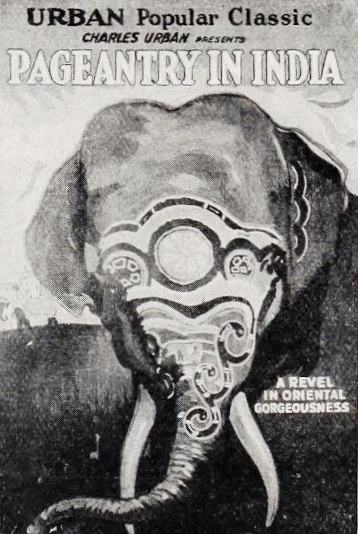
The early 20th century was a period of frantic curiosity, a time when the motion picture camera was less a tool for storytelling and more a passport to the inaccessible corners of the globe. In Pageantry in India, we find a quintessential example of the 'travelogue'—a genre that attempted to condense the vast, incomprehensible complexity of the Indian subcontinent into a few reels of flickering silver halide. Unlike the staged dramas of the era, such as the melodramatic tensions found in The Despoiler, this documentary short relies on the inherent drama of reality, providing a window into a world that, for contemporary audiences, was as distant as the lunar surface.
The film opens with a lingering, almost reverent gaze at the monumental architecture that litters the Indian landscape. There is a specific focus on the Taj Mahal, but not as the postcard cliché it has become today. In Pageantry in India, the ivory-white marble is captured with a granularity that highlights its age and its defiance of time. The cinematography treats these structures not merely as backdrops, but as silent protagonists. Much like the atmospheric dread that permeates the sets of The Invisible Web, the shadows cast by these ancient domes evoke a sense of deep, historical weight.
We see the intricate carvings of Hindu temples, where the stone seems to vibrate with the sheer density of the deities depicted. The filmmaker’s choice to frame these landmarks against the vast, open sky creates a sense of scale that was rarely achieved in the studio-bound productions of the 1920s. While films like Bungalow Troubles dealt with the domestic anxieties of the West, Pageantry in India expands the cinematic horizon, forcing the viewer to confront a grandeur that predates the very concept of the modern nation-state.
Where the film truly excels—and where it differentiates itself from the dry educational shorts of its time—is in its depiction of religious life. The camera captures the kinetic energy of festivals with a fascination that borders on the voyeuristic. We see the smoke of incense, the vibrant colors of the powders thrown during celebrations (though rendered in monochrome, the intensity is palpable), and the rhythmic movements of the devotees. There is a sequence involving a religious procession that rivals the choreographed chaos of a circus film like Hey, Rube!, yet it carries a spiritual gravity that no fictional narrative could replicate.
The film documents the bathing rituals in the Ganges with a stark, unblinking honesty. Here, the water is not just a geographic feature; it is a spiritual conduit. The juxtaposition of the sacred and the mundane—people washing clothes alongside those engaged in deep prayer—offers a nuanced view of Indian life that avoids the easy exoticism often found in Western accounts. It reminds one of the moral struggles depicted in Reclaimed: The Struggle for a Soul Between Love and Hate, though here the struggle is not between archetypal virtues, but between the physical world and the metaphysical aspirations of a people.
One cannot review Pageantry in India without acknowledging the lens through which it was shot. As a product of the early 20th century, the film is inevitably filtered through a colonial perspective. The title itself, 'Pageantry,' suggests a spectacle put on for an audience, rather than a lived reality. However, the sheer vibrancy of the subjects often breaks through this restrictive framing. The individuals captured on screen—the merchants, the ascetics, the children—often look directly into the camera with a defiance or a curiosity that subverts the role of the passive 'subject.'
In many ways, the film acts as a counterpoint to the escapist fantasies of the era. While audiences were flocking to see the high-speed thrills of Fast and Furious or the domestic comedies like Mixed Twixt Wives, Pageantry in India offered a confrontation with the 'Other' that was both beautiful and unsettling. It shares a certain thematic DNA with Does the Jazz Lead to Destruction? in its attempt to grapple with the changing cultural landscape, though its focus is on the preservation of the old rather than the fear of the new.
Comparing this documentary to the narrative features of its time reveals a fascinating divergence in the use of space. In a film like The Zero Hour, space is used to build suspense and isolate characters. In Pageantry in India, space is communal and overflowing. The markets of Delhi and Bombay are depicted as dense thickets of human interaction, where the camera is constantly jostled by the flow of life. This raw, unpolished aesthetic provides a textural richness that is often missing from the highly controlled environments of films like A Woman's Woman.
Furthermore, the naturalism of the Indian wilderness—captured in brief but stunning sequences of the countryside—provides a stark contrast to the stylized 'wilds' seen in Wild Sumac or the rugged terrains of Burning Daylight. There is no attempt here to romanticize the land as a frontier to be conquered; instead, it is presented as a living, breathing entity that dictates the terms of human existence. The presence of wildlife, from the ubiquitous cattle to the occasional elephant, adds a layer of animism that echoes the haunting atmosphere of The Gray Wolf's Ghost, yet remains grounded in the physical reality of the subcontinent.
Ultimately, Pageantry in India is a film that demands to be watched with an awareness of its historical context. It is a piece of archival gold that preserves a version of India that has since been layered over by decades of industrialization and political change. While it lacks the absurdist humor of The Ringtailed Rhinoceros or the rugged individualism of The Boss of the Rancho, it possesses a quiet, observational power that is arguably more enduring.
The sea blue (#0E7490) of the imagined horizons, the dark orange (#C2410C) of the setting sun over the Thar Desert, and the yellow (#EAB308) of the parched earth are all present in the mind's eye of the viewer, even if the film itself remains in black and white. It is a testament to the power of the image that, a century later, we can still feel the heat of the Indian sun and the press of the crowd through these flickering frames. This is not just a film about India; it is a film about the human impulse to see, to document, and to remember. It is a vital chapter in the history of cinema, reminding us that before the camera was a storyteller, it was a witness.
In the final analysis, Pageantry in India stands as a monumental achievement in early documentary filmmaking. It invites us to look beyond the surface of the 'spectacle' and find the shared human experience that lies beneath the rituals and the stone. It is a journey that, despite its age, feels remarkably immediate and profoundly necessary.

IMDb 6.8
1932
Community
Log in to comment.