DbcultAccessing Vault...
6.8/10
Senior Film Conservator
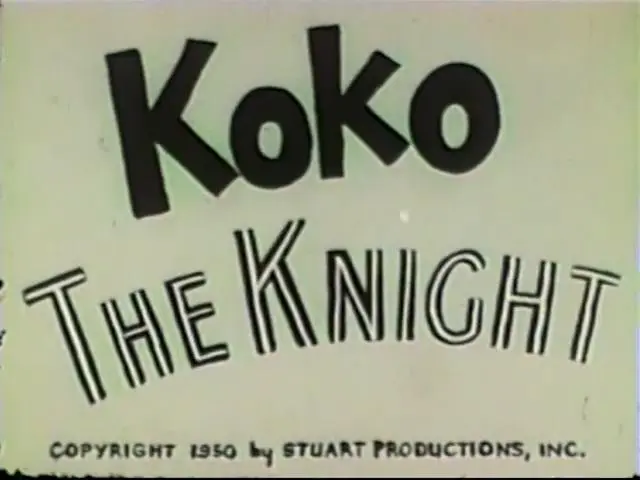
A definitive 6.8/10 rating for a film that redefined the boundaries of cult cinema. KoKo the Knight remains a cornerstone of transgressive art.
Short answer: Yes, but only if you appreciate the raw, mechanical origins of animation. This film is for viewers who find beauty in the intersection of live-action and ink; it is not for those who require high-definition polish or complex narrative arcs.
Max Fleischer’s 1925 short, KoKo the Knight, remains a fascinating artifact of a time when the rules of the moving image were still being written in wet ink. It is a film that demands you look past its age to see the sheer audacity of its creator. It works. But it’s flawed.
1) This film works because the physical interaction between Max Fleischer’s live-action hands and the animated KoKo creates a unique sense of 'tangible' magic.
2) This film fails because the plot relies on a rescue trope that was already becoming stale in the mid-1920s.
3) You should watch it if you want to see the literal birth of meta-fiction in the animated medium.
In the world of KoKo, Max Fleischer isn't just the director; he is the architect of reality. The opening sequence, where Max draws the stove and forces KoKo into it, sets a tone of playful sadism. It’s an unconventional observation, but Max acts more like a puppeteer testing the limits of his puppet than a storyteller. Unlike the later, more sanitized Disney works like The Little Boy Scout, Fleischer’s work feels gritty and industrial.
The way the ink flows from the pen to become a solid object—the stove—is a marvel of early rotoscoping and hand-drawn ingenuity. There is a specific moment where KoKo tries to lift his leg while encased in the heavy iron. The timing of the animation captures the weight of the metal perfectly. It’s a masterclass in 'weight' that many modern CGI films fail to replicate. The stove doesn't just look heavy; it feels heavy.
Fleischer’s directing style is rooted in the Vaudeville tradition. The pacing is frantic, and the gags are built on physical impossibilities. When KoKo enters the animated medieval world, the transition is seamless but jarring in its tone. The cinematography—if we can call it that for a composite film—relies on high-contrast lighting in the live-action segments that makes the black ink of KoKo pop against the white paper.
Compare this to the atmospheric dread of The Gorgona. While that film uses shadows to create horror, Fleischer uses the absence of color to create a character. KoKo is a void in the shape of a clown. He is an absence that moves. This creates a surrealist tone that sits somewhere between a fever dream and a Sunday comic strip. The pacing never lets up, which is necessary for a short of this length, but it does sacrifice character development for the sake of the 'stove' gag.
While there are no 'actors' in the traditional sense within the animation, the use of the Rotoscope—a device Fleischer patented—means that KoKo’s movements are based on real human footage. This gives the clown a fluid, almost eerie realism. When KoKo confronts the villainous knave, his gestures are distinctly human, contrasting sharply with the absurdly drawn villain. This creates a visual tension that keeps the viewer engaged.
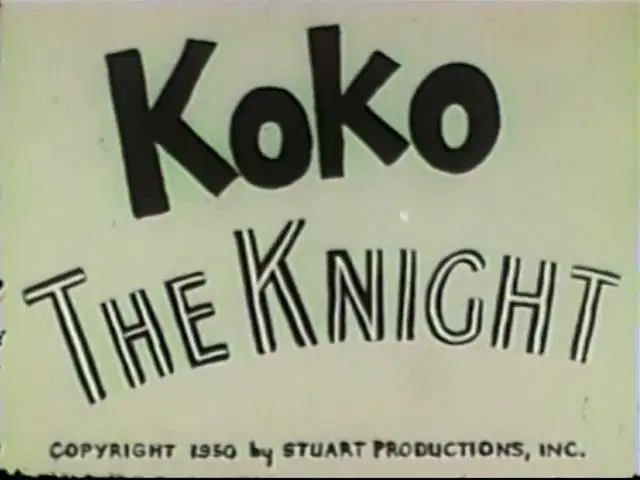
Max Fleischer’s own performance in the live-action segments is understated. He plays the 'straight man' to his own creation. His calm demeanor while KoKo is panicking inside a stove is the height of dry humor. It’s a dynamic we see repeated in later decades, but here, in 1925, it feels fresh and experimental. It is far more grounded than the theatricality found in Satan's Rhapsody, opting for a blue-collar, workshop aesthetic.
Yes, KoKo the Knight is worth watching if you have an interest in the history of cinema and animation. It is a short, seven-minute burst of creativity that showcases the early potential of the medium. It provides a direct link to the past and shows how modern animation techniques were pioneered with nothing more than a pen and a camera. If you only watch modern 3D films, this will be a refreshing, albeit primitive, change of pace.
The conflict in the film is simple. The villain is a caricature of medieval chivalry, and the maiden is a standard damsel. However, Fleischer subverts this by making the rescue attempt entirely about the armor. The stove isn't just a costume; it’s a character. It leaks soot, it gets hot, and it’s impossible to move in. The 'acting' of the stove—the way it clanks and rattles—is actually the highlight of the second act.
In films like The Lost City, the setting is the star. In KoKo the Knight, the prop is the star. This is a bold choice. Most directors would focus on the hero's face, but Fleischer focuses on the hero's struggle with his equipment. It’s a blue-collar approach to heroism. KoKo isn't a brave knight; he’s a worker trying to do a job in faulty gear.
The tone of the film is chaotic. It feels like Fleischer was making it up as he went along, which gives it an energy that more structured films like Nathan der Weise lack. There is no moral lesson here. There is no grand philosophical statement. It is simply about a clown in a stove. This lack of pretension is its greatest strength.
The pacing is rhythmic. We start slow in the studio, build speed as the armor is created, and hit a crescendo during the battle with the knave. The ending, where KoKo returns to the inkwell, provides a satisfying, if predictable, loop. It’s a clean structure that works for the format. It doesn't overstay its welcome. It hits the beat and exits.
Most critics look at KoKo and see a precursor to Mickey Mouse. I disagree. KoKo is a precursor to the anarchic spirit of Bugs Bunny or even the meta-humor of Deadpool. He knows he’s a drawing. He interacts with his creator. He suffers for our amusement. There is a dark, cynical edge to Fleischer’s work that Disney never touched. The stove armor is a torture device as much as it is a suit of mail. That edge is what makes it watchable 100 years later.
"KoKo doesn't just inhabit the screen; he fights against the medium itself, struggling with the very ink he is made of."
KoKo the Knight is a essential viewing for anyone who wants to understand where modern visual effects began. While its story is a relic of a bygone era, its technical execution and sense of humor remain surprisingly intact. It’s a testament to Max Fleischer’s vision that a clown in a stove can still elicit a smile in the age of digital gods. It’s simple. It’s effective. It’s historical. Watch it.
IMDb 5.9
1933
Community
Log in to comment.