DbcultAccessing Vault...
Cult Review
Senior Film Conservator

In the annals of early cinema, few narratives capture the profound emotional arc of prejudice yielding to pure, unadulterated innocence quite like "The Little Duchess." This silent-era gem, penned by the insightful Julia Burnham, transcends its historical context to deliver a timeless fable about the corrosive nature of bitterness and the redemptive power of a child's love. It's more than just a film; it's a poignant exploration of fractured families, societal divides, and the unexpected places where truth and healing can be found.
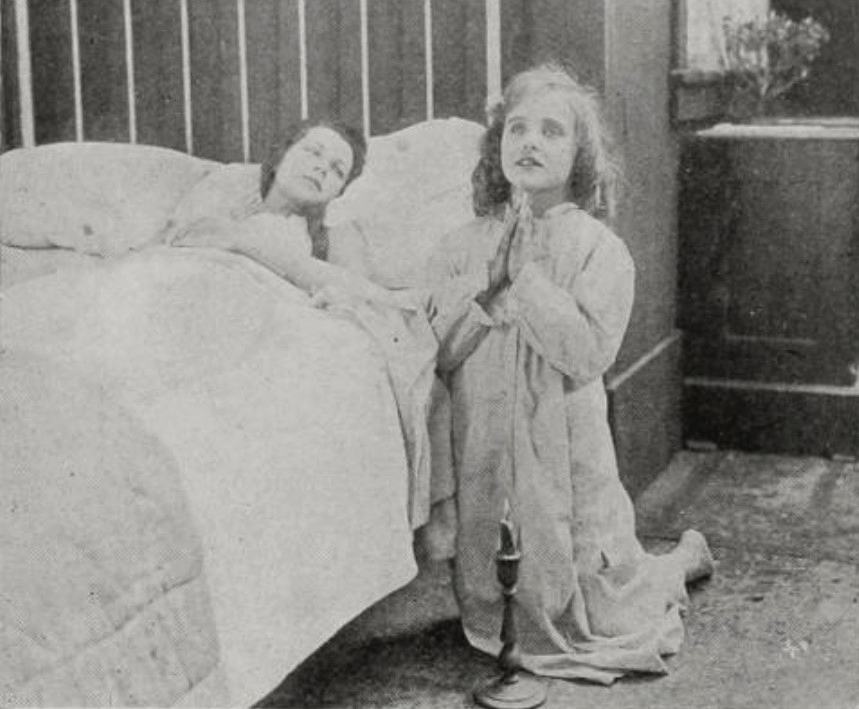
The story commences with a stark portrayal of desperation: Evelyn Carmichael, a woman facing her imminent demise in the squalid tenements, pens a desperate plea to her estranged father-in-law, Lord Carmichael. This isn't just a letter; it's a final, fervent prayer for her granddaughter, Geraldine, affectionately known as Jerry, to escape the crushing grip of poverty. Lord Carmichael, portrayed with a compelling rigidity by J. Gunnis Davis, embodies the quintessential curmudgeon, a man whose soul has been calcified by a past betrayal. His wife's disappearance years prior, seemingly with his own brother, has festered into a virulent misogyny, poisoning his perception of all women. This deep-seated prejudice informs his every action, setting the stage for a dramatic clash of wills and worlds.
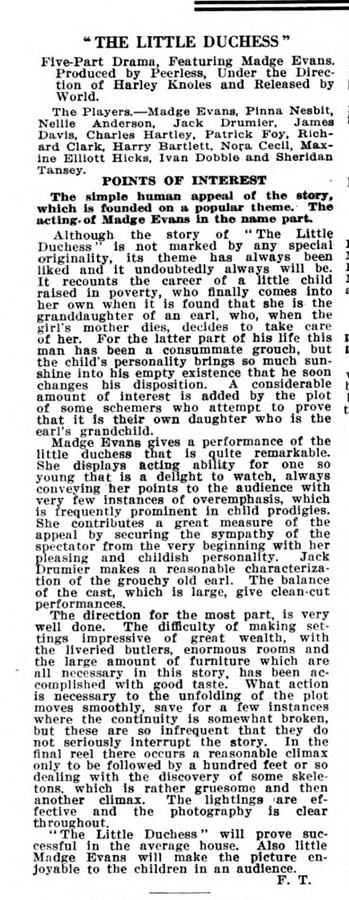
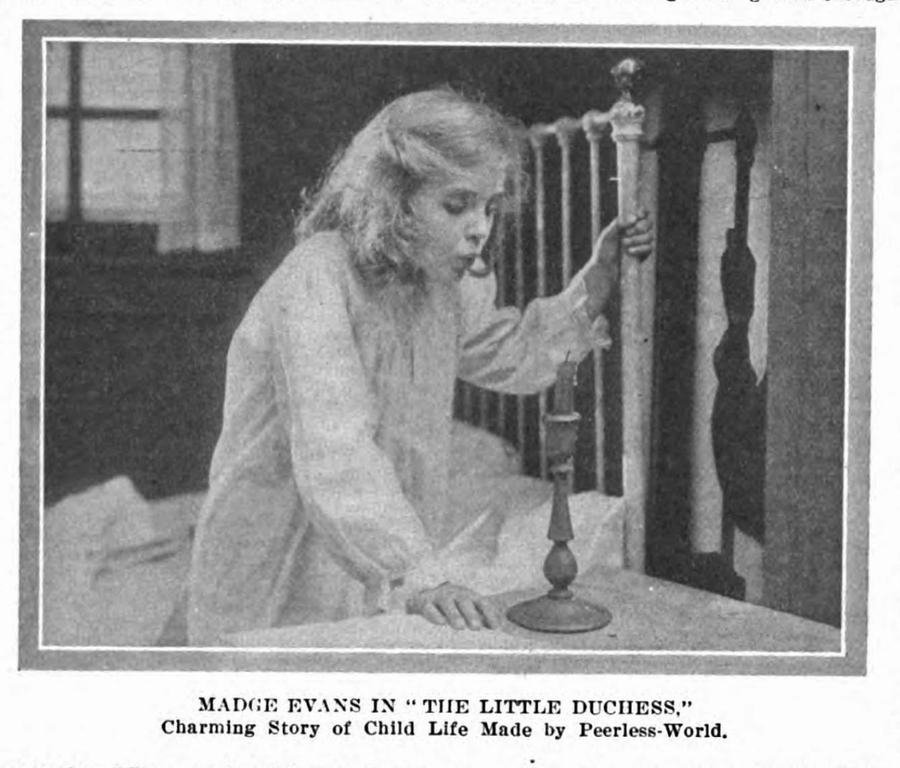
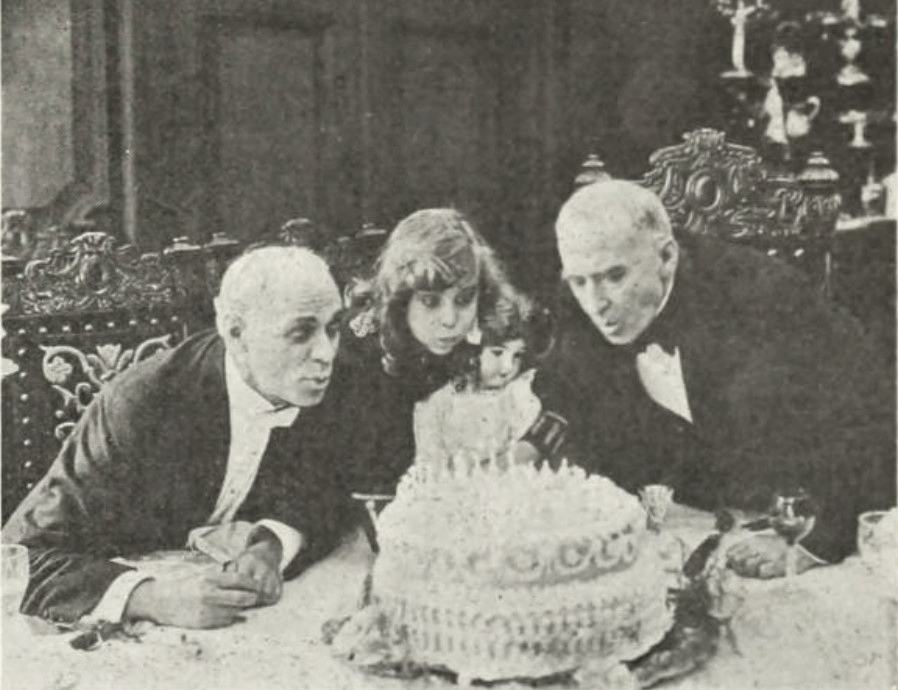
His expectation of a male heir, a continuation of his lineage untainted by the perceived weakness of the feminine, makes Jerry's arrival a particularly jarring revelation. The scene of his initial encounter with the young girl, masterfully conveyed through subtle expressions and body language characteristic of the silent film era, is a study in controlled repulsion. Yet, the narrative's genius lies in its gentle subversion. Jerry, brought to life with an enchanting blend of vulnerability and spirited resilience by Madge Evans, is no ordinary child. Her sweetness, an almost palpable quality, begins to chip away at the Lord's formidable emotional fortress. It’s a delicate, gradual process, beautifully illustrated as his disdain transforms into grudging acceptance, then into a burgeoning affection that surprises even himself. This transformation is the beating heart of the film, a testament to the idea that even the most hardened hearts can be softened by genuine affection. It’s a theme that resonates with other tales of innocence breaking through cynicism, much like the quiet charm of a child protagonist in a film such as The Little Pirate, where youthful spirit confronts a jaded world.
Just as Lord Carmichael begins to open his heart, the fragile peace of Carnimore Castle is disrupted by a cynical attempt at deception. Jim Dawson, a neighbor from Jerry's former life in the tenements, arrives with his own daughter, Sophia, attempting to pass her off as the true Geraldine. This subplot serves not merely as a narrative complication but as a crucial crucible for the Lord's evolving character. His initial woman-hating tendencies might have once made him susceptible to such a scheme, but Jerry's genuine charm has already forged a protective instinct within him. The swiftness with which he exposes Dawson and Sophia, followed by their unceremonious expulsion, underscores the profound shift in his loyalties and affections. It’s a moment of satisfying justice, solidifying his commitment to the true Duchess, and showcasing his newfound ability to discern genuine goodness from manipulative artifice. The cast, including Nora Cecil, Pinna Nesbit, Patrick Foy, and Maxine Elliott Hicks, skillfully navigates these character dynamics, contributing to the rich tapestry of the castle's inhabitants.
Beyond the grand halls and the Lord's personal struggles, Jerry's influence extends throughout the castle. She doesn't just win over her grandfather; she captivates the entire household. The servants, initially perhaps wary of a child from the slums, quickly fall under her spell. Her playful spirit, particularly evident as she drills them into a charmingly disorganized 'play army,' highlights her innate leadership and infectious joy. This imagery of a child bringing order and delight to a stately, perhaps somber, household is a powerful metaphor for her transformative impact. It’s a delightful parallel to the way children often act as catalysts for change, a theme explored in many narratives where a youthful spirit challenges established norms, much like the central figure in The Cub.
The true climax of "The Little Duchess" unfolds within the forgotten confines of Carnimore Castle itself. During one of her playful excursions, Jerry and her makeshift army venture into an unused, long-shuttered tower. This architectural relic, steeped in history and mystery, becomes the stage for the film's most profound revelation. Inside a locked room, they discover a chilling tableau: two skeletons, silent witnesses to a long-forgotten tragedy. The accompanying note, a spectral message from the past, unravels the central mystery that has haunted Lord Carmichael for years. It reveals that his wife and brother were not betrayers, but victims, accidentally trapped within the tower when a spring lock sprung, sealing their fate. This discovery is a seismic event, shattering the bedrock of Lord Carmichael's bitterness and misogyny. The entire edifice of his prejudice crumbles as he realizes the devastating truth: his wife loved him, and her disappearance was a cruel twist of fate, not a deliberate act of infidelity. The visual storytelling here, relying on the power of suggestion and the actors' reactions, is incredibly effective, leveraging the strengths of silent cinema to convey deep emotional turmoil and subsequent catharsis.
The symbolic weight of this scene cannot be overstated. The forgotten tower, once a repository of a painful lie, becomes the site of liberation. The skeletons, grim reminders of death, paradoxically bring life back to Lord Carmichael's spirit. His faith in women, once utterly destroyed, is painstakingly restored. It's a powerful moment of emotional reckoning, a testament to the film's ability to tackle complex themes of forgiveness, truth, and the enduring power of love, even across the chasm of time and misunderstanding. This narrative device, where a hidden secret dramatically alters the protagonist's worldview, is a classic trope, often seen in mysteries and dramas, where revelations serve as pivotal turning points.
The success of "The Little Duchess" hinges significantly on its cast, particularly the remarkable Madge Evans as Jerry. Her ability to convey a wide range of emotions—from vulnerability in the slums to playful assertiveness in the castle—without uttering a single word is truly captivating. She embodies the film's central message: that innocence can be a profound force for change. J. Gunnis Davis, as Lord Carmichael, delivers a performance of nuanced transformation. His initial portrayal of a gruff, embittered aristocrat slowly gives way to a man softened by affection and then utterly devastated and ultimately redeemed by truth. The evolution is subtle yet impactful, a masterclass in silent-era acting.
Julia Burnham's screenplay is a marvel of concise yet emotionally rich storytelling. She constructs a narrative that, despite its relatively straightforward plot, delves into profound psychological and social territories. The pacing is deliberate, allowing the audience to absorb the emotional weight of each scene, from Jerry's initial arrival to the dramatic discovery in the tower. The film understands the power of visual metaphor and character development, building its emotional payoff with careful precision. The supporting cast, including Harry Bartlett, Charles Hartley, Richard Clarke, Jack Drumier, James Sheridan, and Nellie Anderson, provides a solid foundation, creating a believable world within the confines of Carnimore Castle and its surrounding society. Each character, however minor, contributes to the overall atmosphere and the progression of the central drama.
"The Little Duchess" stands as a testament to the enduring power of early cinema to tell complex stories with clarity and emotional depth. It's a film that, despite its age, feels remarkably contemporary in its exploration of themes like prejudice, social class, and the transformative power of empathy. It reminds us that appearances can be deceiving, and that true character often reveals itself not in grand pronouncements, but in quiet acts of kindness and the willingness to confront painful truths. The film's resolution, with Lord Carmichael making Jerry the rightful mistress of the castle, is not merely a happy ending; it's a symbolic restoration of balance, a triumph of love and truth over bitterness and misunderstanding. It's a narrative that, in its simplicity, speaks volumes about the human condition.
Comparing it to other films of its era, one might draw parallels with narratives where a central mystery unravels to reveal a hidden truth, much like the suspenseful revelations in The Riddle of the Tin Soldier, or stories where a protagonist's identity is questioned or challenged, reminiscent of the dramatic tension in The Stubbornness of Geraldine. However, "The Little Duchess" distinguishes itself through its unique blend of poignant drama and heartwarming resolution, anchored by the magnetic performance of its young star. It’s a narrative that champions the inherent goodness in humanity, even when obscured by years of pain and misconception. The film serves as a powerful reminder of the importance of challenging one's own biases and allowing the light of truth to illuminate the darkest corners of the heart.
Ultimately, "The Little Duchess" is more than a historical artifact; it's a vibrant, emotionally resonant piece of filmmaking that continues to charm and move audiences. It’s a narrative that champions the inherent goodness in humanity, even when obscured by years of pain and misconception. The film serves as a powerful reminder of the importance of challenging one's own biases and allowing the light of truth to illuminate the darkest corners of the heart. For those who appreciate the artistry and profound storytelling of the silent era, this film is an absolute must-see, a timeless exploration of how a small, innocent hand can mend a broken world.
A cinematic gem, rich in emotion and timeless lessons.
IMDb —
1916
Community
Log in to comment.