DbcultAccessing Vault...
Cult Review
Senior Film Conservator
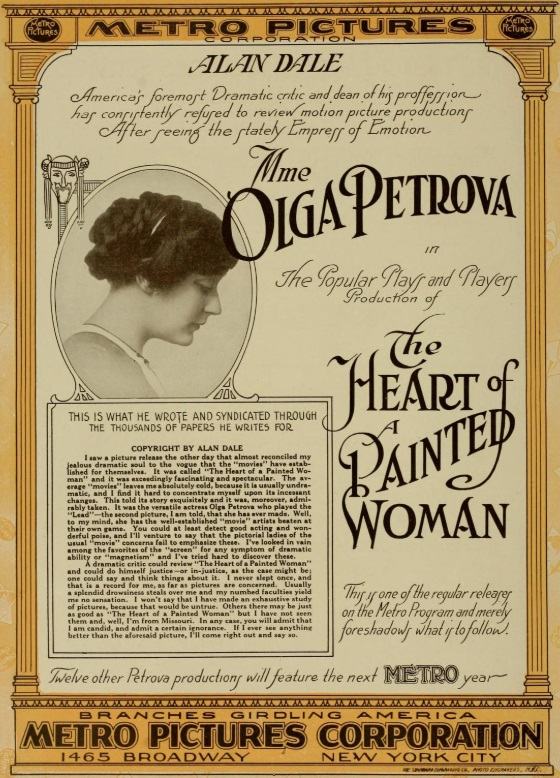
Manhattan’s electric glow has seldom looked as predatory as in The Heart of a Painted Woman, a 1922 silent that pirouettes on the knife-edge between art and exploitation. Director Aaron Hoffman—better known for punchy two-reelers—here orchestrates a feverish valentine to bruised idealism, letting every intertitle land like a slap scented with violet water. The plot, deceptively familiar, becomes a prism: hope refracted into humiliation, then into a half-reluctant transcendence.
Evelyn Brent’s Martha Redmond enters in a blur of coal-dust and church hymns, her face a living chiaroscuro that anticipates the later, more celebrated tragedienne close-ups in The Cheat. Brent carries the weight of every small-town girl who ever stepped off the 11-p.m. express clutching a battered libretto, and the camera loves her for it—loves the tremor in her gloved fingers when she signs the artist’s oversized ledger, loves the way her pupils dilate the first time she sees her own likeness under gallery gas-lights.
Art, the film whispers, is never a mirror; it is a second skin stitched from the sitter’s breath and the painter’s ego.
Mahlon Hamilton’s Julian Roderick—the acclaimed portraitist—oozes the louche entitlement of a man who mistakes possession for vision. His studio, a cavern of half-finished canvases, feels like a mausoleum dedicated to former muses. Note the detail in the set dressing: a cracked Oriental vase dripping dried peonies, a gramophone frozen mid-aria. These fragments suggest entire novels of discarded affection, a mise-en-scène sophistication one rarely encounters outside of the contemporaneous Fantômas serials.
When Julian abruptly jilts Martha for a banker’s pearl-bedecked daughter, the film pivots from backstage melodrama to something far more caustic. Hoffman’s montage—jagged, almost Soviet—shows Martha’s descent via a swirl of champagne flutes, pawing hands, and newspaper gossip columns. It’s a visual grammar that wouldn’t look out of place in Dope or in the narcotic urban labyrinths of The Tangle.
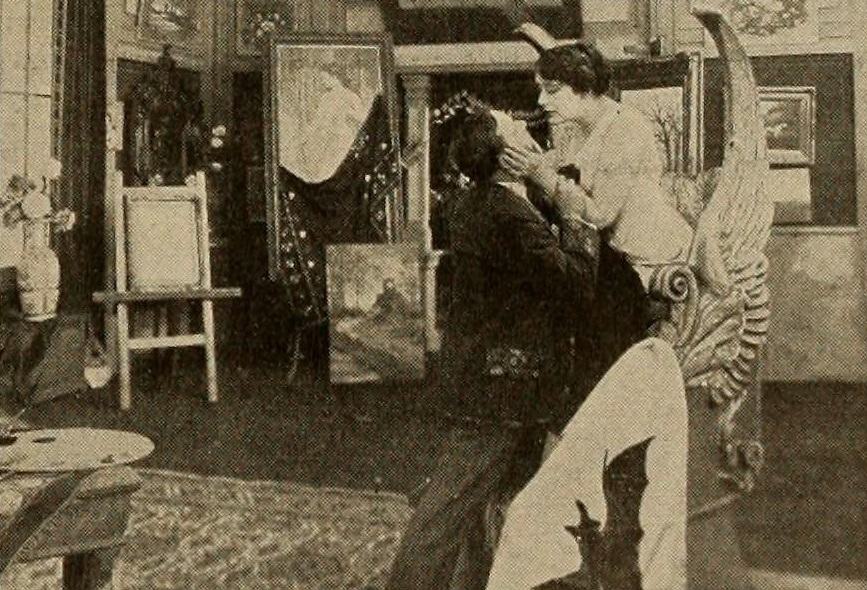
Brent’s acting style is a masterclass in micro-gesture: the fractional tightening of her jaw when a paramour calls her “kid,” the way her shoulders collapse inward the moment a door closes behind her. She never begs the lens for sympathy; rather, she invites the viewer to decode the hieroglyphs of fatigue beneath her kohl. That restraint makes her climactic confrontation with Barrett—played by Fraunie Fraunholz—feel seismic. Fraunholz, often dismissed as a pretty juvenile, here channels a wounded swagger reminiscent of a young Orson Welles minus the baritone. His Barrett is a man who has read too much Byron and inherited too much money, a combustible combo that keeps both Martha and the audience guessing.
James O’Neill cameos as Martha’s fire-and-brimstone father in a flashback framed like a daguerreotype: sepia tint, edges flickering as if lit by candle. The sequence lasts perhaps ninety seconds, yet it anchors the entire narrative in a moral quicksand the heroine never fully escapes. One thinks of the prairie puritanism in A Child of the Prairie, though Hoffman refuses the comforts of redemption those films peddle.
Cinematographer Alfred Ortlieb (unjustly forgotten today) bathes the early reels in a honeyed glow, then gradually leeches saturation until the final reel feels almost monochrome. The transition operates subliminally: you sense rather than see Martha’s world drain of warmth. Spotlights pick out the orange ember of her cigarette against midnight rooftops, a recurring visual motif that foreshadows the fatalistic fireworks in Ein Ehrenwort.
The titular “painted woman” is, of course, both canvas and commodity. Each time another man peels off her lace, you feel a layer of pigment flake away. By the time Barrett offers her a sapphire bracelet, her wrist looks skeletal, as though the very bones have been auctioned. It’s a harrowing visual metaphor for transactional desire, one that prefigures the more overt social critique in The Mail Order Wife nearly a decade later.
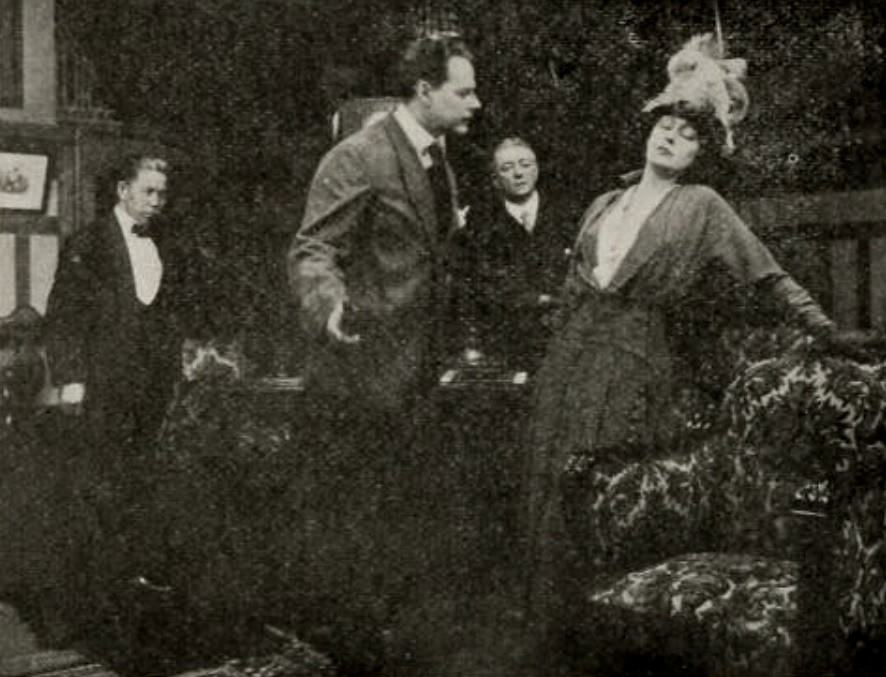
Surviving prints were once confined to European archives, battered by mildew and projection scratches. The 2023 4K restoration by Eclipse Silent Heritage (funded partly via Kickstarter) reinstates the original tints—amber for interiors, cerulean for exteriors, sea-blue for the dream-like Central Park sequences where Martha imagines reclaiming her voice. Composer Claire van der Veer penned a chamber-score for strings, piano, and muted trumpet that interpolates Gilded-Age parlour tunes without slipping into pastiche. The result: an aural counterpoint that breathes under the images like a cautious lover.
Listen for the trumpet motif that surfaces whenever Martha studies her own portrait: a three-note sigh emblematic of stalled aspiration. Van der Veer admits she lifted the interval from an obscure Shaker hymn, a subtle nod to Martha’s rust-belt roots. Such detail typifies the restoration’s scholarly rigor, matching the textual fidelity boasted by A Study in Scarlet’s recent 2K cleanup.
Hoffman’s screenplay, adapted from a scandalous novella by Lillian Lorrimer, weaponizes the male gaze only to indict it. In a bravura sequence, the camera adopts the POV of a gallery patron circling Martha’s semi-nude portrait; each circular track widens to include more leering spectators until the lens itself seems to blush. The shot lasts forty seconds but scalds the retina far longer. It’s a proto-feminist maneuver that rivals the interrogation of voyeurism in Nell Gwynne, albeit without Restoration comedy’s protective bawdiness.
Yet the film never devolves into didacticism. Martha’s agency remains prismatic: she leverages beauty to survive, but each transaction corrodes the melody in her throat. When she finally hums a lullaby to Barrett’s feverish nephew (a maudlin subplot that miraculously works), the sound emerges cracked, ghostly, as though squeezed through broken reeds. That aural frailty visualizes her existential ledger: talent depleted, identity atomized.
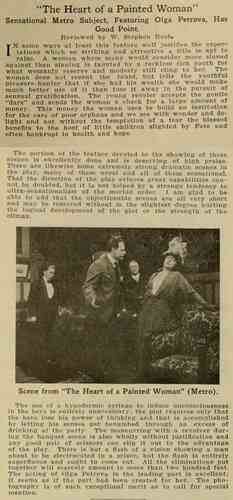
Cinephiles will taste echoes of East Lynne’s fallen-mother hysterics, but Hoffman resists the moral absolutes of Victorian adaptation. Likewise, the urban squalor glimpsed in Martha’s boarding-house corridor nods toward the alleyways of The Crime and the Criminal, though here poverty is backstory, not spectacle.
More intriguing is the film’s dialogue—well, intertitle—with Az aranyásó’s gold-rust allegory. Both features equate the mining of precious material (gold, the female form) with a spiritual bankruptcy that no bullion or brushstroke can offset. The reflexivity is staggering for 1922, a period when most American silents still genuflected to melodramatic redemption.
Spoilers elide easily here because the film refuses closure. Barrett’s proposal arrives wrapped in caveat: a sea-voyage to Europe, anonymity, possible scandal. Hoffman cuts from Martha’s tremulous smile to a long shot of oceanic fog, her answer ungiven. The camera lingers on negative space, as though the universe itself inhales. It’s an ending that feels modernist, almost Antonioni in its temporal suspension, daring the audience to script the aftermath.
Thus The Heart of a Painted Woman transcends its potboiler premise to become a meditation on self-representation in a world that auctions canvases and courtesans alike. The film survives not merely as historical artifact but as open wound, its stitches of pigment and pain still vivid a century on. If you crave silent cinema that bruises as it beguiles, sprint toward this restoration—before the final reel dissolves back into the emulsion of neglect.
IMDb —
1934
Community
Log in to comment.