DbcultAccessing Vault...
4.2/10
Senior Film Conservator
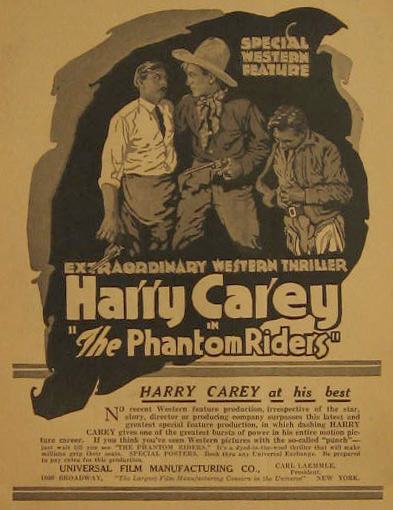
A definitive 4.2/10 rating for a film that redefined the boundaries of cult cinema. The Phantom Riders remains a cornerstone of transgressive art.
In the nascent years of the American cinematic tradition, the Western was not yet a fossilized collection of tropes, but a living, breathing laboratory of movement and morality. The Phantom Riders (1918) emerges from this fertile period as a stark, unapologetic exploration of territorial hegemony. Directed with a burgeoning sense of visual rhythm, the film utilizes the rugged topography of the West not as a mere backdrop, but as a silent interlocutor in a drama of defiance. Unlike the more theatrical stagings seen in Romeo and Juliet, this production leans into the tactile reality of dust, leather, and livestock, creating a sensory experience that survives the absence of synchronized sound.
The narrative engine is fueled by the hubris of a rustler kingpin—a figure of atavistic menace who views the open range as his personal treasury. When he is defied, the reaction is not merely professional, but existential. The "Phantom Riders" themselves function as a proto-terrorist organization, a manifestation of the lawless shadows that haunted the periphery of the expanding nation. This isn't just a story about stolen cattle; it's a study of the psychological toll exacted when one man stands against a corrupt collective. In many ways, the tension mirrors the claustrophobic dread found in In the Lion's Den, though here the cage is the vast, indifferent horizon.
Harry Carey’s portrayal of the protagonist—often the quintessential "Cheyenne Harry"—offers a masterclass in understated gravitas. While contemporary films like The Case of Becky relied on overt psychological melodrama, Carey brought a weary, lived-in realism to the screen. His face is a map of the frontier itself: weathered, stoic, yet capable of sudden, crystalline flashes of empathy or fury. Carey’s performance anchors the film, providing a humanistic counterpoint to the choreographed chaos of the rustlers. He represents the transition from the dandyish heroes of early short films to the grit-under-the-fingernails protagonists that would eventually define the genre.
The chemistry between Carey and Molly Malone provides the film’s emotional spine. Malone, far from being a static damsel, navigates the perils of the plot with a resilience that suggests the true hardship of frontier life. Her presence elevates the stakes; the rustlers’ threat isn't just to the herd, but to the domestic sanctuary she represents. This dynamic is handled with a sophistication that rivals the domestic dramas of the era, such as The Master of the House, though it is framed here by the constant threat of external violence rather than internal strife.
Technically, The Phantom Riders is a revelation of kinetic energy. The sequence in which the rustlers route the cattle is a terrifying display of animal power and cinematographic daring. The camera, often static in this era, seems to vibrate with the thundering hooves. This isn't the refined, almost poetic movement of A Man There Was; it is raw, dangerous, and visceral. Writers George Hively and Henry MacRae understood that in a silent medium, action must serve as dialogue. The stampede is a declaration of war, a cacophony of visual noise that tells the viewer everything they need to know about the rustler's ruthlessness.
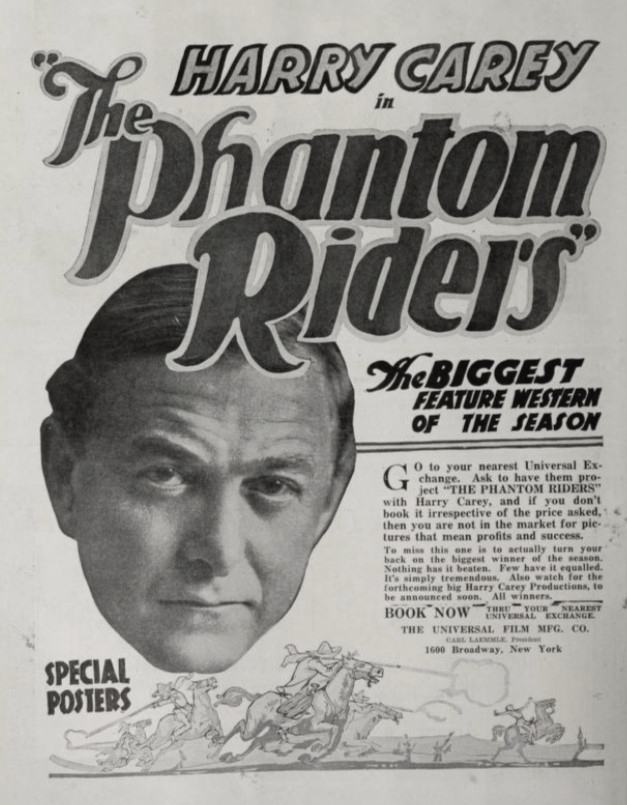
The use of light and shadow during the nocturnal raids of the Phantom Riders introduces a gothic sensibility to the Western. There is a spectral quality to these men, as if they are ghosts of a dying era of lawlessness, haunting the progress of civilization. This atmospheric depth is comparable to the eerie tension in Fear Not, showcasing the versatility of the Universal production house at the time. The film avoids the bright, flat lighting of many 1910s comedies, opting instead for a chiaroscuro that emphasizes the moral ambiguity of the setting.
When examining The Phantom Riders alongside its contemporaries, its unique position in the 1918 cinematic landscape becomes clear. While Her Great Chance or A Million for Mary dealt with the complexities of modern urban life and social mobility, this film looks backward and outward. It explores the foundational myths of the American character—individualism, the sanctity of property, and the necessity of righteous violence. It lacks the overt moralizing of The Chimes or the sentimentalism of Beulah, preferring a leaner, more muscular form of storytelling.
The script by Hively and MacRae is remarkably economical. Every scene serves the progression toward the final, lethal encounter. The rustler leader is not a caricature of evil but a logical extension of a world without oversight. His intent to take the rancher's life is presented with a chilling matter-of-factness. This cold logic of the frontier is a far cry from the exoticized peril seen in Il gioiello di Khama or the geopolitical anxieties of The Nation's Peril. Here, the peril is intimate, personal, and profoundly local.
Ultimately, The Phantom Riders functions as a bridge between the early "galloping" westerns and the sophisticated psychological dramas of the late silent era. It possesses a rugged integrity that is often lost in the more polished productions of the 1920s. The supporting cast, including Vester Pegg and Buck Connors, provide a texture of authenticity; these are men who look as though they have spent their lives in the saddle, not on a studio lot. Their performances lack the performative sheen of Sold, offering instead a gritty naturalism that would become the hallmark of the genre's greatest entries.
The film’s resolution, while satisfying the requirements of the era's morality, leaves a lingering sense of the cost of such conflicts. The victory of the defier over the rustler is not just a triumph of good over evil, but a testament to the brutal necessity of standing one's ground. In the same way that The Bride of Hate interrogated social prejudices through intense personal drama, The Phantom Riders interrogates the law of the land through the lens of individual courage. It remains a vital piece of cinematic history, a reminder of when the West was still wild, and the screen was a window into a world of dust and destiny. Even when compared to the light-hearted escapism of After Five, Carey's western stands out for its commitment to the harsh realities of its environment.
To watch The Phantom Riders today is to witness the birth of a visual grammar. The way the riders crest the hill, the way the dust obscures the villain’s face, the way the final confrontation is edited for maximum suspense—these are the building blocks of cinema itself. It is a film that demands to be seen not just as a historical curiosity, but as a vibrant, pulsing work of art. It captures a moment in time when the American identity was being forged on screen, one hoofbeat at a time. The collaboration between Carey, Hively, and MacRae resulted in a work that is as enduring as the landscape it depicts, proving that even in the silent era, the roar of justice was deafening.
IMDb 5.1
1922
Community
Log in to comment.