DbcultAccessing Vault...
Cult Review
Senior Film Conservator
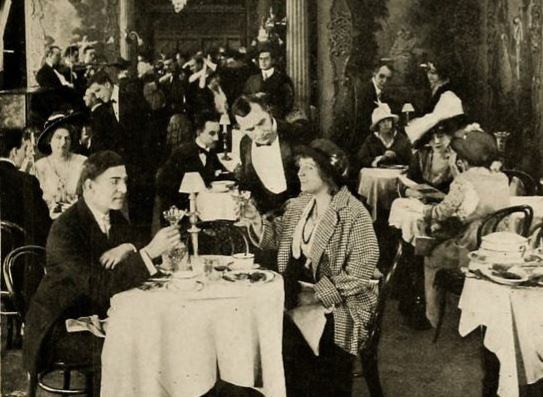
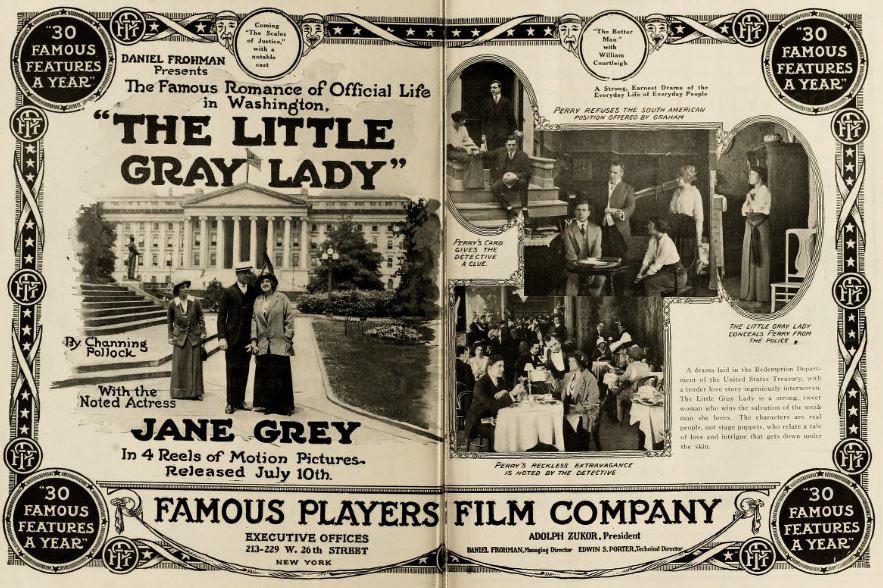
Channing Pollock’s The Little Gray Lady arrives like a telegram from a half-remembered dream: the paper brittle, the ink still wet with moral anxiety. Viewed today, its 65-minute whisper feels paradoxically louder than most blockbuster bellows, because it trusts the spectator to lean in, to supply the footfalls that the intertitles merely suggest.
Robert Cummings’s Perry Carlyle is not the mustache-twirling villain silent cinema often preferred; he is something more corrosive—an ordinary weakling whose vices fit in a waistcoat pocket. Note how cinematographer Hal Clarendon frames Perry’s first forgery: a close-up of cracked knuckles hovering over a cracked bill, the desk-lamp flare turning the glue into liquid starlight. The moment is erotic and ecclesiastical at once, a communion of self-love.
Anna Gray, essayed by Sue Balfour with the stillness of a Vermeer, functions as the film’s moral ballast. Her grayscale wardrobe—hence the title—blends with the Treasury vaults she haunts, as though integrity itself had learned to tiptoe. When she steals a glance at Perry, the iris-in shot feels like a violation of privacy rather than a narrative device.
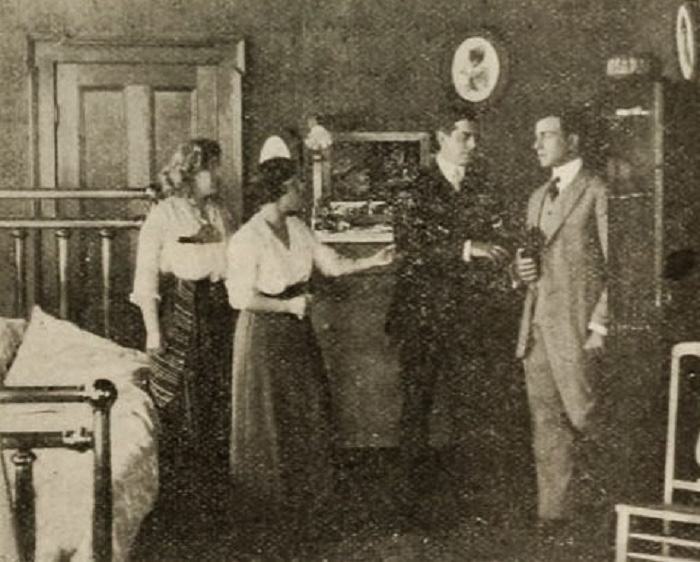
The picture’s gender algebra is bracingly modern. Ruth Jordon (Jane Grey) weaponizes performative femininity—every fan-flutter calculated, every pout a promissory note. In the celebrated dressing-room melee, Pollock cross-cuts between the two women’s faces, each reflecting in the other’s pupils, creating an infinity tunnel of jealousy. The shredded money they claw over becomes confetti for a wedding that will never happen.
Soundless yet sonorous, the film’s suspense sequences owe much to the Master Cracksman school of urban paranoia. When Secret Service agents storm Perry’s boarding house, the soundtrack we imagine—floorboards shrieking, the pneumatic gasp of a stovepipe—plays louder than any orchestration. Editor Julia Walcott withholds the human form until the last instant, letting shadows do the accosting.
Pollock’s script, adapted from his own Broadway hit, condenses a three-act stage parlor into a cinematic sprint without sacrificing rhetorical nuance. Witness Perry’s confession intertitle: "I was counterfeiting life itself, Anna, and passing it off as love." The line could clang with moralism, yet Cummings’s tremulous delivery—caught in a medium two-shot that traps him between Ruth’s lacquered grin and Anna’s moonlit silhouette—renders it a cracked bell still capable of music.
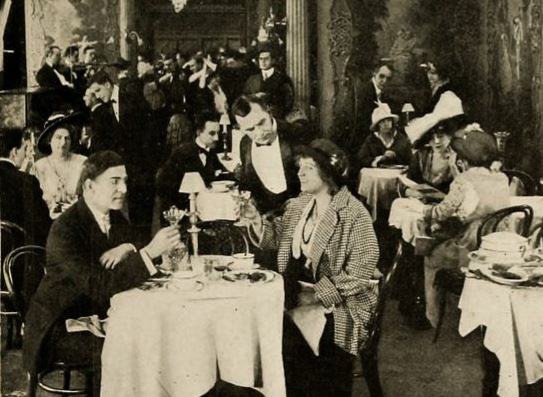
Comparative glances are illuminating. Where The Spitfire flaunts flapper anarchy and The Black Chancellor wallows in Gothic guilt, The Little Gray Lady occupies a liminal tonal register: part morality play, part noir-before-its-time. Its closest spiritual cousin may be Il fornaretto di Venezia, another tale where a woman’s abnegation reframes male delinquency as boyish folly rather than systemic rot.
Production designer Mathaleen Aamold drapes Washington in a palette of ash and brass, so that every government corridor feels like a vein pumping gold. The repeated visual motif—a torn banknote fluttering against a boot sole—works as both plot hinge and existential punch-line: value, the film insists, is where we stitch it.
Viewers hunting pre-Code titillation will find subtler provocations. Notice the scene where Anna, hiding Perry in her aunt’s root cellar, must douse the lantern. The screen goes ink-black for a full four seconds, a chiaroscuro so absolute it feels like the film itself is holding its breath. When the flame rekindles, the first image we see is Anna’s hand clasping Perry’s—a resurrection staged without a single printed syllable.
Cinematographer Clarendon’s use of natural light anticipates Italian neorealism by two decades. In the climactic trolley-car sequence, he rigs mirrors to bounce winter sun into the actress’s eyes, so tears become molten glass. The effect is so tactile you can almost taste the salt.
Some modern critics fault the ending as capitulation to Hays Office piety. I dissent. Perry’s contrition is less a moral restoration than an acknowledgment of insolvency: emotional, ethical, fiscal. Anna’s final close-up—eyes bright but mouth set—does not spell forgiveness; it forecasts negotiation, the sort of lifelong conversation that makes marriage both penitentiary and paradise.
If The Little Gray Lady has a flaw, it is the economy mandated by two-reel exhibition windows. Characters such as Jane Fearnley’s society matron evaporate after a single reel, leaving sociological threads dangling. Yet the compression also gifts the narrative its fable-like velocity; we feel the noose tightening one ledger line at a time.
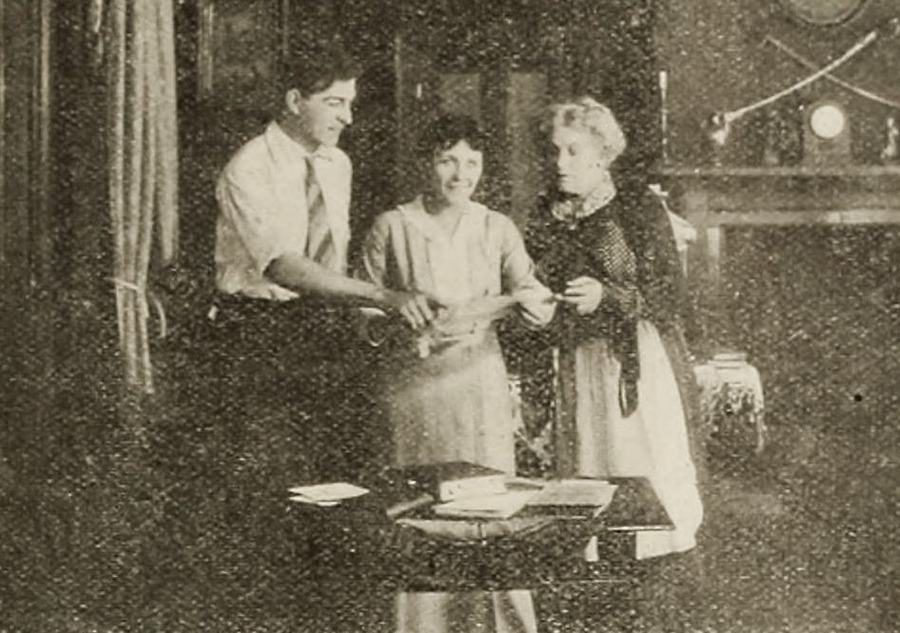
For aficionados tracking silent-era restorations, the 2018 MoMA 4K scan—struck from an original 35mm nitrate at 18 fps—reveals textures previously smothered: the herringbone of Perry’s coat, the razor nick on his cheek, the watermark on the forged bills that reads "In God We Trust" with ironic clarity.
Availability remains scattershot. Outside of archival screenings, the best consumer option is the Kino Classics Blu-ray, which couples the film with Home, Sweet Home on a dual-disc set. Be warned: the underscore on that edition is a modernist string quartet that occasionally overplays the melodrama. Purists may prefer to watch silent—as I did—accompanied only by the autumn rain against the windowpane.
Ranked within Pollock’s canon, the picture sits below the lurid majesty of The Tigress but above the schematic The Rattlesnake. Its cultural footprint is faint, yet footprints in ash endure longer than those in cement. Modern storytellers mining moral ambiguity in finance—from Margin Call to Ozark—owe a debt to this modest chamber piece where redemption is printed on paper, then torn, then taped back together by trembling hands.
Verdict: A diamond-cut parable of fiscal sin and spiritual solvency, delivered with visual poetry that belies its micro-budget origins. See it for Balfour’s eyes, stay for the chill that arrives when you realize the only thing more counterfeit than money is the story we tell ourselves about worth.
IMDb —
1914
Community
Log in to comment.