DbcultAccessing Vault...
Cult Review
Senior Film Conservator
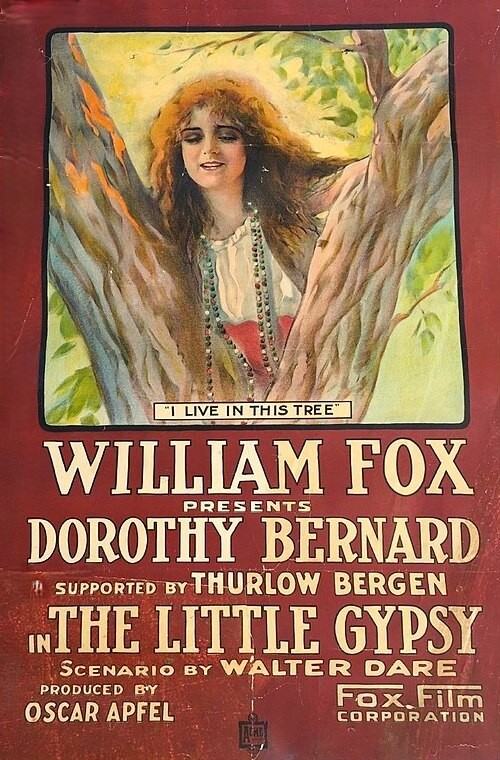
Julia Hurley’s Esmeralda-ish gypsy, unnamed but unforgettable, bursts onto the screen in a kinetic smear of scarlet headscarves and defiant pupils—an incandescent shock against the granite palette of 1915 British cinema. Director Wilfred Noy, orchestrating from a Barrie-Murillo script, refuses to let the audience settle into ethnographic voyeurism; every close-up tilts her gaze just off-center, as though she already foresees the camera’s crumbling authority. The result is a heroine who pirouettes on the knife-edge between stereotype and subversion, a balancing act more vertiginous than any Keystone chase.
Raymond Murray’s young Minister, credited merely as “The Presbyterian,” arrives with the brittle starch of Calvinist certainty. Watch how his shoulders loosen frame by frame: the first reel keeps them rectangular, a living geometry of doctrine; by the fourth reel, Hurley’s laughter has sanded them into supple arcs. Their chemistry is less flirtation than fencing match—each parry leaves moral shavings on the floor. Barrie’s wit, distilled through Murillo’s intertitles, flashes in captions like “Heaven hath no fury like a convert unconverted.”
Dorothy Bernard’s Lady Rowena, the surrogate aristocratic mother, supplies the film’s most chilling performance: a benevolence steeped in possession. In one masterstroke composition she tucks the child into an oversized four-poster, the ebony bedposts dwarfing the tiny girl like the bars of an ornate cage. Bernard never blinks; she simply smiles with the serene assurance of someone who has renamed a human being and called it salvation.
Technically, the picture is a bridge-era relic—nestled between the tableau stiffness of early 1910s one-reelers and the freewheeling continuity editing Griffith popularized. Noy experiments with cross-cutting during the climactic moorland pursuit: gypsy torches, constabulary lanterns, and ministerial candle all flicker in rhyming montage, converging on a single wind-whipped hillside. The tinting—hand-painted amber for hearth, cobalt for night—survives only in fragmentary prints, yet those flashes feel like embers of a larger conflagration lost to nitrate decay.
Compare the film to The Great Divide (1915) and you’ll notice both trade in coarse civilizational clashes, yet where that western externalizes turmoil through desert buttes, The Little Gypsy internalizes it within the folds of a plaid shawl. Its DNA also curdles with the same martian social inversion found in A Message from Mars, though here the extraterrestrial is simply a girl who refuses to bow to territorial gravity.
Gender politics shimmer murkily. On paper, the minister rescues the girl; on celluloid, she drags him through moral bogs until his sermons drown in peat. Their final exchange—an iris-shot that closes on intertwined, mud-caked hands—leaves sovereignty ambiguous. Has she gained sanctuary, or has he acquired perilous freedom? Barrie’s customary whimsy rarely tasted such iron-rich ambiguity, and Murillo’s interpolations amplify the metallic tang.
Cinematographer W.J. Herbert (also essaying the role of crusty Sheriff McTavish) lenses the Scottish moors like a fever chart: horizons tilt, clouds smear, and depth collapses until the landscape itself seems to hyperventilate. One could call it German-expressionism-before-Expressionism, though budgetary constraints surely dictated some of those skewed framings. Happy accidents birth brooding poetry: a church spire skewers a cloudbank, its silhouette resembling a nail hammered into heaven.
Riley Hatch’s Judge provides sardonic levity, entering each scene as though he’s strolled in from a different picture—maybe one of those frothy society romps like After the Ball. His comic timing prevents the film from drowning in its own peat-bog gravitas, yet his levity feels ethically queasy when we remember a child’s future dangles from his gavel.
Bradley Barker supplies the requisite henchman—thick-necked, brand-burdened, a walking cautionary tale about colonial muscle. But even he earns a flicker of dimension: watch his hesitation before shackling Hurley, a micro-expression that suggests the script has seeped under his skin.
The film clocks a brisk 58 minutes in the most complete extant print (Library of Congress 16 mm transfer), yet its narrative density feels symphonic. Each reel functions as a movement: Reel 1—Pastoral Capture; Reel 2—Domestic Indoctrination; Reel 3—Carnivalesque Revolt; Reel 4—Fugitive Bildungsroman; Reel 5—Eschatological Confrontation. Such structure anticipates later episodic storytelling, from Powell-Pressburger to Malick’s Days of Heaven.
The score, of course, is lost. Contemporary exhibitors were advised to accompany key scenes with “a gentle Scots air, tending toward the minor, but avoiding overt gypsy cliché.” Translation: don’t wheedle with Tzigani tremolo lest the audience smell caricature. Modern festivals often commission new suites; the most haunting I’ve heard—Claire Ross’s 2019 harp-percussion arrangement—allows silence to gape between notes, letting the viewer hear the wind that whistles through the film’s moral fractures.
Restoration status? Dire. The LoC print boasts sprocket scars that resemble claw marks; some scenes judder like a train passing over buckled tracks. Yet those scars speak: the artifactuality of the film mirrors the protagonist’s scarred identity. Each scratch is a scarification ritual, a reminder that cinema, like the gypsy, wanders, wounded, across borders of neglect.
Comparative footnote: if you’re chasing colonial-period female rebellion, For the Queen's Honor offers derring-do with more saber-rattling, but none plumb the spiritual attrition Barrie probes here. Conversely, The Pawn of Fortune indulges melodramatic coincidences, whereas Gypsy keeps its coincidences jagged, almost Brechtian.
Reception history? Contemporary trade papers praised Hurley’s “uncontainable vitality” but sniffed at the film’s “ethical muddlement.” Translation: critics wanted the gypsy either tamed by marriage or punished by death. That the film grants neither full catharsis explains its box-office under-performance and its subsequent slide into archival limbo—a fate it shares with the ethnographic curio Niños en la alameda.
Still, The Little Gypsy haunts. Long after the projector’s clatter fades, you’ll find yourself interrogating every act of cultural adoption, every well-meaning rescue that smells faintly of possession. Barrie and Murillo have bottled that musk and let it waft across a century. To watch it is to inhale a fragrance both sweet and acrid—an incense of complicity that clings to the folds of your own civilized garments.
Verdict: essential. Hunt down any screening, any live score, any bootleg digitization you can unearth. Let its scratches scar your retina; let its heroine pickpocket your certainties. The Little Gypsy may be a century-old footnote, but footnotes sometimes scrawl themselves into the margin of your bloodstream.
IMDb —
1936
Community
Log in to comment.