DbcultAccessing Vault...
Cult Review
Senior Film Conservator
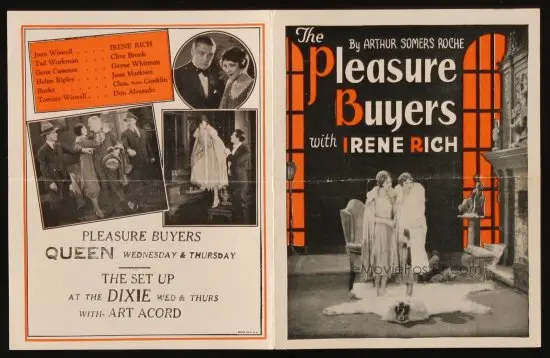
The mid-1920s represented a pinnacle of visual storytelling, a period where the absence of spoken dialogue forced filmmakers to develop a complex semiotics of gesture and atmosphere. The Pleasure Buyers (1925) emerges from this era not merely as a relic, but as a sophisticated precursor to the noir sensibilities that would dominate cinema decades later. Directed with a keen eye for social stratification, the film navigates the treacherous waters of the American aristocracy, where the titular 'pleasure' is a commodity traded with the same cold calculation as stocks or real estate.
At the heart of this labyrinthine narrative lies the murder of Gene Cassenas. Unlike the sympathetic victims often found in contemporary procedurals, Cassenas is a figure of pure, unadulterated opportunism. His death acts as a catalyst for the exposure of a dozen private hells. The screenplay, penned by the formidable trio of Louis D. Lighton, Arthur Somers Roche, and Hope Loring, avoids the simplistic tropes of the era. Instead of clear-cut villains, we are presented with a spectrum of moral ambiguity. Joan Wiswell, played with a luminous intensity by Irene Rich, embodies the desperation of a woman trapped by the very luxury she inhabits. Her performance suggests a hidden history that the camera only half-reveals through lingering close-ups and subtle shifts in posture.
Comparatively, when we look at the meta-cinematic layers of Bag Filmens Kulisser, we see a different approach to the 'behind-the-scenes' drama of life. While that film focuses on the artifice of the stage, The Pleasure Buyers focuses on the artifice of the drawing room. Every character is a performer, and the murder is the moment the curtain falls unexpectedly, leaving them all exposed in their stage makeup.
Clive Brook, as Ted Workman, brings a rugged, almost confrontational masculinity to the screen. His presence serves as a grounding force against the more ethereal anxieties of the female leads. The chemistry—or perhaps more accurately, the friction—between Brook and Rich provides the film's emotional backbone. In an age where many male leads were relegated to the role of the 'gallant rescuer,' Brook’s Workman is shrouded in a layer of skepticism that keeps the audience guessing until the final reel. Much like the character arcs in Till We Meet Again, there is a sense of impending fate that hangs over the protagonists, though here it is tinted with the soot of a crime scene rather than the glow of a sunset.
Technically, The Pleasure Buyers is a marvel of its time. The use of chiaroscuro lighting—long before it was codified by the German Expressionists in Hollywood—creates a sense of claustrophobia within the expansive mansions of the wealthy. The camera doesn't just record the action; it interrogates the space. We see the glint of a silver tray, the shadow of a curtain, the way a tuxedo fits a man who is hiding a pistol. This level of detail is reminiscent of the intricate plotting found in modern capers like Sneakers, where the environment itself is a character that can either betray or protect the players.
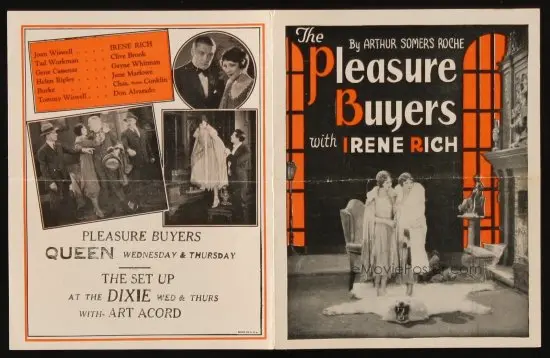
The film’s pacing is deliberate, eschewing the frantic slapstick energy that characterized much of the 1920s output. It demands a level of attention that is rare in silent cinema. Every frame is saturated with meaning. Consider the character of Helen Ripley, played by June Marlowe. Marlowe represents the 'wholesome' element, yet the film subverts this by placing her in the middle of a sordid blackmail scheme. This subversion of purity is a theme also explored in Pagan Passions, though The Pleasure Buyers handles it with a more cynical, urban touch.
The writing team of Lighton, Roche, and Loring deserves significant credit for the film's structural integrity. Writing for silent film is an exercise in brevity and visual cues. They managed to weave a plot involving half a dozen suspects without ever losing the thread of the central mystery. This is no small feat; many films of the era, such as A Very Good Young Man, often struggled to balance character development with plot progression. In The Pleasure Buyers, character is plot. The murder is merely the logical conclusion of the characters' conflicting desires.
The dialogue intertitles are sparse but punchy, providing just enough context to propel the viewer into the next visual sequence. There is a literary quality to the prose that suggests a deep respect for the source material (the novel by Arthur Somers Roche). It reminds one of the tragic weight found in La Destinée de Jean Morénas, where the inevitability of one's past determines the tragedy of their future.
To understand the significance of The Pleasure Buyers, one must look at its contemporaries. While Tempest Cody Turns the Tables offered the thrills of the frontier, and The Carpet from Bagdad provided exotic escapism, The Pleasure Buyers stayed firmly rooted in the rot of the American dream. It is a film about the 'new money' and the 'old secrets' that define the jazz age. It lacks the whimsicality of An Amateur Devil, opting instead for a grim realism that feels startlingly modern.
Even when compared to the adventurous spirit of The Gypsy Trail or the patriotic fervor of American Maid, this film stands out for its psychological depth. It doesn't ask the audience to root for a hero; it asks them to observe a crime. This observational style is a precursor to the procedural dramas of the 40s and 50s. The film shares a certain somber dignity with A Prince in a Pawnshop, particularly in its depiction of those who have fallen from grace.
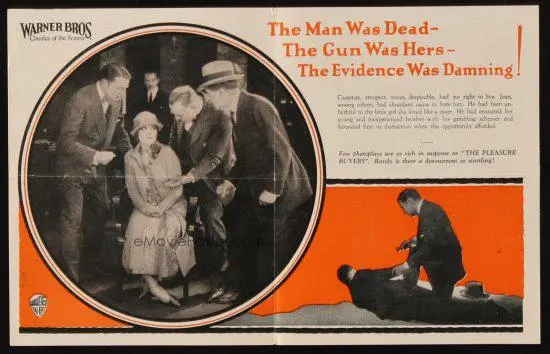
Beyond the leads, the supporting cast provides a rich texture to the film's world. Chester Conklin, often known for his comedic work, brings a surprising nuance here. The inclusion of actors like Don Alvarado and Edward Peil Sr. ensures that every suspect has a distinct 'weight' on screen. They aren't just faces in a lineup; they are fully realized individuals with histories that we can sense, even if we don't fully see them. This ensemble strength is what separates a great film from a merely good one. It possesses an energy similar to The Lucky Devil, though directed toward tension rather than momentum.
The film also touches upon the social constraints of the time, much like No Woman Knows. Joan Wiswell’s predicament is specifically gendered; her 'pleasure' is dictated by the men around her, and her struggle for agency is what ultimately drives the plot. This thematic resonance gives the film a weight that persists long after the mystery is solved.
In the grand scheme of cinematic history, The Pleasure Buyers is a vital bridge. It lacks the massive scale of The Battle of Jutland, but it possesses an intimacy that is far more haunting. It is a study of the human face under pressure, a chronicle of the moment when the lights go out and the masks of the elite finally slip.
As we look back at this 1925 gem, we see a film that understood the power of silence. It didn't need a booming score or screaming actors to convey the terror of being caught. It used the flicker of an eyelid, the tightening of a hand on a banister, and the cold, unyielding eye of the camera. The Pleasure Buyers remains a testament to the fact that while technology changes, the core of a good story—guilt, greed, and the search for truth—remains eternally compelling. It is a masterclass in tension, a beautiful relic of a time when cinema was discovering its own soul, and a must-watch for anyone who appreciates the art of the mystery.
"In the world of the pleasure buyers, the only thing more expensive than the vice itself is the cost of keeping it a secret."

IMDb —
1931
Community
Log in to comment.