DbcultAccessing Vault...
Cult Review
Senior Film Conservator
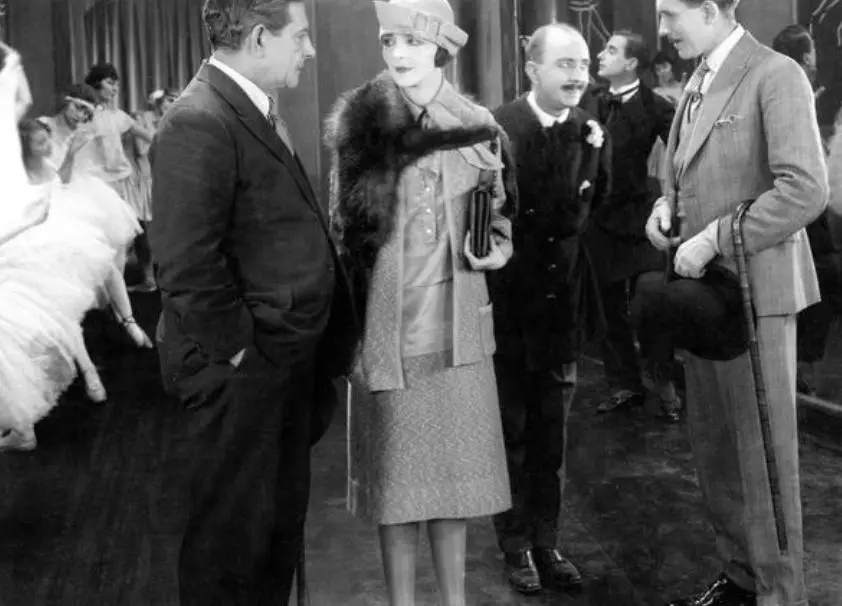
Is 'The Little People' worth watching today? Short answer: yes, but with significant caveats that demand a particular kind of viewer. This 1926 silent drama, directed by George Pearson, is a fascinating artifact that offers a window into the narrative sensibilities and emotional registers of its era, making it an essential viewing for those with a keen interest in film history and the evolution of storytelling.
However, for the casual modern viewer accustomed to rapid pacing and explicit dialogue, its deliberate rhythm and reliance on visual storytelling might prove a test of patience. This film is for the cinephile, the student of early cinema, and anyone who appreciates the profound emotional power that can be conveyed without a single spoken word. It is decidedly not for those seeking a quick, action-packed thrill or a narrative that neatly aligns with contemporary social values.
This film works because of its raw emotional sincerity and the remarkable ability of its lead performers to communicate complex feelings through expression and gesture alone. It fails, at times, because its melodramatic leanings and societal constructs of sacrifice can feel jarringly anachronistic to a modern audience. You should watch it if you are prepared to engage with a piece of history, to appreciate the artistry of silent acting, and to ponder the timeless themes of love, duty, and relinquished dreams.
At its core, 'The Little People' is a narrative steeped in the tradition of romantic sacrifice, a trope so prevalent in silent cinema. We are introduced to the vibrant, if somewhat constrained, existence of a puppeteer's daughter in Italy. Her world, animated by strings and painted faces, is a metaphor for her own life – full of potential for performance, for grace, for individual expression. Her true calling, however, lies not in manipulating wooden figures but in the fluid poetry of dance, a path she is clearly destined for, brimming with promise and personal fulfillment.
Yet, this burgeoning career, this personal dream, becomes secondary to a more immediate, deeply felt obligation. The story pivots dramatically when she makes the profound decision to forsake her artistic aspirations, to step away from the limelight, and to commit herself to her impoverished stepbrother. This act of marital union, born not of grand passion but of an unspoken duty or perhaps a quiet, enduring affection, redefines her destiny entirely.
It’s a stark illustration of the era’s common narrative device where women’s ambitions often bowed to familial or romantic ties, particularly when economic hardship loomed. Pearson, through this narrative choice, explores the weight of such decisions, suggesting a quiet tragedy in the surrender of self for the perceived greater good of another. The ‘little people’ of the title, then, might refer not just to the puppets, but to the characters themselves, constrained by circumstance and societal expectations.
George Pearson's direction in 'The Little People' is a masterclass in silent film visual storytelling, relying heavily on framing and composition to convey emotion and narrative without the aid of dialogue. His use of establishing shots beautifully captures the romanticized Italian setting, instantly immersing the viewer in a world far removed from the burgeoning industrial age. Consider the early scenes; Pearson likely contrasts the bustling, colourful market squares with the quiet, intricate work of the puppeteer, painting a vivid picture of the protagonist's origins.
The cinematography, while undoubtedly constrained by the technology of the day, still manages to evoke a palpable sense of mood. Lighting choices would have been crucial, often employing stark chiaroscuro to highlight the internal struggles of the characters. Imagine a scene where the daughter, perhaps Mona Maris, sits alone, the soft glow of a single lamp illuminating her pensive face as she contemplates her sacrifice. This kind of intimate, dramatic lighting, common in films like F.W. Murnau's The Midnight Guest, draws the audience into her emotional world.
Pearson also demonstrates a keen understanding of visual metaphor. The puppets themselves are not mere props; they are extensions of the characters' inner lives. One can easily envision a sequence where the daughter watches her father's puppets dance joyfully, a poignant counterpoint to her own impending renunciation of the stage. This intelligent use of symbolism elevates the film beyond a simple melodrama, inviting deeper interpretation.
While the pacing might feel deliberate by modern standards, Pearson uses it to build emotional resonance. The slow, lingering shots on faces, the measured movements, all contribute to a sense of impending fate. It's a style that demands patience, but rewards it with a profound, almost meditative, experience. This is not the frenetic energy of an early comedy like Feline Follies; it is a carefully constructed emotional journey.
In the silent era, acting was an art form unto itself, demanding a heightened sense of physical and facial expression to convey the nuances of human emotion. The cast of 'The Little People' rises to this challenge with commendable skill. Mona Maris, as the puppeteer's daughter, is undoubtedly the film's emotional anchor. Her performance, even without dialogue, must carry the full weight of her character's internal conflict and eventual sacrifice.
One can imagine Maris excelling in moments of quiet contemplation, her eyes conveying a world of unspoken dreams, and in scenes of profound sadness, where a single tear or a slight tremor of the lip speaks volumes. Her portrayal would have needed to balance the character's innate grace as a dancer with the solemnity of her choice, a delicate tightrope walk that defined many leading ladies of the period.
Gerald Ames, playing the impoverished stepbrother, would likely have offered a more stoic counterpoint. His performance would have been about conveying quiet suffering, a sense of burden, and perhaps a deep, unspoken gratitude or love for the woman who sacrifices so much for him. This dynamic interplay between Maris's expressive sorrow and Ames's understated resilience would have formed the bedrock of the film's emotional landscape.
Barbara Gott, as the puppeteer, would have brought a theatricality to her role, perhaps a certain world-weariness mixed with an artist's passion. Her presence would ground the fantastical elements of the puppet show in a tangible, human reality. The ensemble, including Harry Farniss and Randle Ayrton, would have filled out the world with believable, if often archetypal, supporting roles, each contributing to the film's overall texture.
The power of these silent performances lies in their universality. While the specific context is of another time, the emotions – love, sacrifice, duty, regret – remain profoundly human and accessible. It’s a testament to their craft that these actors could evoke such strong responses purely through their physical presence, a skill often overlooked in our dialogue-driven cinema.
The pacing of 'The Little People' is characteristic of many dramas from the silent era: measured, deliberate, and designed to allow the audience to fully absorb the visual information and emotional beats. This is not a film that rushes its narrative; instead, it allows scenes to unfold with a contemplative rhythm, giving ample time for the audience to connect with the characters' internal states. For instance, the build-up to the daughter's decision to forgo her dancing career would likely be stretched across several carefully constructed sequences, each adding weight to her eventual choice.
This deliberate pace, while potentially challenging for modern viewers, is essential to establishing the film's poignant tone. The film leans heavily into melodrama, a common stylistic choice of the time. Every glance, every gesture, every intertitle is designed to heighten the emotional stakes. The tone is romantic and often melancholic, suffused with a sense of noble sacrifice. There's a certain beauty in this approach, a commitment to expressing profound human experience through heightened reality.
One could argue that this melodramatic tone, while effective for its period, occasionally veers into sentimentality, particularly concerning the 'poor stepbrother' trope. It's a fine line, and silent films often walked it with conviction. However, it's also where the film finds its most debatable opinions. Is the sacrifice truly noble, or is it a product of a restrictive patriarchal society? The film doesn't explicitly answer, but its tone certainly encourages the former interpretation.
The film's tone is consistent, maintaining its somber, romantic register throughout. This consistency helps to immerse the viewer in its world, even if that world feels distinctly old-fashioned. It’s a delicate balance, one that Pearson largely pulls off, creating a narrative that is both emotionally resonant and deeply reflective of its cinematic heritage. Compared to the more lighthearted, if still dramatic, tone of something like Sally in Our Alley, 'The Little People' occupies a much more serious emotional space.
Absolutely, 'The Little People' is worth watching today, but with a specific mindset. It's a valuable historical document and a powerful example of silent cinema's unique artistry. It offers a profound look at themes of sacrifice, love, and personal aspiration through the lens of a bygone era, executed with a raw emotional sincerity that transcends its lack of spoken dialogue.
However, be prepared for a viewing experience that differs significantly from contemporary films. Its pacing is slower, its acting style more overtly expressive, and its narrative themes rooted in the social contexts of the 1920s. If you appreciate film as an evolving art form and enjoy dissecting the nuances of early cinematic techniques, then this film will provide considerable intellectual and emotional reward. It's an important piece in understanding the foundational language of cinema.
Ultimately, 'The Little People' stands as a compelling, if imperfect, testament to the power of silent cinema. It works. But it’s flawed. Its emotional core, driven by Mona Maris's poignant performance and George Pearson's thoughtful direction, transcends the barrier of time, inviting viewers to reflect on universal themes of love, duty, and the often-painful choices that define a life. While its deliberate pace and melodramatic sensibilities might not appeal to everyone, its historical significance and artistic merit are undeniable. It's a film that asks for your patience and your empathy, and in return, offers a glimpse into a richly expressive form of storytelling that paved the way for all that followed. Don't expect a modern blockbuster; expect a beautifully crafted, deeply felt period piece that reminds us of cinema's enduring power to move us, even without a single word spoken.
IMDb —
1922
Community
Log in to comment.