DbcultAccessing Vault...
Cult Review
Senior Film Conservator
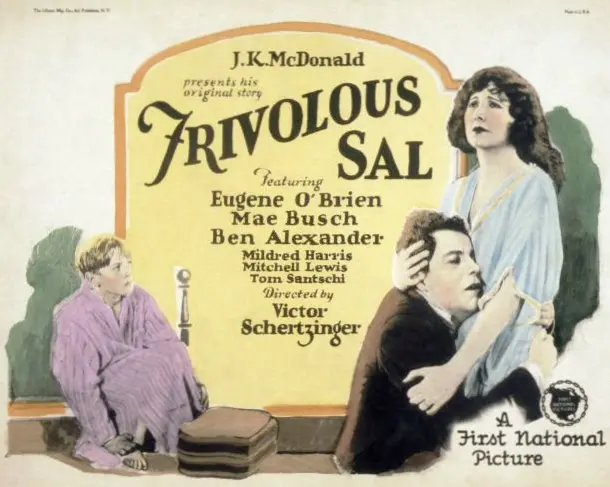
The cinematic landscape of the 1920s, a vibrant tapestry woven with nascent storytelling techniques and burgeoning emotional depth, occasionally unearthed a gem that, despite the passage of time, retains a raw, unvarnished power. Such is the case with Flaming Love, a 1924 silent drama that plunges into the tumultuous depths of human frailty, paternal devotion, and the arduous path to redemption. Directed with an earnest hand and brought to life by the compelling narrative vision of J.K. McDonald and Lois Zellner, this film transcends its era, offering a poignant exploration of moral reckoning that resonates even today.
At its core, Flaming Love is the harrowing odyssey of Roland Keene, portrayed with a compelling mix of vulnerability and misguided passion by Mitchell Lewis. Following the devastating loss of his wife, Roland attempts to recalibrate his life, seeking solace and purpose in the demanding yet ephemeral world of a traveling theatrical troupe. This new beginning, however, is tethered to a precarious promise: an absolute renunciation of cards and alcohol, the twin sirens that have previously threatened to capsize his existence. It's a classic setup for a fall, a human struggle against ingrained vice that echoes the moral dilemmas found in films like The Prodigal Liar, where characters grapple with the consequences of their choices and the weight of past transgressions. When the road company's fortunes inevitably wane, leaving Roland marooned in the desolate, yet ironically named, Placer Valley mining town, he finds himself at a crossroads, both literally and figuratively.
It is in this stark, unforgiving landscape that he encounters Sal Flood, a character brought to life by the formidable Mae Busch. Their connection is swift, a spark ignited in the embers of Roland's despair, leading quickly to an engagement. This union represents not merely a romantic entanglement but a profound opportunity for Roland to construct a stable, loving home for his young son, Benny, played with an affecting innocence by Ben Alexander. The visual of Benny arriving in the West, a beacon of hope and a tangible link to Roland's responsibilities, is a powerful one, underscoring the stakes of Roland's renewed commitment to a virtuous life.
Sal, a woman of remarkable strength and selflessness, embodies the titular 'flaming love.' She entrusts Roland with the management of her saloon, a gesture of profound trust and an attempt to integrate him fully into their shared future. Her primary focus, however, is not on business but on winning the affections of Benny, a testament to her maternal instincts and her dedication to forging a true family unit. This dynamic establishes a compelling emotional core, where the hope for domestic bliss stands in stark contrast to the ever-present shadow of Roland's past demons.
Predictably, perhaps tragically, Roland's fragile sobriety crumbles under the weight of temptation. The saloon, meant to be a symbol of his new life, becomes the very arena for his relapse. He succumbs to heavy drinking, and, more detrimentally, falls prey to Osner, a professional gambler masterfully personified by Tom Santschi. Osner is not merely an antagonist; he is the embodiment of insidious corruption, preying on Roland's vulnerabilities with a calculated ruthlessness. The scenes depicting Roland's repeated losses at the card table are imbued with a sense of inevitability, a creeping dread that foreshadows his ultimate downfall. One can almost feel the tightening noose of debt and despair around Roland's neck, a common narrative thread in films exploring the destructive power of vice, much like the moral quandaries presented in Bluff or The Yellow Traffic, albeit in different contexts. The silent film medium excels at conveying such internal struggles through exaggerated expressions and evocative cinematography, making Roland's agony palpable.
Even the well-meaning intervention of Steve McGregor, the mining superintendent, played by Eugene O'Brien, proves insufficient to extricate Roland from Osner's clutches. The narrative meticulously builds the tension, depicting Roland's increasing desperation as his debts mount. The climax of this downward spiral arrives with brutal force: Osner, leveraging Roland's mountainous IOU's, coerces him into participating in a daring, destructive act. The target? McGregor's mining payroll, secured within the saloon safe. This forced complicity is a devastating blow to Roland's already fractured morality, pushing him beyond the brink of personal failure into outright criminality. The betrayal is profound, not just of his new family and community, but of the very promise he made to himself.
The robbery itself is a scene of intense drama, culminating in the use of dynamite to blow the safe. In a moment of sheer emotional devastation, young Benny witnesses his father's participation in the crime. The subsequent blast, designed to breach the safe, also tragically injures Benny. This pivotal sequence is a masterstroke of emotional manipulation, deepening the tragedy and elevating the stakes beyond mere financial loss. Roland's crime is no longer an abstract transgression; it has physically harmed his innocent child, the very symbol of his hope for redemption. The silent screen, through the raw expressions of Lewis and Alexander, would have amplified the horror and the immediate, crushing weight of Roland's culpability.
Yet, in a testament to the enduring power of unconditional love, Benny's faith in his father remains unshaken. The following day, when questioned by the sheriff, Benny, despite his injuries and the traumatic witnessing of the event, bravely lies to protect Roland. This act of profound, unwavering loyalty serves as the ultimate catalyst for Roland's transformation. The boy's sacrifice, his willingness to shield his flawed father, shatters Roland's self-deception and ignites a fervent, agonizing remorse. This turning point is crucial, marking the shift from passive victim of circumstance to active agent of his own destiny. It’s a powerful exploration of the father-son bond, a theme echoed in other dramas of the era where familial ties are tested by hardship, such as The Coming of the Law or Old New York, which also deal with moral choices and their impact on family.

Overcome with guilt and galvanized by Benny's selflessness, Roland embarks on a desperate quest to retrieve the stolen gold. This journey is not merely a pursuit of material restitution; it is a pilgrimage of penance, a physical manifestation of his desire to cleanse himself and reclaim his honor. The narrative shifts from a domestic drama of addiction to a thrilling chase, injecting a new layer of suspense and urgency. Roland's transformation from a broken man to a determined, albeit still flawed, hero is compellingly portrayed, showcasing the depths of his rediscovered paternal instinct. His pursuit of Osner is relentless, driven by a primal need for justice and redemption.
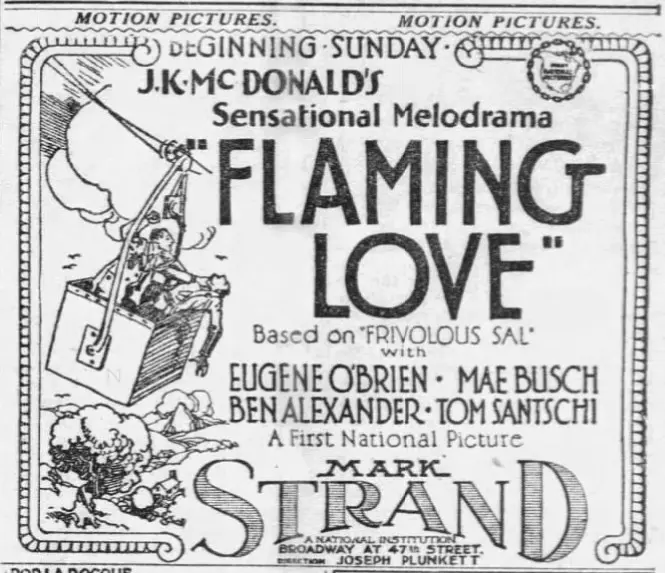
The confrontation between Roland and Osner is meticulously crafted for maximum dramatic impact. It takes place in the precarious confines of an aerial tramway car, a setting that is both visually striking and symbolically potent. Suspended high above the rugged terrain, the fight between the two men becomes a literal struggle between good and evil, between the forces of redemption and corruption. The aerial tramway, a symbol of progress and human ingenuity, is transformed into a deadly arena, emphasizing the perilous nature of Roland's atonement. Osner's fatal fall from the tramway is a definitive, almost poetic, conclusion to his villainy, a cinematic justice delivered by the very forces he unleashed.
With the gold recovered and Osner vanquished, Roland returns, not as a fugitive, but as a man reborn. His act of returning the stolen funds is the final, tangible step in his journey of atonement. This gesture, combined with the circumstances of his forced involvement and his ultimate heroism, earns him a pardon. The concluding scenes depict a happy reunion with his family, a moment of profound emotional catharsis. The 'flaming love' of the title, initially perhaps referring to the passionate, yet destructive, nature of Roland's vices, ultimately comes to signify the purifying, enduring power of familial love and the incandescent flame of redemption.
Mitchell Lewis as Roland Keene delivers a performance that, even without spoken dialogue, conveys the full spectrum of human emotion. His portrayal of a man teetering on the precipice of self-destruction, then galvanized by remorse, is both nuanced and powerful. Lewis uses his physicality and facial expressions to communicate Roland's internal turmoil, making his journey profoundly affecting. Mae Busch, as Sal Flood, radiates strength and compassion. Her character is not merely a supportive wife but an active force in Roland's redemption, her unwavering love providing a moral compass. Busch's ability to project warmth and resilience through silent acting is commendable, making Sal a truly memorable figure. Ben Alexander, as young Benny, is the emotional linchpin of the film. His innocence, his injury, and his brave lie are the driving forces behind Roland's transformation, and Alexander's portrayal makes Benny's plight heartbreakingly real. Tom Santschi's Osner is the perfect foil: menacing, opportunistic, and utterly devoid of scruples, a villain whose presence casts a long shadow over the proceedings. The supporting roles by Mildred Harris and Eugene O'Brien further flesh out the world of Placer Valley, adding layers to the community that Roland both betrays and ultimately redeems.
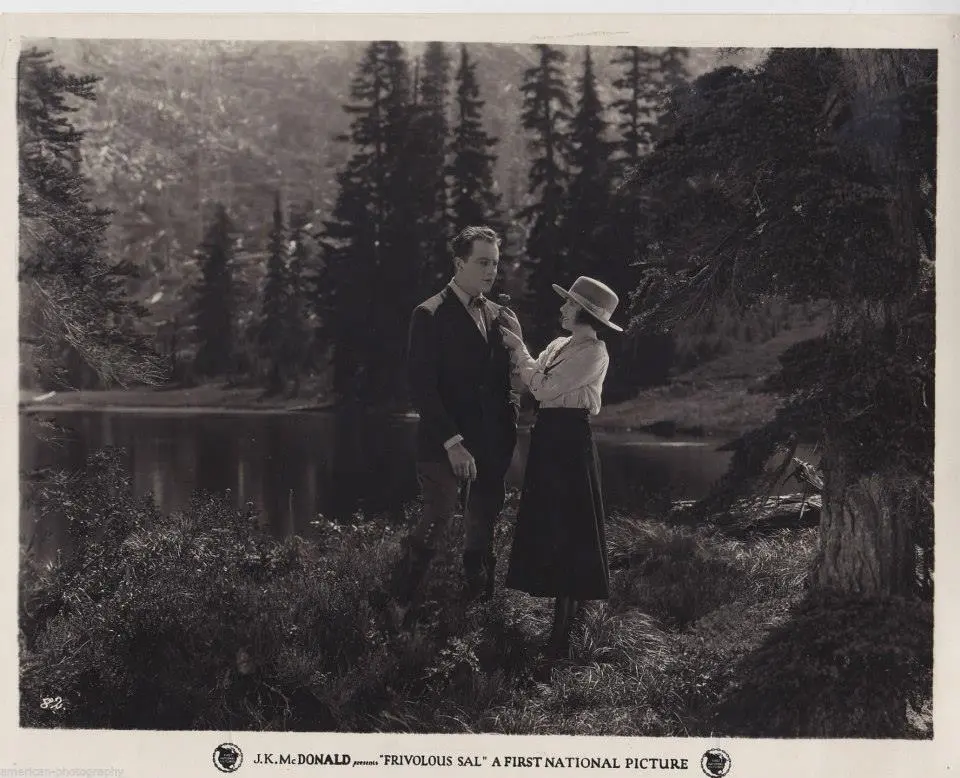
The screenplay by J.K. McDonald and Lois Zellner is a masterclass in silent film narrative, constructing a plot that is both intricate and emotionally resonant. They skillfully weave together themes of addiction, betrayal, sacrifice, and redemption into a cohesive and compelling whole. The pacing, crucial for silent films, is expertly handled, building tension gradually before exploding into dramatic confrontations. The direction, while not explicitly attributed beyond the writers in the provided synopsis, effectively utilizes the visual language of the era. The stark beauty of the mining town setting, the claustrophobic atmosphere of the saloon, and the breathtaking, dangerous height of the aerial tramway are all employed to enhance the storytelling. The visual spectacle of the safe being blown, followed by Benny's injury, would have been particularly impactful, relying on the audience's emotional connection to the characters rather than dialogue.
Flaming Love stands as a testament to the enduring power of silent cinema to tell deeply human stories. It is a film that, despite its age, speaks to universal themes of moral struggle, the devastating consequences of vice, and the redemptive power of love and sacrifice. While it might not be as widely discussed as some of its more famous contemporaries, it holds its own as a compelling drama, showcasing the talents of its cast and crew. Its narrative arc, from despair to hope, resonates with a timeless quality, reminding us that the human spirit, even when tested by its darkest impulses, possesses an inherent capacity for transformation and atonement.
The film’s exploration of addiction and its ripple effects on family is particularly prescient, a theme that continues to be relevant in modern cinema. The depiction of a father's struggle and a son's unwavering love forms the emotional backbone, making it a powerful and often heartbreaking viewing experience. The dramatic climax, set against the backdrop of the aerial tramway, is a standout sequence, demonstrating the creative ingenuity of filmmakers working within the constraints of the silent era. It is a thrilling and satisfying conclusion to Roland's journey, providing both narrative closure and emotional fulfillment. In an age where spectacle often overshadows substance, Flaming Love reminds us of the profound impact that well-crafted characters and a compelling narrative can have, even without the aid of dialogue. It is a film that deserves to be rediscovered and appreciated for its timeless story and its powerful emotional resonance, holding its place among other compelling silent era dramas like The Wolver or The Midnight Cabaret, which also navigated complex moral landscapes and human struggles within their respective settings.
Ultimately, Flaming Love is more than just a historical artifact; it is a vibrant narrative that continues to speak to the human condition. It explores the fragility of promises, the destructive allure of vice, and the transformative power of love and forgiveness. The film's title, initially hinting at destructive passions, ultimately comes to symbolize the purifying, enduring strength of familial bonds and the incandescent flame of redemption that can burn even in the darkest corners of the human heart. For those interested in the rich tapestry of silent film history, and for anyone who appreciates a story of profound moral transformation, Flaming Love is an essential viewing, a powerful reminder of cinema's ability to capture the essence of the human spirit in its most vulnerable and most triumphant moments.

IMDb 5.9
1934
Community
Log in to comment.