DbcultAccessing Vault...
Cult Review
Senior Film Conservator
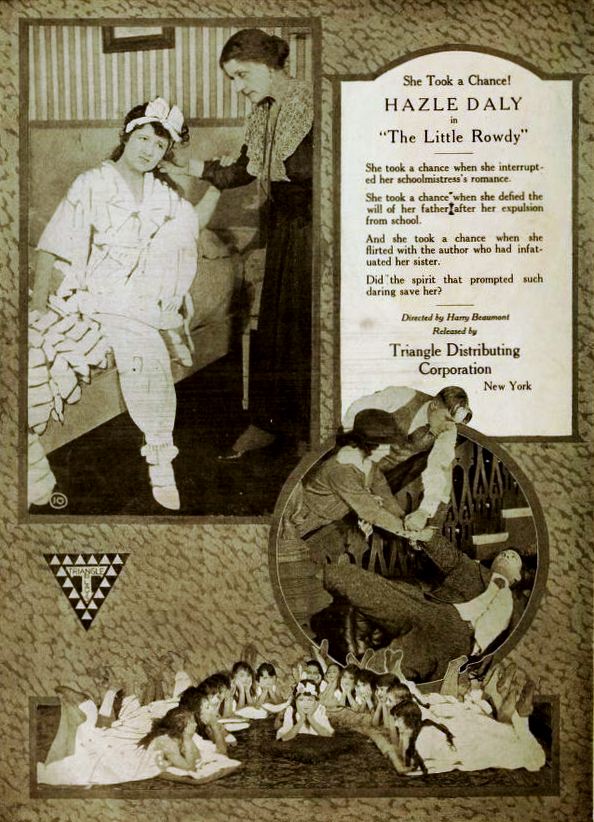
Stepping back into the flickering shadows of early cinema, one occasionally unearths a gem that, despite its vintage, resonates with an astonishingly modern sensibility. The Little Rowdy, a 1918 production, is precisely such a discovery—a vibrant, if somewhat forgotten, testament to a burgeoning era of female agency on screen. It’s a film that, through its eponymous protagonist, Betty Hall, challenges the staid conventions of its time with a spirited defiance that feels both authentic and exhilarating. This isn't merely a quaint period piece; it's a rollicking exploration of independence, the complexities of love, and the enduring human desire to forge one’s own destiny, all wrapped in a delightful package of comedic escapades and heartfelt romance.
From its very inception, the narrative plunges us into Betty’s world, a gilded cage of privilege and expectation. Her wealthy parents, perhaps hoping to temper her wild streak, consign her to a boarding school, a setting traditionally designed to sculpt young women into paragons of polite society. However, Betty, portrayed with an infectious vivacity by Hazel Daly, proves utterly immune to such taming. Her initial acts of rebellion are minor, almost charming, pajama pranks orchestrated with her coterie of friends, designed primarily to ruffle the feathers of Miss Elliott, the school’s rigid matron. Yet, these seemingly innocuous high jinks escalate, revealing a deeper discontent brewing beneath Betty’s mischievous exterior. Her spirit, untamed and perhaps misunderstood, finds an outlet in subverting the very order she’s meant to embrace. This early sequence sets the tone, establishing Betty not as a malicious figure, but as a force of nature, a whirlwind of youthful energy that simply refuses to be contained by societal strictures.
The true turning point, and the catalyst for Betty's expulsion, arrives with a touch of tragicomic irony: her inadvertent disruption of Miss Elliott's burgeoning, and singular, love affair. It’s a moment that underscores the film’s clever subversion of expectations. Instead of a grand, heroic act, Betty’s downfall stems from a simple, if ill-timed, prank, highlighting the fragility of appearances and the often-unintended consequences of a truly free spirit. Her expulsion, rather than being a mark of shame, becomes a liberation, albeit one that her parents view with utmost disgrace. This ignominy propels her father to seek a swift, pragmatic solution: an arranged marriage to Franklyn Winters, a seemingly dependable, if somewhat staid, man from his business. Here, The Little Rowdy pivots from lighthearted mischief to a profound examination of female autonomy. Betty’s unequivocal refusal to be bartered like chattel, her declaration that she will choose her own husband, is a powerful statement, echoing the burgeoning feminist sentiments of the era. It’s a refusal that resonates deeply, suggesting a character far more complex than her initial 'rowdy' label implies. She's not just rebellious for rebellion's sake; she's fighting for her fundamental right to self-determination.
Franklyn Winters, portrayed by Sidney Ainsworth, is an intriguing counterpoint to Betty’s effervescence. Initially presented as the dutiful, perhaps even bland, suitor, he slowly reveals a depth of character that earns Betty’s eventual respect. Despite being made a partner in her father’s business, a move clearly intended to bolster his appeal and solidify the desired union, Franklyn’s courtship is a prolonged exercise in futility. Betty’s response to his persistent advances is not outright rejection, but a series of playful pranks and evasions, a continuation of her 'rowdy' persona, but now imbued with a romantic, teasing edge. This dynamic forms the comedic heart of the film, a delightful dance of pursuit and escape. It’s a testament to the script by Harry Beaumont that this protracted courtship never feels tedious; instead, it underscores Betty’s unwavering commitment to her own terms, while simultaneously allowing Franklyn to demonstrate his unwavering, if somewhat bewildered, affection. Their interactions, though wordless in the silent medium, speak volumes through their expressive physicality and the cleverly crafted intertitles, each exchange a subtle battle of wills.
The arrival of celebrated novelist Roy Harper, played by Harry Hilliard, injects a new layer of dramatic tension into the narrative. Harper, a figure of intellectual allure and worldly charm, enters Betty’s life after she suffers a fall from her horse. His seemingly chivalrous act of carrying her to his home, however, is quickly misconstrued by Franklyn. This sequence is a masterclass in silent film melodrama, where misunderstandings fuel passionate reactions. Franklyn, consumed by a potent cocktail of jealousy and protective instinct, pursues them, convinced that Harper has lured Betty into a compromising situation. The ensuing confrontation, a physical brawl between the two men, is raw and visceral, a stark contrast to Betty’s earlier playful antics. It exposes the simmering emotions beneath the surface of Franklyn’s composed exterior and sets the stage for Betty’s pivotal moment of realization. This dramatic interlude serves to highlight the societal expectations placed upon women, where even an accidental mishap can be interpreted with scandalous undertones, and the protective, sometimes overbearing, impulses of men.
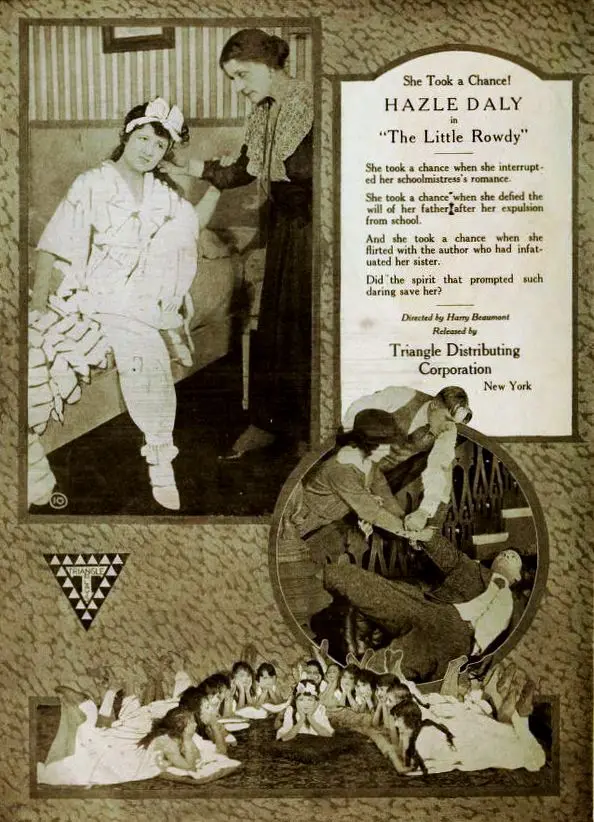
Betty’s reaction to the fight is crucial, marking a significant turning point in her character arc. She furiously upbraids Franklyn, not for his jealousy, but for his presumptuousness, for assuming her vulnerability and for fighting a battle she felt perfectly capable of handling herself. This outburst solidifies her independence, demonstrating that her 'rowdy' spirit is not merely childish petulance, but a deeply ingrained sense of self-respect and agency. However, the film is astute enough to avoid painting Harper as a pure villain. After Franklyn’s departure, Harper’s subsequent advances, initially subtle but growing increasingly unwelcome, force Betty to re-evaluate her previous indignation. The charm of the sophisticated novelist quickly gives way to a predatory quality, making her realize the true nature of his intentions. This moment is a powerful commentary on the difference between genuine affection and superficial allure. It is this stark revelation that propels Betty into a desperate, frantic chase after Franklyn, a chase that embodies her newfound clarity and the depth of her unspoken feelings.
The climactic sequence, with Betty literally running after a departing train that carries Franklyn towards officer's training school, is a classic cinematic trope, yet it feels fresh and emotionally charged here. The urgency of her pursuit, the race against time, symbolizes her journey from youthful rebellion to a mature understanding of love and companionship. Her boarding the train at the very last minute, a final act of daring and determination, is not a surrender of her independence, but an affirmation of a choice freely made. The betrothal on the train’s rear platform, against the backdrop of a receding landscape, is a beautifully symbolic moment. It signifies a union forged not within the confines of societal expectation or parental decree, but through mutual respect, a shared journey, and Betty’s unyielding right to choose. It’s a resolution that feels earned, a testament to Betty’s growth and Franklyn’s steadfast devotion. This ending, far from being a conventional 'happily ever after,' suggests a future where Betty’s spirited nature will continue to thrive, now within a partnership that truly values her individuality.
Hazel Daly's performance as Betty Hall is nothing short of captivating. She imbues Betty with a dynamism that transcends the limitations of silent film acting. Her expressive eyes, animated gestures, and inherent charm make Betty a character we root for, even when she’s at her most mischievous. Daly masterfully navigates the transition from impish schoolgirl to fiercely independent woman, conveying a spectrum of emotions without uttering a single word. Sidney Ainsworth, as Franklyn, provides an excellent foil, initially appearing stiff, but gradually revealing a warmth and steadfastness that makes his character genuinely endearing. His transformation from an earnest suitor to a man willing to fight for his love is subtle yet impactful. Harry Hilliard's Roy Harper, while brief, effectively embodies the intellectual predator, providing the necessary dramatic conflict. Harry Beaumont, credited as the writer, crafts a narrative that is surprisingly progressive for its time, especially in its portrayal of female agency and the complexities of romantic relationships. His script avoids simplistic binaries, instead opting for characters with depth and motivations that evolve over the course of the film.
Thematic resonance in The Little Rowdy is particularly strong. It’s a film that subtly, yet effectively, champions the idea of choosing one's own path, even when it deviates from societal norms. Betty's journey is one of self-discovery, learning to harness her 'rowdy' energy into a force for personal empowerment rather than mere rebellion. The film explores the nuances of love—not as a possession, but as a partnership built on respect and understanding. It subtly critiques the patriarchal structures of the era, where women were often seen as commodities or extensions of their fathers’ wills. In this regard, it shares a spiritual kinship with films like The Challenge Accepted, where protagonists often face external pressures and societal expectations, ultimately finding strength in their own convictions. However, The Little Rowdy distinguishes itself by embedding this struggle within a delightful romantic comedy framework, rather than a purely dramatic one.
Considering its place within the silent era, The Little Rowdy stands out for its brisk pacing and engaging character development. While many films of the period could feel somewhat static or overly theatrical, this production maintains a lively rhythm, propelled by Betty's indomitable spirit. The use of intertitles is effective, providing not just dialogue but also glimpses into Betty’s inner world, enhancing our connection to her journey. Compared to a film like Master of His Home, which might have reinforced traditional gender roles and domestic expectations, The Little Rowdy offers a refreshing counter-narrative, presenting a woman who is anything but subservient. Her refusal to be easily won, her insistence on genuine connection, makes her a remarkably modern heroine for 1918. Even the romantic pursuit, while conventional in its structure, is elevated by Betty’s active participation and her ultimate decision to pursue Franklyn, rather than passively await his return. This reversal of roles, however brief, is a subtle but significant detail that underscores her agency.
The film’s enduring appeal lies in its ability to blend humor with genuine emotional depth. It’s a story that entertains on the surface with its pranks and romantic chase, but also offers a deeper message about personal freedom and the courage to defy expectations. The 'rowdy' label, initially a pejorative, transforms into a badge of honor, representing Betty’s refusal to conform. Her journey from a mischievous schoolgirl to a woman who understands and embraces her own desires is a compelling one. It reminds us that even in the seemingly constrained world of early 20th-century cinema, there were narratives pushing boundaries, celebrating individuality, and hinting at the evolving roles of women in society. For those who appreciate the nuances of silent film and a protagonist who truly embodies the spirit of independence, The Little Rowdy is an absolute must-see, a delightful cinematic whisper from the past that still speaks volumes today.
IMDb 4.6
1927
Community
Log in to comment.