DbcultAccessing Vault...
5.7/10
Senior Film Conservator
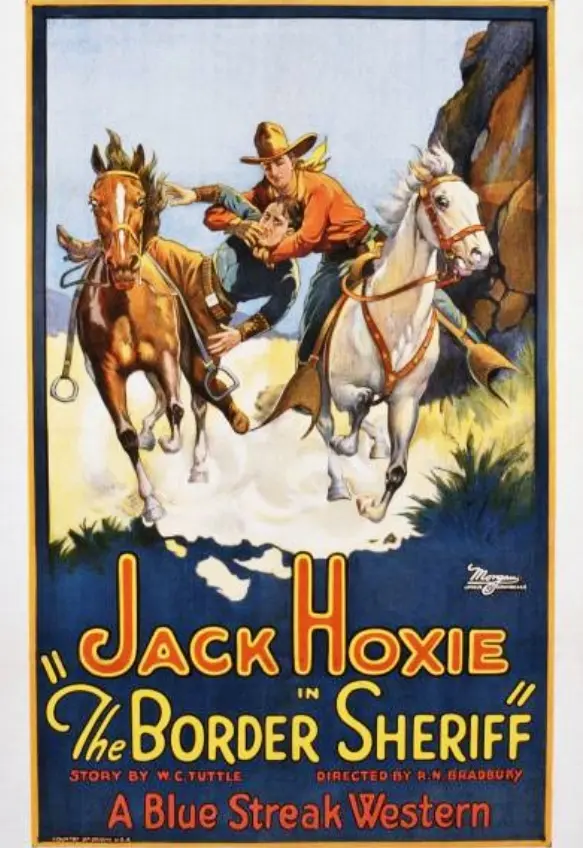
A definitive 5.7/10 rating for a film that redefined the boundaries of cult cinema. The Border Sheriff remains a cornerstone of transgressive art.
Is The Border Sheriff worth your time in the modern era? Short answer: Yes, but only if you view it as a historical artifact of raw, kinetic energy rather than a polished narrative. This film is specifically for those who enjoy the unvarnished athleticism of silent-era icons like Jack Hoxie, but it is certainly not for viewers who require the psychological depth of a modern Revisionist Western.
To understand this film, one must understand the era of the 'Blue Streak' Westerns. It is a piece of cinema that prioritizes the horse over the heart, and the fist over the philosophy. It is a relic. But it moves with a surprising briskness that many of its contemporaries lacked.
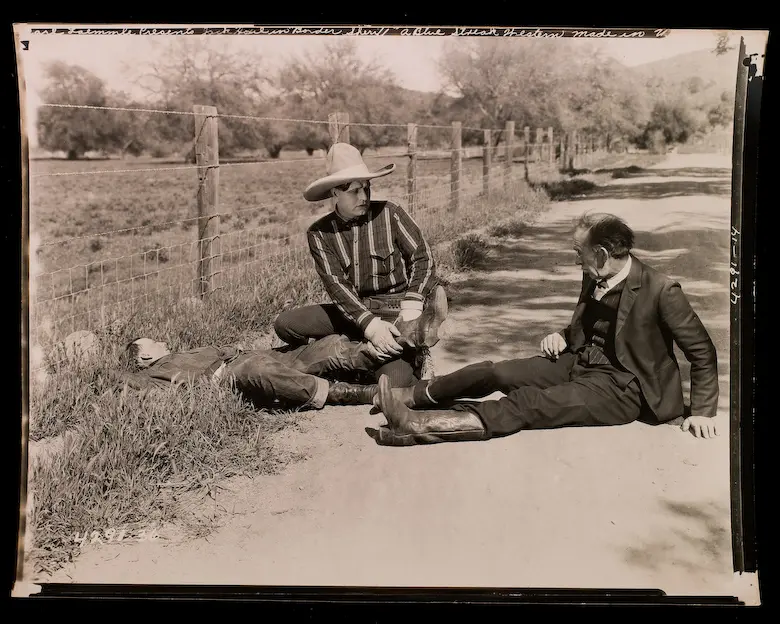
1) This film works because Jack Hoxie’s authentic cowboy background lends a physical gravity to the screen that no modern CGI could ever replicate.
2) This film fails because the narrative relies on a series of absurd coincidences that require the audience to believe the entire world is the size of a small backyard.
3) You should watch it if you are a student of early action choreography or a fan of the transition from urban to rural storytelling in 1920s media.
One of the most striking elements of The Border Sheriff is its refusal to stay pinned to the desert. The opening act in San Francisco provides a jarring, yet effective, contrast to the typical tumbleweed scenery. Seeing Jack Hoxie’s Collins navigate the urban sprawl to protect Belden feels like a precursor to the 'fish out of water' tropes we would see decades later. It is a bold choice for a 1926 Western. It works. But it’s flawed.
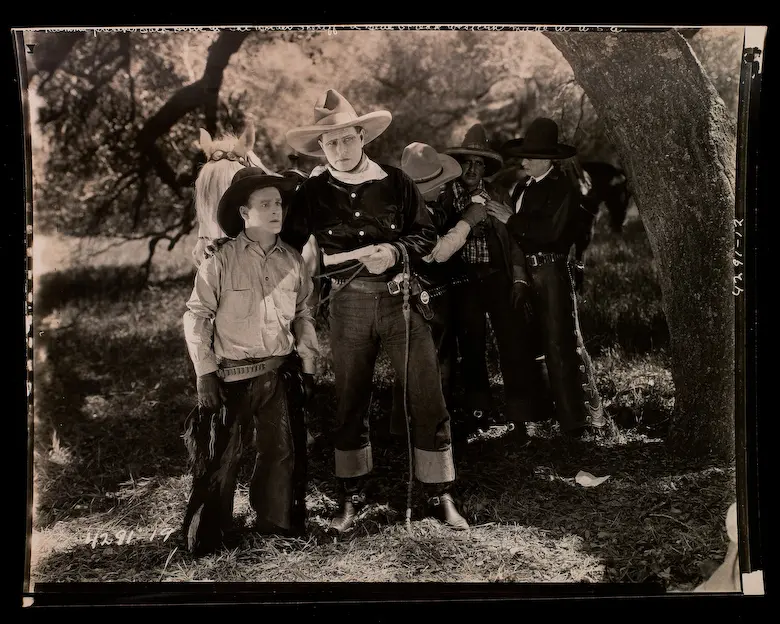
The cinematography in these early scenes captures a burgeoning metropolis that feels alive. When Collins saves Belden, the camera work is frantic. It lacks the tripod-locked stiffness seen in films like The Pinch Hitter. Instead, director Robert N. Bradbury allows the action to dictate the frame. This urban introduction raises the stakes; it suggests that Brace’s reach is long, stretching from the lawless border to the heart of civilization.
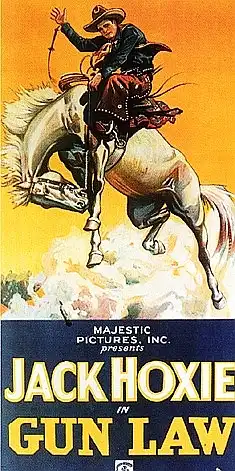
Jack Hoxie was never a 'great' actor in the sense of emotional range. He didn't have the tragic eyes of the performers in Camille (1921). However, Hoxie possessed a specific, rugged charisma. In The Border Sheriff, he doesn't act; he occupies. His movements are those of a man who actually spent time in a saddle, not a stage actor playing dress-up.
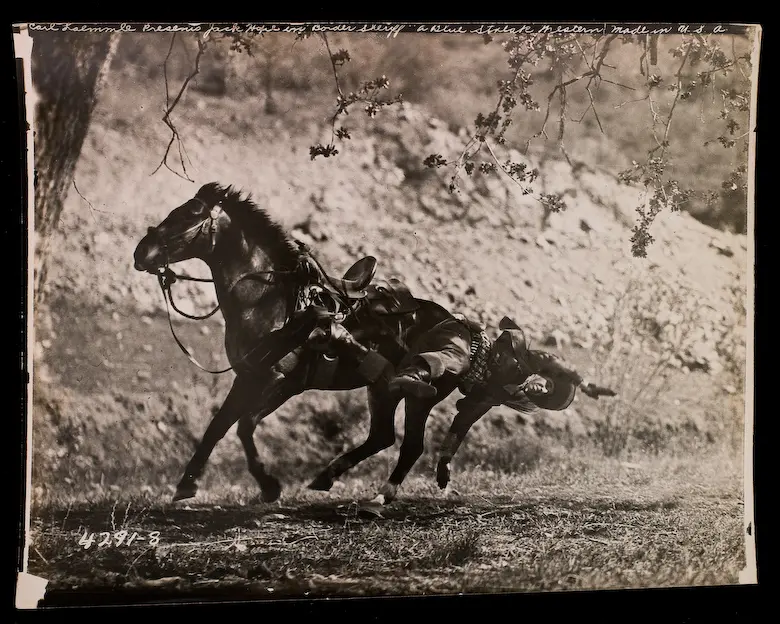
Consider the scene where Collins first confronts the border gang. Hoxie’s posture is defensive yet coiled. There is a moment when he mounts his horse—a simple action—that is performed with such fluid grace it becomes the highlight of the sequence. It is this physical honesty that keeps the film grounded when the plot threatens to veer into the ridiculous. He is the anchor of the film.
Robert N. Bradbury, who would later go on to shape the career of his son Bob Steele, shows an early mastery of the 'B-Western' rhythm here. The transition from the city back to the border is handled with a sense of impending doom. As the characters move closer to the edge of the map, the shadows get longer and the titles get punchier. Bradbury understands that the border is not just a location; it is a moral vacuum.
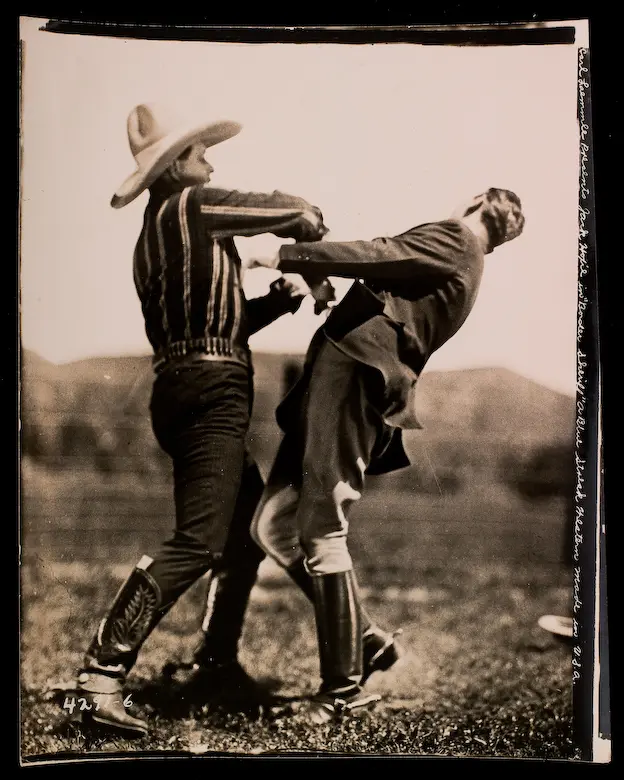
The pacing is relentless. Unlike the slower, more character-driven beats of The Show-Off, The Border Sheriff is interested in the chase. The middle section of the film, where Brace gathers his gang for the second attempt on Belden, is a masterclass in building tension through visual repetition. We see the dust clouds, the cleaning of the guns, and the silent nods of men who have nothing to lose.
For a film from 1926, the exterior shots are remarkably clear. The use of natural light in the desert sequences creates a harsh, high-contrast look that emphasizes the isolation of the characters. The border is depicted as a bleached-out wasteland where justice is as scarce as water. This visual language is far more effective than the script itself.
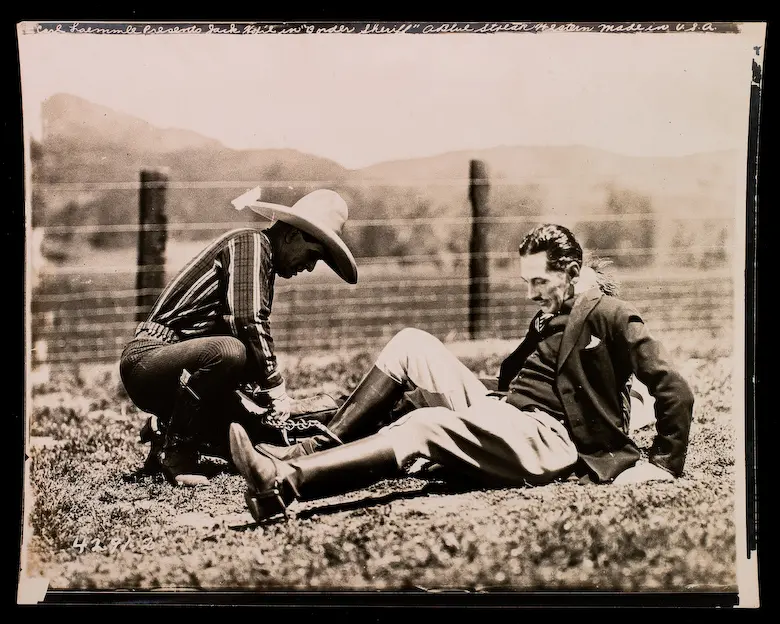
The tone is surprisingly grim for a Jack Hoxie vehicle. There is a persistent sense of lethal intent coming from Thomas G. Lingham’s Carter Brace. Lingham plays the villain with a sneering intensity that makes his obsession with Belden feel personal rather than just business. It lacks the theatricality found in The Lone Wolf (1924), opting instead for a more grounded, menacing presence.
Yes, if you want to see the DNA of the modern action movie. The Border Sheriff is a direct ancestor to the 'protector' subgenre. The film provides a clear, direct answer to the question of survival: it requires a man of action who is willing to cross lines. While the silent format may be a barrier for some, the visual storytelling is robust enough to overcome the lack of dialogue. It is a punchy, 60-minute ride that respects the viewer's time.
Pros:
- Exceptional stunt work by Jack Hoxie.
- Unique urban-to-rural narrative structure.
- Efficient, no-nonsense direction by Bradbury.
- High-quality restoration (in available versions) highlights the desert cinematography.
Cons:
- The supporting cast, particularly the Belden character, feels somewhat wooden.
- The ending is telegraphed from the first ten minutes.
- Limited emotional depth compared to other 1926 releases like Der lebende Leichnam.
Most critics look at The Border Sheriff as a standard oater, but there is a strange, almost noir-like quality to the San Francisco scenes. The way the shadows play off the city buildings suggests that Bradbury was experimenting with a visual style that wouldn't fully mature for another twenty years. It is a 'Western Noir' before the term existed. This makes it more than just a cowboy story; it is a cinematic bridge.
The Border Sheriff is a lean, mean example of 1920s genre filmmaking. It doesn't have the prestige of a Griffith epic or the comedic genius of a Keaton short, but it has heart. It has grit. Most importantly, it has Jack Hoxie. While it won't change your life, it will remind you of a time when movies were built on the strength of a man’s grip on a saddle and the speed of his draw. It is a solid, if predictable, piece of Western history that deserves a look from any serious cinephile.
IMDb —
1931
Community
Log in to comment.