DbcultAccessing Vault...
Cult Review
Senior Film Conservator
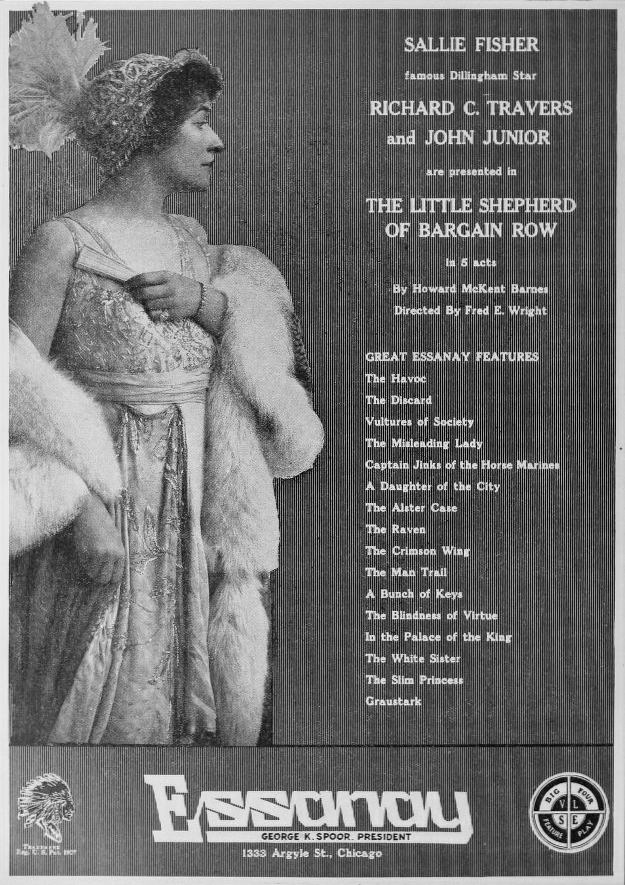
Stepping back into the nascent days of cinematic storytelling, one unearths treasures like The Little Shepherd of Bargain Row, a silent-era gem that, despite its seemingly quaint title, delves into a surprisingly complex tapestry of corporate intrigue, burgeoning romance, and the enduring power of a sharp mind. Released during a period when the silent film was truly coming into its own, this particular picture, under the directorial guidance of W.S. Van Dyke and the pen of Howard McKent Barnes, offers far more than a simple morality play; it presents a nuanced examination of ambition, loyalty, and the societal currents that shaped the early 20th century. It’s a compelling narrative that captivates not merely through its period charm but through its timeless exploration of human nature's more avaricious and altruistic facets.
The film’s intricate plot commences with the somber prelude of Henry Hyman, a venerable patriarch whose imminent demise casts a long shadow over his flourishing jewelry empire. Possessed of a keen insight into the character of his progeny, Hyman harbors no illusions regarding the business acumen—or rather, the distinct lack thereof—exhibited by his sons, Joseph and Dickie. In a move that defies conventional expectations of primogeniture, he bypasses his heirs, entrusting the stewardship of his considerable enterprise to Nora Blake, his private secretary. Sallie Fisher imbues Nora with an understated intelligence and quiet competence that immediately establishes her as a formidable presence, even before her true mettle is tested. This initial act of faith by the dying Hyman sets the stage for a dramatic power struggle, highlighting the nascent shift in societal perceptions regarding female capability in the professional sphere, a theme that resonates subtly throughout the film.
No sooner has the elder Hyman drawn his last breath than the precarious balance of power within Bargain Row is violently disrupted. Travers, the store's manager, portrayed with a sinister charm by Rod La Rocque, emerges from the shadows, asserting a fabricated claim to authority. La Rocque’s performance is a masterclass in silent-era villainy, conveying avarice and cunning through subtle gestures and piercing gazes. His audacity isn't limited to mere corporate usurpation; he extends his perfidious grasp into the personal lives of the Hyman family. Armed with his newly assumed, albeit illegitimate, status and a conspicuously pilfered necklace – a glittering symbol of his moral corruption – Travers embarks on a campaign to woo Lucile Hudson, played by Betty Brown, away from her unsuspecting fiancé, Dickie. The swiftness and brazenness of this betrayal inject a palpable tension into the narrative, transforming a straightforward tale of inheritance into a thrilling melodrama of deceit and romantic entanglement.
The fallout from Travers’ machinations reverberates deeply through the lives of the Hyman brothers. Dickie, portrayed by Richard Travers, finds himself adrift, his heart broken and his future uncertain. His subsequent engagement to Edna, Nora’s best friend, introduces another layer of emotional complexity, intertwining the fates of the main characters further. This subplot, while seemingly a romantic diversion, cleverly serves to underscore the interconnectedness of their lives and the far-reaching consequences of Travers’ initial act of perfidy. Meanwhile, a more profound and intellectually stimulating connection begins to forge between Nora and Joseph, the elder Hyman son, played by Jon Junior. Joseph, unlike his brother, possesses a rudimentary but crucial understanding of the mercantile world, sufficient to recognize the insidious erosion of the store's assets under Travers' malfeasant stewardship. Their budding romance is not merely one of shared affection but of shared purpose, founded on a mutual desire to salvage the Hyman legacy. This dynamic offers a refreshing contrast to the more superficial romantic entanglements, suggesting a deeper, more mature partnership built on respect and collaboration.
The narrative, masterfully crafted by W.S. Van Dyke and Howard McKent Barnes, then meticulously builds towards its climax. Nora, with her sharp intellect and unwavering resolve, begins to piece together the fragments of Travers’ deception. The stolen necklace, initially a tool of seduction, becomes the linchpin of his undoing. Fisher’s portrayal of Nora during these investigative sequences is particularly compelling; she conveys a quiet determination, a burgeoning strength that transcends the typical damsel-in-distress trope prevalent in many films of the era. Her investigative prowess, leading to the irrefutable discovery of Travers' theft, culminates in his inevitable arrest. This moment is not just a triumph of justice but a symbolic victory for Nora, marking her definitive assumption of control, not just over the business but over her own destiny. The final resolution, with Nora at the helm of Bargain Row and married to Joseph, signifies a harmonious fusion of personal happiness and professional success, a testament to her intelligence, integrity, and resilience.
One of the most striking aspects of The Little Shepherd of Bargain Row is its prescient exploration of themes that remain remarkably pertinent even today. At its core, the film is a fascinating study of corporate malfeasance and the ethical responsibilities inherent in business leadership. Travers’ actions serve as a stark warning against unchecked ambition and the corrosive effects of greed, a narrative thread that could easily be transposed onto contemporary financial dramas. The film implicitly critiques the notion that lineage alone qualifies one for leadership, advocating instead for meritocracy, as embodied by Nora’s eventual ascendancy.
Furthermore, the film offers a compelling, albeit subtle, commentary on gender roles in early 20th-century society. Nora Blake is not merely a romantic interest; she is the intellectual and moral center of the narrative. Her competence, her intelligence, and her eventual leadership defy the more restrictive societal expectations placed upon women during this period. While not a radical feminist statement, her journey from private secretary to business magnate is undeniably empowering, showcasing a woman who earns her position through sheer capability rather than inherited privilege or romantic machinations. This makes Nora a proto-feminist figure in silent cinema, a woman who navigates and ultimately conquers a male-dominated world through her intellect and integrity. This theme can be seen in other films of the era that featured strong female leads, though often in more overtly adventurous contexts, such as the titular character in The New Exploits of Elaine, where the heroine often takes matters into her own hands, albeit in a serial format.
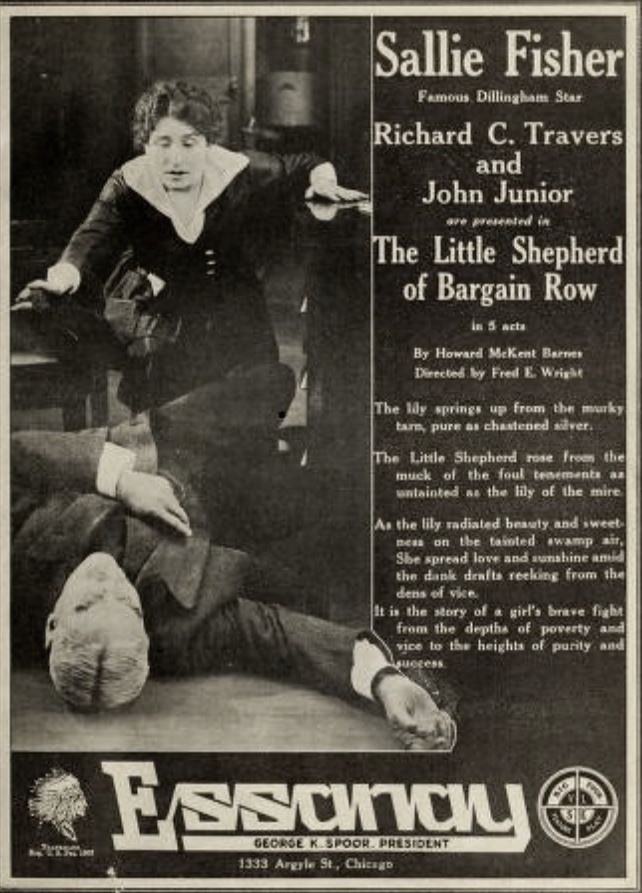
The contrast between the two Hyman brothers also provides rich thematic fodder. Dickie represents the charming but ultimately feckless dilettante, easily swayed by superficial attractions and lacking in substantive drive. Joseph, while initially overshadowed, possesses a quiet integrity and a nascent understanding of responsibility, making him a fitting partner for Nora. Their union, therefore, symbolizes a harmonious blend of intellect, integrity, and practical business sense, a far cry from the chaotic and corrupt leadership of Travers. The film suggests that true leadership is built on a foundation of honesty and diligence, not just inherited wealth or cunning manipulation.
W.S. Van Dyke’s direction, even in this early phase of his illustrious career, demonstrates a keen understanding of visual storytelling, a paramount skill in the silent era. The pacing is deliberate, allowing the audience to absorb the emotional nuances conveyed through the actors' expressions and body language, yet it never drags. The use of intertitles is judicious, providing necessary exposition without overwhelming the visual narrative. The cinematography, while perhaps not groundbreaking by later standards, effectively captures the opulence of the jewelry store and the contrasting emotional states of the characters. Close-ups are employed effectively to highlight moments of revelation, deception, or burgeoning affection, drawing the audience into the characters' inner worlds.
The performances, particularly Sallie Fisher as Nora, are a testament to the sophisticated artistry of silent film actors. Fisher conveys a remarkable range of emotions – from quiet diligence to burgeoning suspicion, and ultimately, triumphant resolve – without uttering a single word. Her portrayal is nuanced, avoiding the theatrical excesses sometimes associated with the era, instead opting for a more restrained and believable performance. Rod La Rocque’s Travers is equally memorable, embodying the archetypal villain with a compelling blend of charm and menace. His ability to project duplicity through his demeanor alone is a masterclass in silent acting. The supporting cast, including Jon Junior, Betty Brown, and Richard Travers, all contribute solid performances that flesh out the intricate emotional landscape of the film.
Howard McKent Barnes' screenplay is remarkably well-structured, weaving together threads of romance, mystery, and corporate drama into a cohesive and engaging narrative. The plot unfolds with a logical progression, each development building upon the last, leading to a satisfying resolution. The dialogue, conveyed through intertitles, is concise and purposeful, advancing the plot and revealing character without unnecessary verbosity. This economy of storytelling is a hallmark of effective silent film writing, where every word and every frame must count. The intricate plotting and the clever use of a physical object (the necklace) as a central piece of evidence recall the meticulous detective work seen in other early crime dramas, even if The Ticket of Leave Man (a much earlier stage play adaptation) focused more on moral rehabilitation after a wrongful accusation.
Released in the mid-1910s, The Little Shepherd of Bargain Row reflects the societal anxieties and burgeoning opportunities of its time. The rapid industrialization and expansion of commerce in America meant that business ethics, inheritance laws, and the role of women in the workforce were all subjects of public discourse. The film taps into these contemporary concerns, offering a narrative that would have resonated deeply with audiences grappling with a rapidly changing world. The idea of a self-made woman rising to prominence through her own merits, rather than through marriage or family connections, was a powerful, if still somewhat novel, concept.
Comparing it to other films of the era, one can see how The Little Shepherd of Bargain Row stands out for its blend of genres. While some films focused purely on adventure, like Marvelous Maciste, or historical events, such as IV. Károly király koronázása, this film adeptly combines romantic drama with a compelling mystery and a strong undercurrent of corporate ethics. It avoids the sensationalism of some serials while maintaining a captivating plot, offering a more grounded, yet equally engaging, viewing experience. The focus on a struggle for control over a valuable asset also bears a thematic resemblance to films like Pay Dirt, where the stakes involve mineral wealth, but here, the wealth is mercantile, rooted in an established urban enterprise.
Its enduring appeal lies in its well-constructed plot, its memorable characters, and its ability to transcend its historical context. While the fashion and societal norms depicted are undeniably of their time, the core human dramas – betrayal, love, ambition, and the pursuit of justice – are universal. The film serves as a poignant reminder of the rich storytelling traditions that flourished in the silent era, proving that compelling narratives do not require spoken dialogue to resonate deeply with an audience. It's a testament to the power of visual language and the expressive capabilities of early cinematic artists.
In summation, The Little Shepherd of Bargain Row stands as a compelling example of early American cinema's capacity for sophisticated narrative and character development. It is more than just a historical artifact; it is a vibrant, engaging film that continues to speak to modern sensibilities through its timeless themes. Sallie Fisher delivers a performance that anchors the entire production, creating a protagonist who is both relatable and inspiring. W.S. Van Dyke’s direction ensures a steady, engaging pace, while Howard McKent Barnes’ script provides the robust framework for this intriguing drama. For aficionados of silent film, or indeed anyone with an interest in the evolution of cinematic storytelling, this picture offers a richly rewarding experience. It is a quiet triumph, a testament to the power of integrity and intelligence in the face of avarice and deceit, echoing through the decades as a finely crafted piece of entertainment and a subtle social commentary. Its ability to weave together a love story with a corporate thriller, all while championing a strong, intelligent female lead, solidifies its place as a significant, if often overlooked, contribution to the canon of early cinema. The journey of Nora Blake from a diligent secretary to the rightful owner of a thriving business, and a loving partner, is a narrative arc that continues to inspire, proving that diligence and moral fortitude are indeed the most valuable assets in any enterprise, be it personal or professional.
IMDb —
1923
Community
Log in to comment.