DbcultAccessing Vault...
7.1/10
Senior Film Conservator
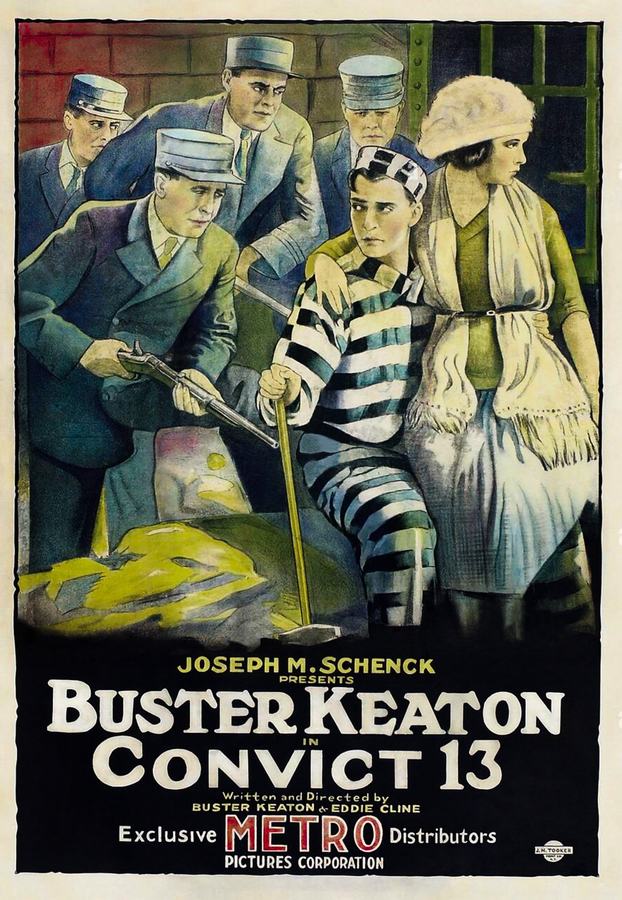
A definitive 7.1/10 rating for a film that redefined the boundaries of cult cinema. Convict 13 remains a cornerstone of transgressive art.
The year 1920 marked a seismic shift in the landscape of American humor, as Buster Keaton stepped away from the shadow of Roscoe "Fatty" Arbuckle to forge a solo path defined by stoic resilience and a terrifying disregard for his own physical safety. Convict 13 stands as a quintessential artifact of this era, a two-reeler that bridges the gap between the chaotic slapstick of the vaudeville stage and the sophisticated visual storytelling that would eventually define Keaton's later masterpieces. Unlike the more grounded narratives found in contemporary works like The Girl Who Came Back, Keaton’s foray into the prison subgenre is a fever dream of kinetic energy and dark, almost nihilistic comedy.
The film opens on a golf course, a space of bourgeois leisure that Keaton immediately dismantles with surgical precision. The physics of the golf ball become a source of existential dread; every swing is a gamble with the laws of motion. This sequence is not merely a collection of jokes but a study in spatial awareness. When Keaton’s protagonist is assaulted and swapped into convict stripes, the transition is jarringly efficient. This theme of sudden, violent displacement echoes the narrative tension found in Kidnapped, though Keaton substitutes the melodrama for a series of escalating physical confrontations that defy the gravity of the situation.

One cannot discuss Convict 13 without addressing the infamous hanging scene. In a moment of sheer audacity, Keaton turns the gallows—a symbol of ultimate finality—into a source of elastic levity. As the trapdoor opens, the rope stretches, and Buster bounces with a rhythmic, hypnotic grace. It is a moment that encapsulates the "Great Stone Face" philosophy: the world may attempt to crush the individual, but the individual, through a combination of luck and mechanical serendipity, will remain unperturbed. This sequence possesses a surrealist quality that makes the social commentary of films like Thieves feel almost pedestrian by comparison.
The presence of the Keaton family—Joe, Louise, and Harry—adds a layer of meta-textual depth to the production. This was a family business, and the synchronicity between the performers is palpable. Joe Roberts, the "Big Boy" to Keaton’s diminutive hero, provides the necessary physical foil. Roberts’ performance as the menacing guard is a masterclass in the "immovable object" archetype, allowing Keaton to play the "irresistible force" with frantic, albeit calculated, energy. This dynamic is far more explosive than the domestic subtleties explored in Their Baby or the romantic entanglements of The Thousand-Dollar Husband.
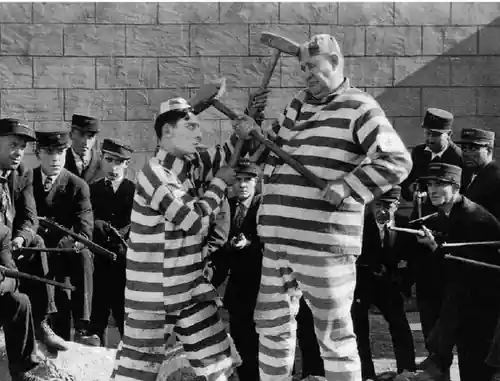
Sybil Seely, as the warden’s daughter, offers more than just a typical love interest. She is an active participant in the chaos, providing the emotional anchor for a story that frequently threatens to spin off into pure abstraction. Her presence reminds the viewer that even in the midst of a prison riot, there is room for a brief, albeit absurd, romantic interlude. This juxtaposition of the harsh and the tender is a hallmark of Keaton’s early work, a tonal complexity that one might find in the more dramatic beats of The Little Dutch Girl, yet here it is served with a side of violent slapstick.
Technically, Convict 13 is a marvel of its time. The use of long takes to capture Keaton’s unedited stunts serves as a testament to his physical prowess. There are no trick cuts here; when Buster swings a morning star or navigates the prison yard with a series of acrobatic tumbles, the audience is witnessing a genuine athletic feat. The lighting, while primitive by modern standards, effectively differentiates the sunny, open golf course from the high-contrast, shadowed interiors of the prison, creating a visual shorthand for the protagonist’s descent into the underworld. This visual storytelling is as sophisticated as the historical reconstructions in Tsar Nikolay II or the atmospheric mystery of Beatrice Fairfax Episode 14: The Hidden Menace.
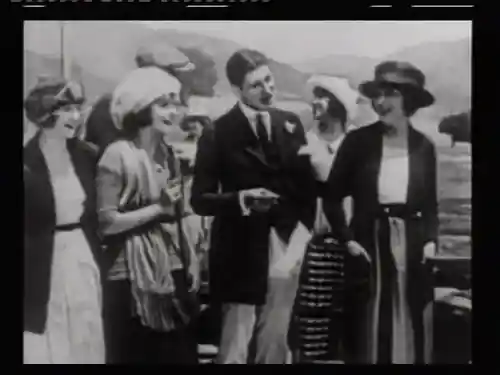
The film’s climax, involving a riot and a clever use of a heavy weight on a rope, is a precursor to the elaborate mechanical gags Keaton would perfect in The General. It is a dance of timing and tension. Each inmate is dispatched with a rhythmic inevitability that feels almost choreographed, like a ballet of the absurd. This sequence elevates the film from a simple comedy to a study in human movement and environmental interaction. It lacks the moralizing tone of The Lifted Veil, opting instead for a visceral, immediate engagement with the audience’s sense of wonder.
The revelation that the entire prison sequence was a dream—a result of Buster being knocked out by a golf ball—is a classic trope of the era, yet Keaton utilizes it to frame the preceding events as an exploration of the subconscious. It explains the surrealist nature of the gags and the logic-defying physics of the prison. This narrative framing allows the film to exist in two worlds: the reality of the golf course and the hyper-reality of the dream. This duality is a common thread in silent cinema, often seen in the psychological explorations of Tangled Fates or the identity crises of The Beautiful Lie.
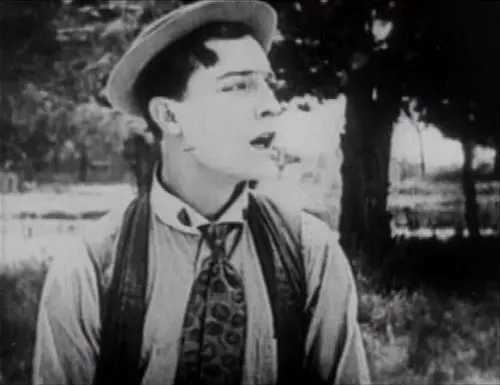
By returning to the golf course, Keaton restores the status quo, but the audience is left with the lingering impression of the carceral nightmare. The golf ball, once a tool of sport, becomes a weapon of fate. It is this subversion of the mundane that makes Keaton’s work so enduring. While other films of the period, like Help Wanted, focused on the social anxieties of the workforce, Keaton focused on the cosmic joke of existence itself. His characters are often at the mercy of inanimate objects, and Convict 13 is perhaps the purest expression of this struggle.
To view Convict 13 today is to witness the birth of a new visual language. In the post-war fervor of 1920, audiences were hungry for a brand of escapism that was both physically demanding and intellectually stimulating. Keaton delivered this in spades. The film lacks the jingoistic overtones of The Historic Fourth of July in Paris or the overt espionage tropes of A Spy for a Day, focusing instead on the universal comedy of the human condition. It is a film that rewards repeated viewings, as each frame is packed with subtle background gags and meticulous set design.
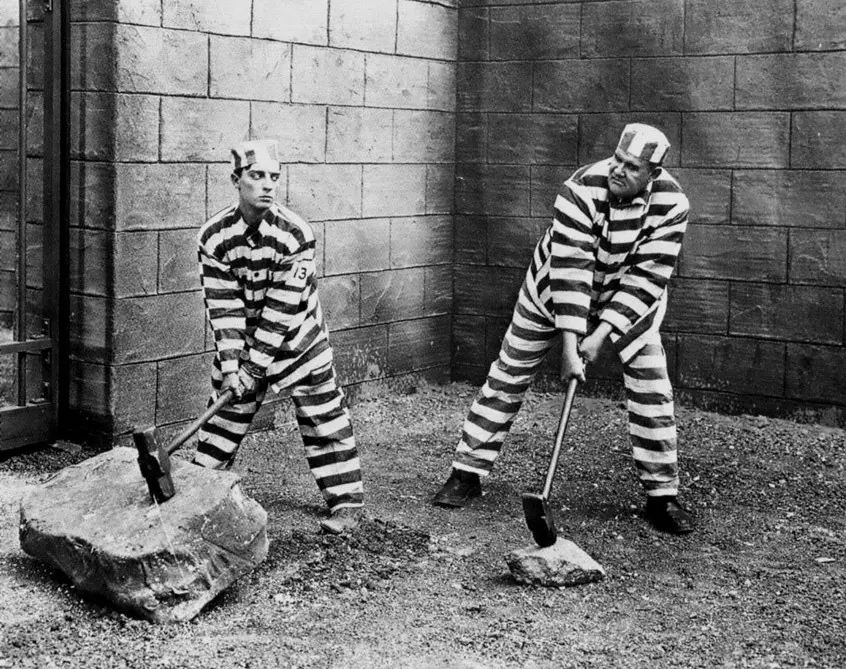
In the broader context of Keaton’s filmography, Convict 13 serves as a crucial evolutionary step. It shows a filmmaker beginning to understand the power of the medium to manipulate time and space. The prison yard is not just a setting; it is a character in its own right, pushing back against the protagonist at every turn. This adversarial relationship with the environment would become the defining feature of Keaton’s career, culminating in his masterworks of the mid-20s. Even in this early short, the seeds of genius are fully visible, germinating in the fertile soil of silent slapstick.
Ultimately, Convict 13 is a triumph of imagination over budget. It proves that with a handful of talented performers, a few well-placed props, and a visionary at the helm, the cinema can transform even the most dire of settings—a prison—into a fountain of joy. It remains a vital piece of film history, a reminder that before there were digital effects and complex dialogue, there was the pure, unadulterated power of the image and the incredible resilience of a man in a flat hat.
IMDb 7.2
1937
Community
Log in to comment.