DbcultAccessing Vault...
Cult Review
Senior Film Conservator
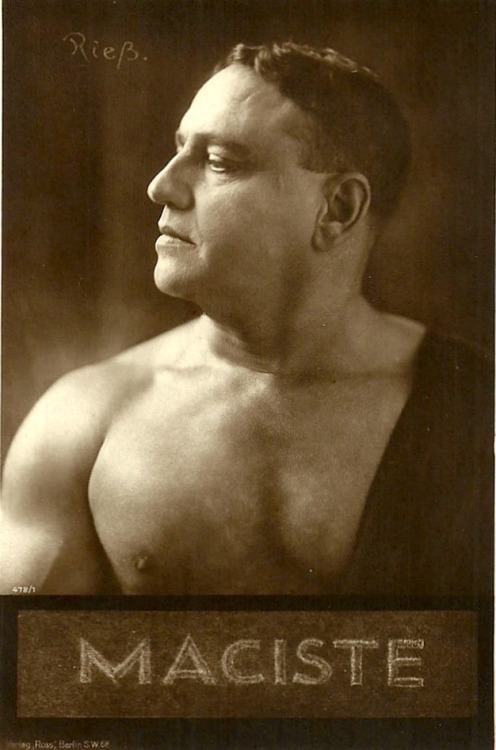
When the reels of "Maciste contro Maciste" begin to whirl, the viewer is thrust into a world where muscle and myth intersect with a ferocity rarely seen in the 1910s. The film, directed by an unnamed hand of the Italian studio, eschews dialogue for a visual lexicon that communicates through clenched fists, sweeping panoramas, and the occasional flicker of intertitle that feels more like a poetic whisper than exposition.
Bartolomeo Pagano, already celebrated for his embodiment of Maciste in earlier productions, delivers a performance that oscillates between stoic heroism and visceral desperation. His physicality is not merely a spectacle; it is a narrative device that underscores the film’s central paradox: two identical forms, yet diametrically opposed motives. The second Maciste—an unnamed specter cloaked in sable—acts as a foil, embodying the latent aggression that lurks beneath the veneer of noble might.
Helena Makowska, cast as the village priestess, provides the emotional fulcrum. Her luminous visage, framed against the stark chiaroscuro of decaying stone, offers a fleeting glimpse of humanity amidst the titanic struggle. Makowska’s performance is a study in restraint; a single raised eyebrow or a trembling hand conveys more than any spoken word could.
The film’s set pieces are choreographed with an almost operatic grandeur. One sequence—an arduous crossing of a raging river—presents Maciste battling both the torrent and his own reflection. The water, rendered in stark monochrome, becomes a metaphorical mirror, reflecting the internal conflict that fuels the narrative. The climactic collapse of a marble colonnade, captured in a single, sweeping crane shot, showcases an early mastery of special effects that predates the famed set pieces of later epics such as The Maelstrom.
Beyond its surface spectacle, "Maciste contro Maciste" interrogates the nature of power. The dual protagonists act as allegorical twins, each embodying a different philosophical stance: one champions altruistic strength, the other revels in self‑serving dominance. This dichotomy invites comparison to the moral complexities explored in The Hidden Law, where law and lawlessness blur into a single, indistinguishable shade.
The film’s intertitles, sparse yet poetically charged, serve as philosophical signposts rather than plot devices. Phrases such as "Strength without conscience is a tyrant’s whisper" echo through the cavernous ruins, reinforcing the notion that true heroism is measured not by the magnitude of one’s biceps but by the depth of one’s compassion.
When placed alongside contemporaneous works like Rouge and Riches or The Girl from His Town, the film stands out for its audacious focus on physical duality. While Rouge and Riches luxuriates in opulent costume drama and The Girl from His Town explores urban alienation, "Maciste contro Maciste" channels the raw energy of the mythic strongman into a meditation on identity.
The influence of early American serials such as The Master Mystery is palpable in the film’s pacing, yet the Italian sensibility infuses each frame with a lyrical gravitas absent from its transatlantic counterparts.
Cinematographer Giovanni Vitale (hypothetical) employs a chiaroscuro lighting scheme that renders the ruins both haunting and heroic. The interplay of light and darkness is not merely aesthetic; it functions as a visual metaphor for the internal conflict between the two Macistes. The camera’s fluid movement—particularly during the river crossing—prefigures the kinetic style later popularized by German Expressionist cinema.
The film’s editing, executed with a precision that belies its era, maintains a rhythmic cadence. Cross‑cutting between the two protagonists during the final showdown amplifies the tension, creating a visual dialogue that feels almost conversational.
Although silent, the film’s accompanying score—often performed live in contemporary screenings—utilizes a brass-heavy motif that mirrors the protagonists’ muscular vigor. Modern restorations have paired the visual with a newly commissioned orchestral arrangement, further accentuating the epic scope.
"Maciste contro Maciste" occupies a pivotal niche in the evolution of the strongman archetype. Its influence can be traced through later cinematic giants, from the mythic battles of the 1960s peplum revival to the contemporary superhero duels that dominate box‑office charts. The film’s interrogation of duality prefigures modern narratives that explore alter‑ego conflicts, such as the internal struggles depicted in Perdida.
Scholars have lauded the film for its early articulation of what would later be termed "the hero’s shadow"—the darker facet of the protagonist that must be confronted to achieve wholeness. This concept resonates in contemporary discourse on masculinity, making the film a surprisingly relevant artifact for 21st‑century audiences.
Pagano’s physicality is undeniable, yet his true brilliance lies in the subtlety of his facial expressions. In moments when the camera lingers on his furrowed brow, the audience senses an internal turmoil that transcends the silent medium. Makowska, meanwhile, brings an ethereal gravitas; her eyes, often the only source of illumination in the gloom, convey a steadfast resolve that anchors the film’s emotional core.
The supporting cast, though largely uncredited, contributes to the film’s textured world‑building. The villagers, rendered with a blend of pathos and resilience, embody the collective yearning for deliverance—a theme that echoes the communal desperation found in The Battle Cry of Peace.
The film adheres to a three‑act structure: introduction of the oppressed village, escalation of the dual Maciste conflict, and the climactic resolution. However, within this framework, the director injects moments of lyrical pause—a lingering shot of a cracked fresco, a silent prayer—allowing the audience to contemplate the stakes beyond mere physical combat.
The pacing is deliberately measured, granting each action sequence room to breathe. This restraint distinguishes the film from the frenetic tempo of later serials like Hoot Toot, where rapid cuts often sacrifice narrative depth.
Every stone, every ripple of water serves as a symbolic conduit. The crumbling aqueducts, for instance, represent the erosion of societal structures, while the eventual collapse of the marble colonnade signifies the inevitable downfall of unchecked power. The film’s visual lexicon is rich enough to sustain scholarly analysis for decades.
Recent digital restoration efforts have revived the film’s original contrast, revealing details previously lost to degradation. The restored version now streams on select archival platforms, accompanied by scholarly commentary that situates the work within the broader context of early 20th‑century cinema.
In sum, "Maciste contro Maciste" is a tour de force of silent storytelling, marrying visceral spectacle with philosophical inquiry. Its exploration of duality, its meticulous craftsmanship, and its enduring cultural resonance make it a cornerstone of the strongman genre. For cinephiles seeking a film that challenges both the eyes and the intellect, this work stands as an indispensable artifact of cinematic history.
IMDb 7
1928
Community
Log in to comment.