DbcultAccessing Vault...
Cult Review
Senior Film Conservator
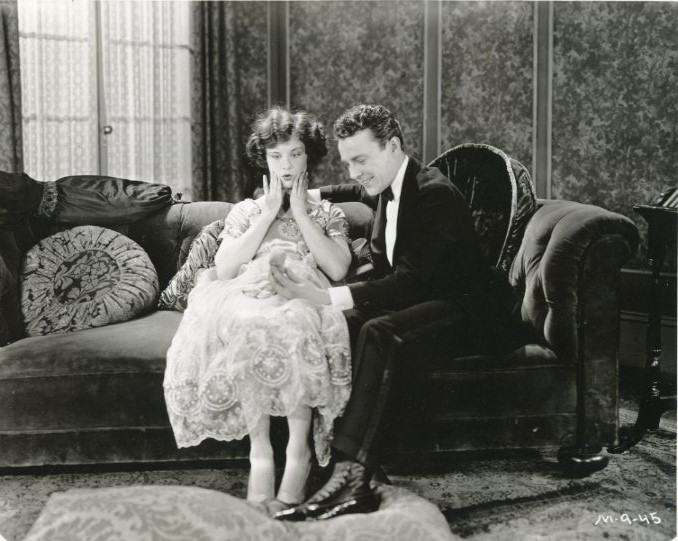
Picture, if you can, a newsroom lit by sputtering gas-jets, the air thick with ink, ambition, and the metallic scrape of typewriter keys. In this cathedral of clamor, Larry Hart—looking every inch the Jazz-Age messiah in a three-piece suit—denounces the family trade: the commodification of human misery for Monday-morning circulation spikes. The film wastes zero time moralising; instead it hurls us into the ethical deep end, letting the clatter of teletypes and the flashbulbs of crime-scene photographers sketch the stakes.
Denison Clift’s screenplay, lean yet literate, treats every intertitle like a haiku of class tension. When Larry spits, "You’re selling hunger by the column-inch, Father," the subtitle burns white-hot against the black screen, a match struck in a barn full of hay. That confrontation ignites the narrative fuse: a reckless social experiment that drags our dilettante rebel from mahogany boardroom to urine-stained stairwell where rats scuttle like gossip.
Enter Jenny Carson, the proverbial rose in the ash-barrel, only she’s dressed in corduroy castoffs and answers to "Jimmy" to keep the wolves guessing. Shirley Mason plays her with eyes that dart like swallows, always half a second from flight, yet capable of sudden stillness that pins Larry—and the viewer—to the wall. Their meet-cute is anything but cute: a near-mugging in which Jenny brandishes a rusty shovel, a gender reveal that lands like a slap, and a hurried escape through a fish market that smells cinematically pungent even in monochrome.
Fast-forward through a whirlwind of job-hunting montages—because 1920 audiences expected speed—and Jenny lands at a hash-house where the coffee could degrease an engine. The camera lingers on her first paycheck: coins that clink like bells of freedom. Yet liberation under capitalism is always provisional; Clift knows this, and he lets the glow linger just long enough to break our hearts later.
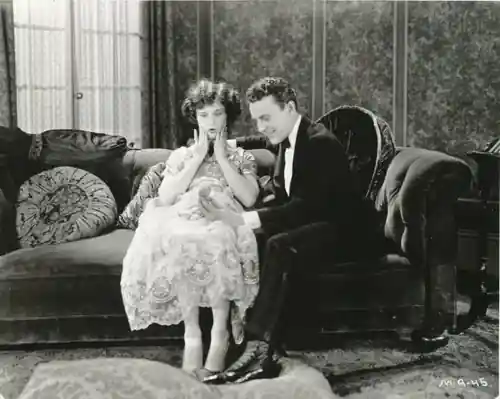
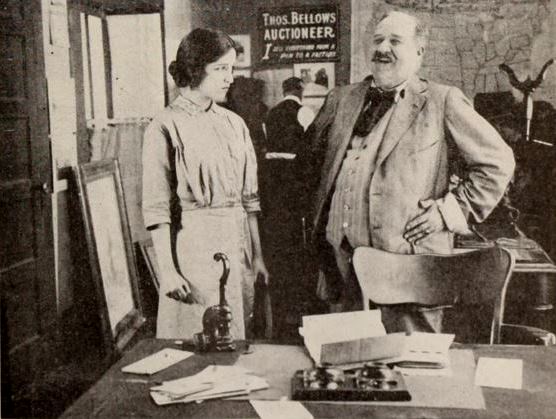
Romance blooms between Larry’s idealism and Jenny’s survivor pragmatism, a graft of ivy onto brick. Jack Pratt plays Larry with eyebrows forever arched toward utopia, the kind of guy who believes a newspaper can be a pulpit. Their courtship unfolds in stolen moments on the diner’s back stoop: cigarette tips glowing like fireflies, steam from the laundry vent painting ghostly murals in the air. Van Auker’s camera glides in, close enough to catch the tremor in Jenny’s lip when she confesses she’s never seen the ocean—an admission that, in 1920, feels like admitting you’ve never seen hope.
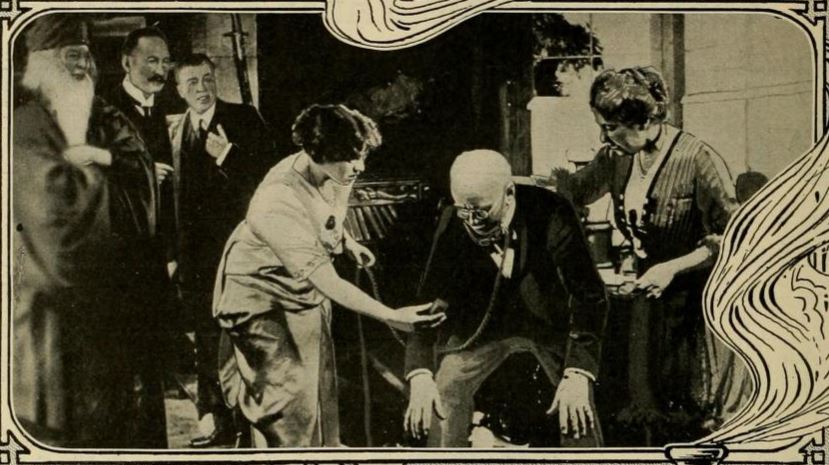
Conflict detonates when father Hart—Edwin B. Tilton in a career-defining turn, all silver moustache and moral gangrene—recognises Jenny’s surname during a patronising visit to the café. In a bravura close-up, the lens catches the moment his pupils dilate: not with compassion but with the predator’s realisation that prey has wandered back onto the board. Tilton plays the epiphany like a man tasting something rancid, then hiding the disgust behind a newspaper. His subsequent prohibition of marriage lands with monarchal arrogance: "I’ll see her in a gutter before she weds my son."
Which brings us to Joe Farley—Raymond McKee, gaunt, wolf-eyed, a specter of ruined partnerships. Farley’s re-entrance is staged like a resurrection in a back-alley church: a silhouette under a flickering bulb, the slow reveal of a scarred face, and ledgers clutched like scripture. Those books become the film’s McGuffin and moral compass, ink-blotted testaments proving that the real embezzler was Hart Senior, who weaponised gossip to exile his partner and pocket the profits.
The denouement is anything but sedate: a night-time chase through the printing presses, rollers spinning like colossal gears in Hades, paper storms blotting out faces until identity itself seems malleable. Farley corners Hart père amid the mechanised clamor; the confession is whispered as if shame could be muted by the roar of industry. Clift withholds a conventional fist-fight; instead, he lets the machinery of truth—rollers, ink, type—exact poetic justice. Hart’s ink-stained hands, held up in surrender, visually rhyme with Jenny’s earlier wage-coins, suggesting that money and guilt are both forms of currency that eventually change hands.
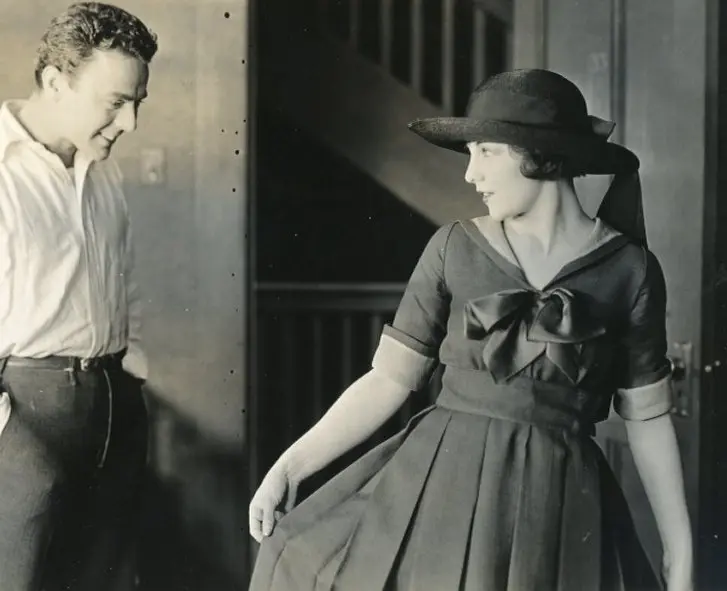
By the time dawn seeps into the newsroom, Larry has seized the editorial chair, Jenny stands beside him no longer waif but partner, and the front page that once sensationalised poverty now announces a series on tenement reform. The final intertitle—"Truth is the only ink that never fades"—could read as hokey, but Mason’s tear-glazed smile sells it; hope, the film insists, is not naïveté but a daily practice.
Comparisons? Viewers steeped in The Land of Opportunity will recognise the shared preoccupation with immigrant exploitation, though The Little Wanderer trades that film’s epic sweep for intimacy. The moral rigor of The Sign of the Cross lurks here too, minus DeMille’s biblical bombast; both films insist that spectacle without conscience is pornography. On the other hand, fans of The Hayseed’s bucolic slapstick might find this outing unapologetically urban, yet the comic timing of diner sequences pays homage to rural romps—proof that early cinema’s comic DNA infiltrated even melodrama.
Technically, the movie is a time-capsule of transition-era craft: title cards flaunt art-deco borders that anticipate the flapper aesthetic, while the camera work alternates between stately long takes—actors performing in theatrical proscenium—and the emergent grammar of inserts (a hand on a doorknob, a headline in close-up). The tinting strategy is instructive: amber for interiors suggesting gaslight, cerulean for exteriors implying dusk, and a startling crimson blush during the press-room climax, as though the film itself blushes at the scandal.
Performances are calibrated for the balcony as well as the orchestra pit. Mason’s Jenny never begs for sympathy; instead she earns it with micro-gestures—how she pockets her first tip as if it might evaporate, the fractional stiffening when a male customer pinches her side. Jack Pratt risks hamminess in the early reels, all grandiloquent hand chops, but as Larry’s privilege erodes, his body folds inward, shoulders becoming commas punctuating uncertainty.
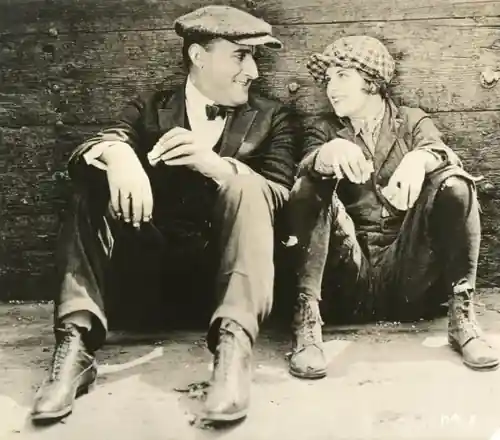
Edwin B. Tilton steals scenes with the languid cruelty of a man who has never been told no. Watch how he lights a cigar: the flare is an act of arson against the weak. When his villainy unravels, Clift denies him a villain’s curtain call; instead he is absorbed back into the machinery, a ghost haunting the margins of the very paper he once weaponised—a visual prophecy of tycoons undone by their creations.
Yet the film’s boldest stroke is tonal: it refuses to sanctify the poor. The slum denizens who orbit Jenny can be predatory; the café cook who offers her shelter also skims her wages. Clift’s socialism is not sainthood but solidarity, an insistence that dignity is a collective project, not a gift from benevolent elites.
Modern viewers will note eerie resonances: the click-baiting scandal sheets of 1920 are today’s algorithmic outrage mills; Jenny’s gendered masquerade foreshadows contemporary debates on safety in public space. The film’s faith that exposing malfeasance in print can redistribute power feels simultaneously quaint and urgent in an era of deep-fakes and corporate media capture.
If The Little Wanderer were released tomorrow, cinephiles would hail it as a prestige mini-series; its DNA threads through everything from The Wire to Spotlight. Yet its silent eloquence—how silence amplifies the rustle of a paper boy’s coin—reminds us that cinema began as a radical medium, a machine for seeing society’s blind spots.
Flaws? A middle act relies on coincidence—Farley’s ledgers surfacing at the precise moment Larry’s romance peaks—but the breakneck pace leaves scant room to quibble. Contemporary feminists might bridle at Jenny’s fate hinging on marriage; still, the film codes wedlock less as patriarchal prize than as strategic alliance, a merger of moral capital.
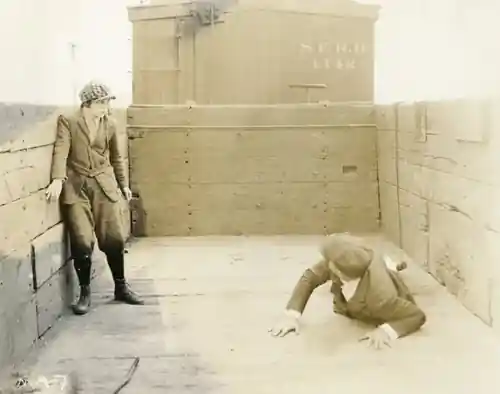
Restoration-wise, surviving prints are spotty—nitrate decomposition nibbles the edges—yet the emotional core survives the bruises. Recent 4K scans by EYE Filmmuseum reveal textures previously muddied: the houndstooth of Larry’s lapels, the café’s cracked linoleum like a map of urban fracture. Under a dark-orange darkened sky, these details pulse with newfound vitality.
Score accompaniments on the Blu-ray range from ragtime piano to a haunting chamber quartet that channels Yiddish lament; either route underscores the film’s porous border between melodrama and social document. Viewers opting for the quartet track will find the final ascent of the camera toward the newsroom’s skylight—morning light flooding in—plays like secular benediction.
For the cine-curious, pair this with Triumph des Lebens for a transatlantic double-bill on institutionalised poverty, or chase it with The Princess of India if you crave ornate exoticism after the gutters of New York. But let The Little Wanderer stand alone first; its whisper still drowns out many a blockbuster roar.
In the end, the film asks a question newspapers themselves rarely pose: who gets to author the narrative of the powerless, and at what cost? Larry’s answer is to cede the byline to those who actually live the story. A century on, that remains a revolution in progress, one pixel, one headline, one vote at a time. Until the next reel, keep the projector humming and the ink wet; history, like nitrate, is flammable, but truth—when struck by light—can burn brighter than any bulb.
IMDb 4.6
1914
Community
Log in to comment.