DbcultAccessing Vault...
Cult Review
Senior Film Conservator
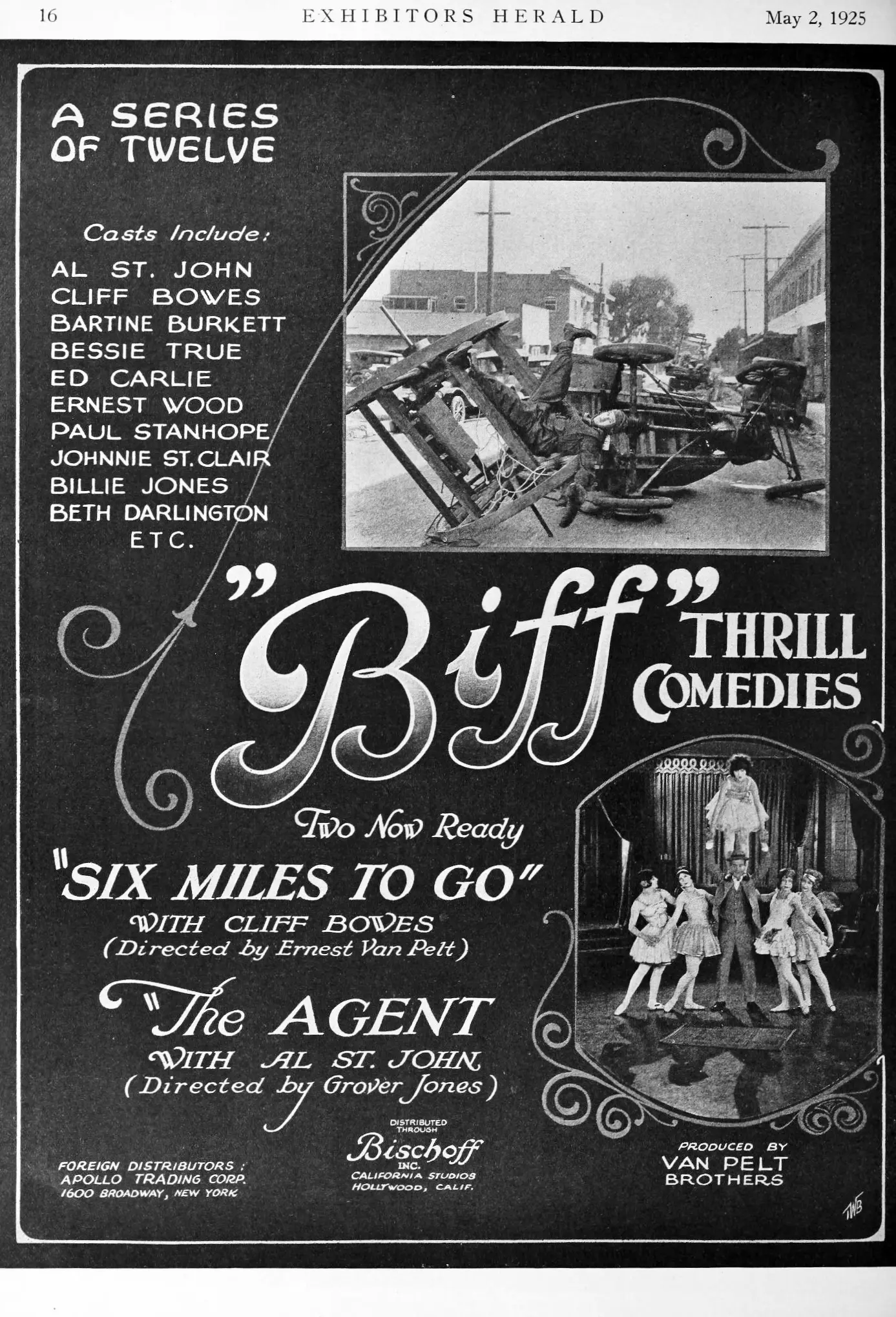
Is it worth watching this century-old relic today? Short answer: Yes, but only if you appreciate the raw, unpolished grit of early physical comedy over a coherent narrative.
This film is for enthusiasts of silent-era stunts and those who find humor in the sheer danger of pre-CGI filmmaking; it is definitely not for viewers who require emotional depth or complex character arcs.
1) This film works because Al St. John possesses a level of athletic fearlessness that makes every fall feel genuinely perilous.
2) This film fails because the secondary characters, including John Sinclair, are given almost nothing to do but react to Al's whirlwind energy.
3) You should watch it if you want to see the missing link between the circus acrobatics of the 1800s and the modern action choreography of Jackie Chan.
Al St. John was never the most subtle comedian. Unlike the calculated stillness of Buster Keaton or the frantic charm of Harold Lloyd, St. John operated with a jagged, almost violent energy. In The Live Agent, this energy is channeled into the persona of a man who is essentially a walking hazard. The premise—an insurance agent who causes accidents—is a stroke of dark-comedy genius that predates the cynical humor of the 1940s. It is a concept that would feel right at home in a darker film like Morals for Men, yet here it is played for laughs.
The opening sequence sets the tone immediately. St. John doesn't just walk into a scene; he tumbles. His interaction with the environment is adversarial. When he attempts to sell a policy to a man on a construction site, the choreography is terrifying. There is a moment where St. John dangles from a ledge that looks suspiciously high off the ground. There are no safety nets visible. There are no green screens. It is just a man, a suit, and the very real possibility of a hospital visit. It works. But it’s flawed.
The pacing of the film is its greatest enemy. While the stunts are top-tier, the connective tissue between them is thin. We see Al move from one location to the next with little motivation other than "find the next gag." Compared to the more structured narrative of Marriage in Transit, this feels like a collection of sketches rather than a complete film. However, the sketches are so high-octane that you rarely have time to care about the lack of plot.
Al St. John’s performance is a paradox of grace and clumsiness. He was famously trained by his uncle, Roscoe "Fatty" Arbuckle, and that influence is visible in his timing. But St. John added a layer of rural eccentricity—the "rube" character—that makes his insurance agent feel like an outsider trying to play a city man’s game. His facial expressions are broad, bordering on the grotesque, which might alienate modern audiences used to the understated acting in None So Blind.
Bartine Burkett provides a necessary anchor, though her role is largely decorative. She represents the "prize" at the end of the corporate ladder, a trope common in 1920s cinema. Her presence is most felt in the quieter moments, which, admittedly, are few and far between. The real "co-star" of the film is the cinematography. The camera is often static, as was the custom, but the framing of the stunts is impeccable. The director understands that the humor comes from seeing the entire body in motion. If you cut to a close-up during a fall, you lose the magic. The film respects the wide shot.
The Live Agent is worth watching if you are a student of film history or a fan of extreme physical performance. While the story is repetitive, the technical execution of the stunts provides a thrill that modern digital effects cannot replicate. It is a short, sharp burst of 1920s adrenaline that showcases why Al St. John was a force to be reckoned with.
One specific scene involving a runaway vehicle highlights the film's creative peak. St. John manages to get himself entangled with the car in a way that seems to defy physics. This isn't just falling; it's geometry. He uses his limbs as levers, pivoting around the chassis with the precision of a clockmaker. It’s a stark contrast to the more grounded, dramatic tone of Devyatoe yanvarya. In The Live Agent, gravity is a suggestion, not a law.
However, I would argue that the film’s relentless pace actually works against it in the final five minutes. The audience becomes desensitized to the spectacle. When everything is a climax, nothing is. A bit more of the slow-burn tension found in The Avalanche could have made the final stunts hit even harder. Instead, the film just... stops. It’s an abrupt ending that leaves you wanting more substance and fewer bruises.
Pros:
The stunts are genuinely impressive and hold up by modern standards. The film's short runtime ensures it doesn't overstay its welcome. St. John’s energy is infectious and unique.
Cons:
The supporting cast is forgettable. The ending feels rushed and lacks a proper punchline. Some of the "accidents" feel too staged even for a slapstick comedy.
The Live Agent is a fascinating, if somewhat shallow, look at a comedian who was willing to break his neck for a laugh. It doesn't have the soul of Birthright or the wit of The Golf Bug, but it has guts. Al St. John was a pioneer of the "pain as entertainment" school of thought, and this film is his manifesto. It’s loud, it’s messy, and it’s undeniably impressive. It is a 7/10 for history buffs and a 5/10 for casual viewers. Ultimately, it’s a relic that still has enough spark to singe your eyebrows if you get too close.
IMDb —
1926
Community
Log in to comment.