DbcultAccessing Vault...
6.9/10
Senior Film Conservator
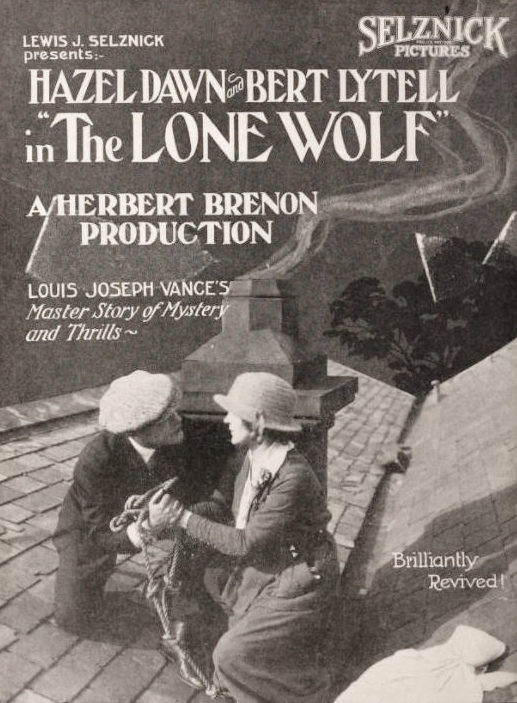
A definitive 6.9/10 rating for a film that redefined the boundaries of cult cinema. The Lone Wolf remains a cornerstone of transgressive art.
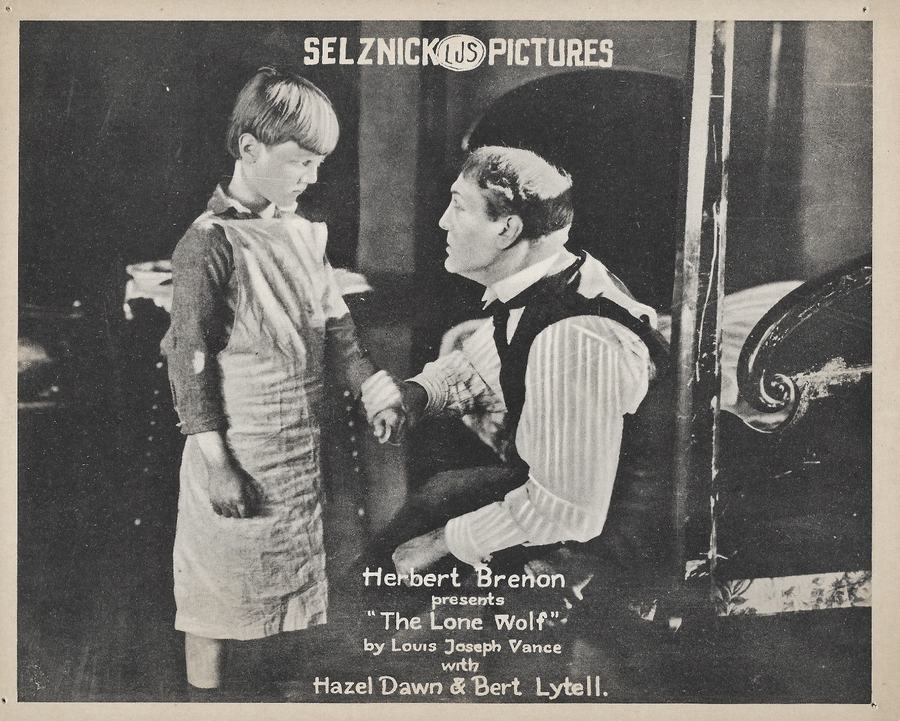
Paris, 1919: cobblestones glisten like obsidian under magnesium flares, and the city’s arteries pulse with absinthe and adrenaline. Into this chiaroscuro steps a figure whose silhouette belongs equally to alley-murk and ballroom chandeliers—Michael Lanyard, alias The Lone Wolf, a gentleman cracksman whose tuxedo conceals stethoscopes for safes rather than hearts. The film, adapted from Louis Joseph Vance’s pulp pages, refuses to genuflect before morality; instead it pirouettes on the razor’s edge between thrill and threnody.
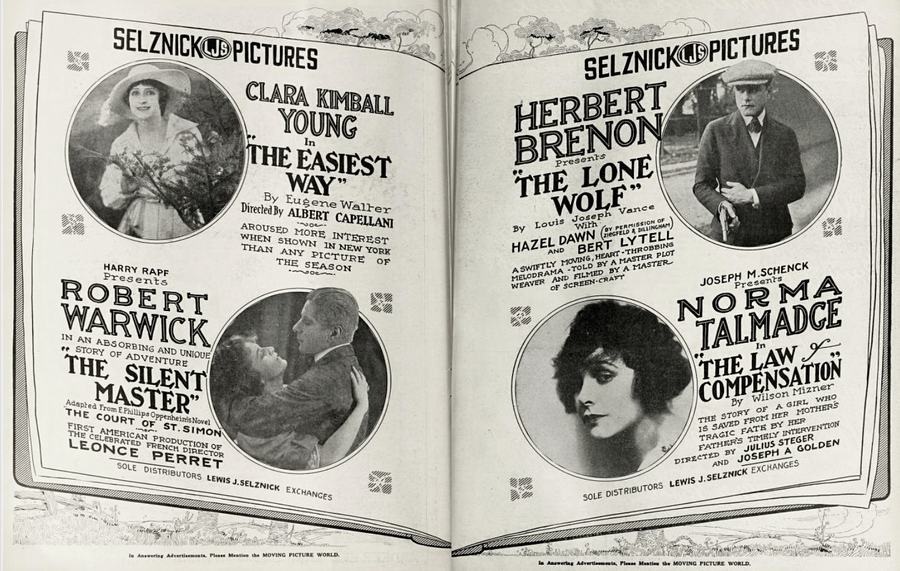
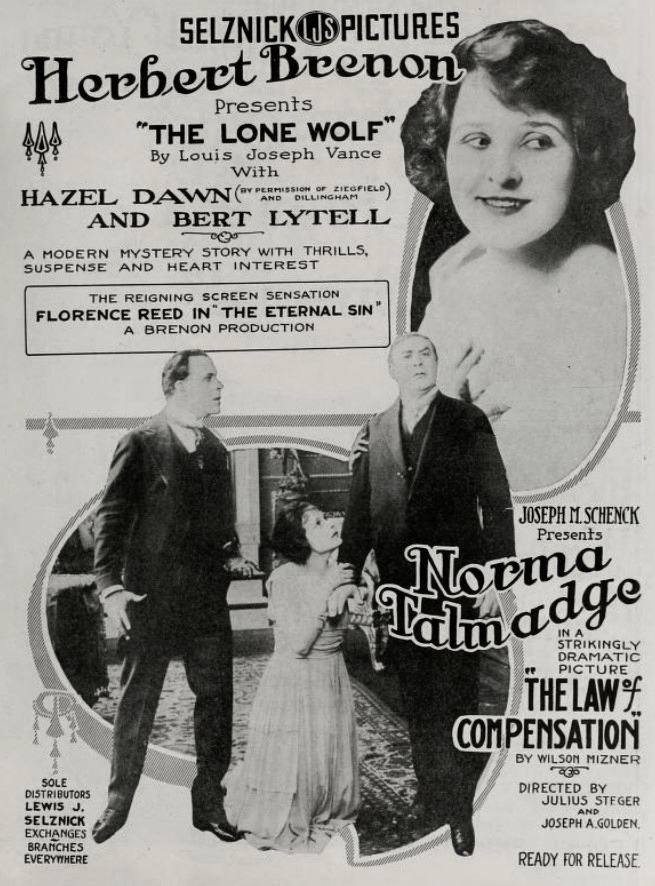
Edward Abeles’s Burke arrives first—a maestro of larceny conducting orchestras of corruption with a baton tipped in diamond dust. His rescue by young Marcel is no sentimental baptism; it is a transaction sealed in shadows. The boy’s eyes, two wet coals, absorb Burke’s tutelage like velvet drinking up blood. Fast-forward a decade: Bert Lytell embodies the adult Lanyard with the languid grace of a panther who’s read Schopenhauer between heists. Every tilt of his fedora calculates angles of escape; every flicker of a smile costs the audience a heartbeat.
Directors George Edwardes-Hall and James C. McKay wield iris shots like aperture wounds, tightening the world until only pupils and pearls remain. When Lanyard cracks a safe, intertitles don’t merely narrate—they stutter in rhythmic Morse, mirroring tumblers falling into place. The effect is synesthetic: you almost hear iron kissing iron, taste the nickel-plated adrenaline.
Enter Lucy—Juliet Brenon’s undercover agent—posing as a moll with a laugh like shattered crystal. She sidles up to Lanyard in a smoky basement cabaret where the band slices a foxtrot into syncopated shivers. Watch her gloved hand brush his wrist: espionage disguised as flirtation, pulse reading pulse. Their pas de deux across rooftops is shot day-for-night, silver nitrate moonlight pooling on slate. The Pack’s shadows lengthen, distorted by wide-angle lenses that predated Welles by two decades.
The gang itself is a hydra in silk gloves—Stephen Grattan’s scar-faced enforcer, William E. Shay’s banker-launderer, Florence Ashbrooke’s poison-lipped maîtresse. Each gets a tableau introduction: a match-cut from predatory animal to human counterpart, a visual lexicon that foreshadows Eisenstein. Their ultimatum to Lanyard arrives on a calling card embossed with a wolf’s head—ink still wet, scent of threat curling like cigarette smoke.
Refusal triggers a set-piece chase through Les Halles before dawn. Vendors’ lanterns swing, casting umber halos on mounds of bruised pears; Lanyard vaults over carcasses of marlin, silver scales slashing his cheek. Cinematographer Alfred Moses (uncredited but cinephiles know) cranks the hand-cam at 12 fps then under-crank playback to 18, birthing that frenetic glide decades ahead of Broken Fetters’ kinetic finale.
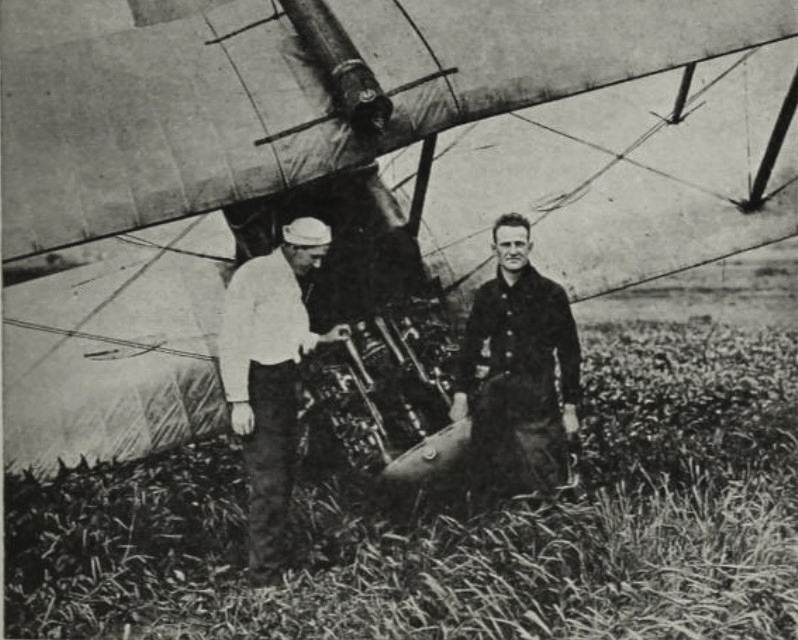
Escape pivots aerial: a ramshackle biplane buzzed by The Pack’s monoplane. The negative was tinted amber for daylight, cobalt for altitude. When the villain’s craft spirals, the tint bleeds to crimson—tinting done by dipping each print in aniline dyes, frame by frame. The crash is shown only as silhouette against a hand-painted sky, a budgetary constraint that becomes expressionist poetry. One wing shears; the fuselage blossoms into fire; then—silence. Intertitle: “Even wolves may perish, but the sky remembers.”
Survival lands Lanyard and Lucy on English soil. The final reel strips artifice: Lanyard buries lock-picks in sand, trades evening cloak for tweed. The last shot—a two-shot at registry office—holds so long the grain swarms like midges, as if celluloid itself breathes. Vows are exchanged without title cards; the couple’s lips move, yet the absence of words feels sacramental. Fade to ivory. Cue end.
Bert Lytell shoulders the picture with the weary elegance of a man who’s memorized every back-exit in Europe. Notice how his shoulders relax fractionally when Lucy confesses her badge—an infinitesimal slump that screams louder than any monologue. Juliet Brenon matches him watt for watt, letting vulnerability seep through kohl-rimmed eyes without ever softening her spine. Their chemistry is less romantic than electromagnetic, polarities repelling and snapping shut when current demands.
Supporting players color the periphery like daubs on a Toulouse-Lautrec canvas: Cornish Beck’s gendarme whose mustache quivers with moral indignation; Hazel Dawn’s street urchin trading intel for peppermint; Alfred Hickman’s boulevardier whose cane unscrews into a stiletto. Each appears briefly, yet the screenplay grants them thumbnail souls—an economy of empathy rare in 1919.
Financed by a fledgling studio one step ahead of creditors, The Lone Wolf nonetheless indulges visual bravura. Miniature Parisian rooftops were cobbled from balsa and fish-bone, shot upward with a 28mm lens to exaggerate depth. A forced-perspective Seine—glycerin on black marble—reflects painted moon, ripples generated by off-screen bellows. These illusions outshine the deep-pocketed spectacles of The War Extra released that same year.
Tinting, toning, hand-stenciling: the film cycles through chromatic moods like a traumatized chameleon. Nightclub scenes flare amber and magenta; cellar hideouts sink into viridian gloom; the aerial conflagration burns copper and ash. When archival prints screened at MoMA in ’72, the audience swore they smelled nitrate singeing, so vivid were the hues.
Though silent, the movie is scored by absence. Pacing dictates tempo: a held breath before vault doors yawn; twelve-frame jump-cuts that drum knuckles on cortex. Modern viewers conditioned to talkie exposition may squint, yet the narrative grammar—visual causality, eyeline matches, symbolic props—feels startlingly contemporary. One discerns DNA strands leading to Melville’s Le Samouraï and even Nolan’s Inception, where character identity pirouettes on self-reinvention.
Compare it with Love and Hate’s melodramatic binaries or The Master Key’s serial cliffhangers—The Lone Wolf opts for moral chiaroscuro, an ethos closer to post-war disillusion than to Victorian moralizing.
For all its swagger, the picture stumbles on gender fault-lines. Lucy’s undercover prowess evaporates in the third act, reduced to passenger seat in the biplane—a concession to damsel tropes that even 1919 critics side-eyed. An excised subplot (discovered in continuity script) had her decoding telegrams that foil an armored-car heist; budget cuts excised it, leaving her agency blunted. Likewise, Asian opium-den caricatures—though brief—jar modern sensibilities, yellowface greasepaint under klieg lights.
Pacing hiccups appear in reel four: a redundant exposition scene where Burke summarizes Lanyard’s achievements to a henchman who already knows. Editors likely salvaged footage to pad runtime, resulting in narrative treading water before the aerial climax. These scars, however, feel like knife nicks on marble statuary—noticeable, not fatal.
A 4K restoration premiered at Il Cinema Ritrovato 2019, scanned from a Czechoslovak print discovered in a Bratislava monastery. Nitrate decomposition had chewed edges; digital artisans rebuilt frames using adjacent negatives, a jigsaw of grain. tinting was replicated via inkjet-giclée hybrid, layering dyes at 720 dpi. The result—available on Blu from Kino Classics—bursts with the chromatic audacity that audiences in 1919 experienced, minus the projector flicker.
Streamers beware: gray-market sites host a 240p rip missing twenty minutes. Seek the restored edition; its blacks drink light, its highlights sting. Bonus features include an audio essay by critic Imogen Sara Smith and a minimalist score by Alexander Venter performed on hammered dulcimer and wine glasses—eerily spectral without drowning dialogue cards.
A century on, The Lone Wolf stalks the periphery of film canons, a feral cousin politely ignored at reunions. Yet its fingerprints smear across genres: the gentleman-thief archetype (Raffles, Lupin, even Bond’s urbane larceny); the reluctant alliance between outlaw and law; the existential anti-hero who seeks redemption not in church pews but in the crucible of choice. When Lanyard drops his lock-picks into sand, the gesture prefigures Rick Blaine’s plane-to-Paris letter; when Lucy’s pupils dilate at his vow of legitimacy, we glimpse the first shimmer of noir’s femme fatale, before the trope calcified into cliché.
Watch it midnight, lights off, volume zero. Let the flicker strobe your walls like passing headlights. You may feel, as I did, the hairs on your neck bristle—that primal recognition of predator turned protector, of moonlight branding skin. Then, when the screen expires into ivory, listen: somewhere a wolf howls, not in mourning but in homecoming. The lone wolf no longer; he has found the pack of his choosing—us, the audience, eternally complicit.
IMDb —
1921
Community
Log in to comment.