DbcultAccessing Vault...
1.6/10
Senior Film Conservator
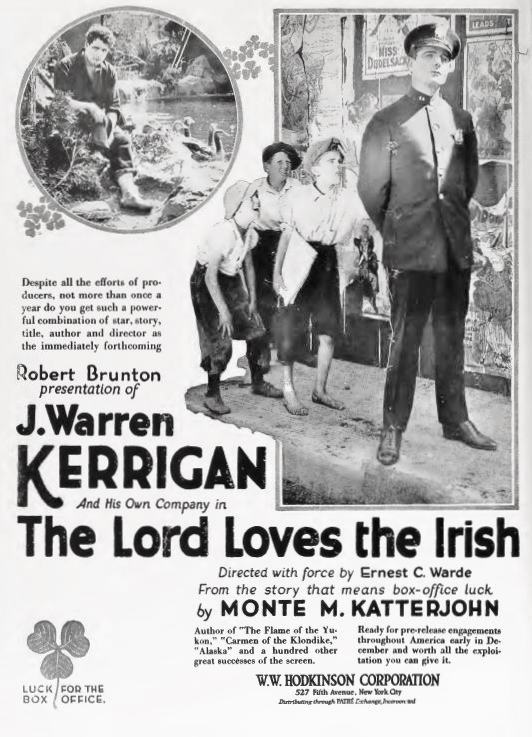
A definitive 1.6/10 rating for a film that redefined the boundaries of cult cinema. The Lord Loves the Irish remains a cornerstone of transgressive art.
Stepping back into the cinematic past, specifically to the year 1919, offers a fascinating glimpse into the storytelling sensibilities and societal reflections of a bygone era. "The Lord Loves the Irish" emerges from this period as a robust melodrama, a narrative tapestry woven with threads of immigrant ambition, illicit schemes, and the timeless pursuit of love. It’s a film that, despite its silent nature and the passage of a century, still manages to resonate with fundamental human desires and dilemmas, presenting a compelling portrait of transformation against the backdrop of a rapidly modernizing world. This motion picture is more than just a historical artifact; it's a window into the dramatic conventions that captivated audiences long before the advent of synchronized sound.
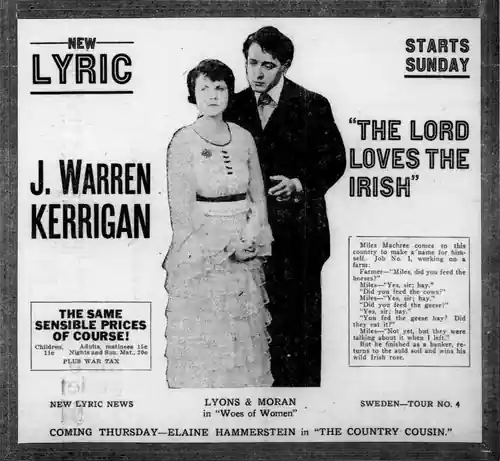
The film begins its sprawling tale in the serene, almost idyllic landscapes of Glengarry, Ireland. Here, we encounter Miles Machree, portrayed with a certain rustic charm by J. Warren Kerrigan. Miles is introduced as a man utterly content with his lot, a tiller of the soil, surrounded by the warmth of his mother, brothers, and sisters. His existence is one of quietude and tradition, a life seemingly untouched by the clamor of external ambition. This pastoral opening sets a powerful contrast for the dramatic shifts that are soon to unfold. His contentment, however, is not destined to endure. The catalyst for this profound change arrives in the form of Sheila Lynch, played by the vivacious Fritzi Brunette. Sheila is not merely a visitor; she is a harbinger of modernity, a woman imbued with the dynamism of New York City, where her father presides as a formidable bank president. Her presence in Glengarry is a return to roots, yet her perspective is firmly rooted in the forward-moving ethos of the New World. It is her pointed critique of Miles's perceived lack of ambition, her gentle yet firm chiding, that plants the first seed of restlessness within his soul. She represents a different kind of life, one where opportunity is seized, and dreams are actively pursued, rather than simply accepted.
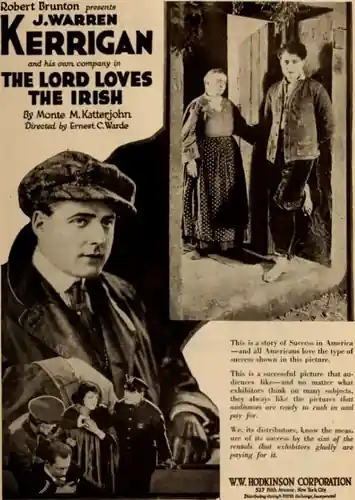
Sheila’s invitation to America is not merely a polite suggestion; it is a summons to a destiny Miles had never contemplated. The journey across the Atlantic itself symbolizes a monumental leap, a severance from the familiar comforts of Glengarry and an embrace of the unknown. Upon his arrival in New York, Miles finds himself in a bewildering urban labyrinth, a stark contrast to the open fields of his homeland. It is here that he encounters his uncle, Malachi Nolan, brought to life by William Ellingford. Malachi is a quintessential figure of the era, a saloon keeper whose establishment serves as a hub of community and political maneuvering, and an alderman, deeply entrenched in the city's political machinery. Malachi’s role as a mentor and facilitator is crucial; he is the bridge between Miles’s Irish past and his American future, guiding him through the complexities of his new environment. It is through Malachi’s influence that Miles secures a position as a policeman, a profession that demands courage, integrity, and a keen understanding of the city's underbelly – qualities Miles will soon discover he possesses in abundance.
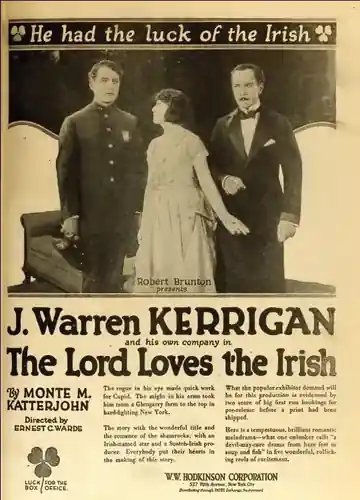
The burgeoning romance between Miles and Sheila, which seemed so promising in the idyllic setting of Ireland, faces its first significant hurdle in the unforgiving landscape of New York society. Miles is confronted with the disheartening reality of Sheila’s engagement to Allyn Dexter, her father's secretary, portrayed by Wedgwood Nowell. Dexter embodies a certain urban sophistication, a perceived social superiority that, to Miles, must feel like a formidable barrier. This revelation is a crushing blow, transforming Miles’s initial aspirations into a crucible of personal disappointment and unrequited longing. Yet, fate, as it often does in such melodramas, has a more intricate design. The narrative takes a sharp turn into the realm of crime and intrigue when Miles, through a stroke of serendipity or perhaps the vigilant instincts of his new profession, overhears a clandestine conversation. Dexter, the man who holds Sheila’s affection, is revealed to be entangled in a nefarious plot with Dr. Leon Wilson (Joseph J. Dowling), a scheme to substitute counterfeit money for genuine bank bills. This discovery thrusts Miles into a moral quandary. His love for Sheila, despite her engagement, compels him to protect her, even if it means shielding the man she is set to marry from the consequences of his own perfidy. This internal conflict adds a rich layer of psychological complexity to Miles’s character, elevating him beyond a simple hero.
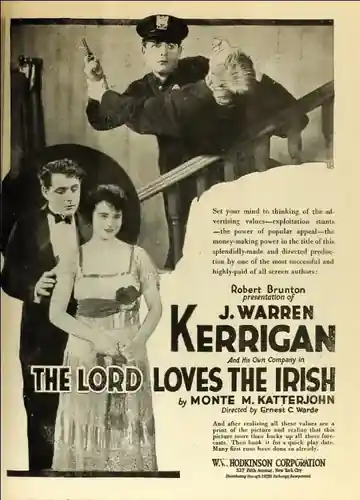
The film’s dramatic tension escalates considerably when Sheila herself becomes an unwitting pawn in Dexter and Wilson's criminal enterprise. She is lured into the counterfeiters' den, a classic trope that ratchets up the stakes and provides the perfect stage for Miles to demonstrate his heroism. His subsequent rescue of Sheila is depicted with all the urgency and suspense characteristic of silent-era action sequences. The climax unfolds in a chaotic scuffle involving the Secret Service, who have presumably been tracking the counterfeiters. In the ensuing melee, Dexter meets his untimely end, a swift and dramatic resolution to his villainy. The capture of the counterfeiters restores order, but not before the audience has been taken on a thrilling journey through the darker alleys of urban crime. The resolution of the narrative is one of poetic justice and romantic fulfillment. Miles, having proven his courage, integrity, and unwavering loyalty, ascends to a position of prominence, becoming Lynch’s private secretary. More importantly, his unwavering devotion to Sheila is finally rewarded, as he becomes her husband and, by extension, Lynch’s son-in-law. It is a triumphant conclusion, a testament to the idea that true character, rather than inherited wealth or social standing, ultimately prevails.
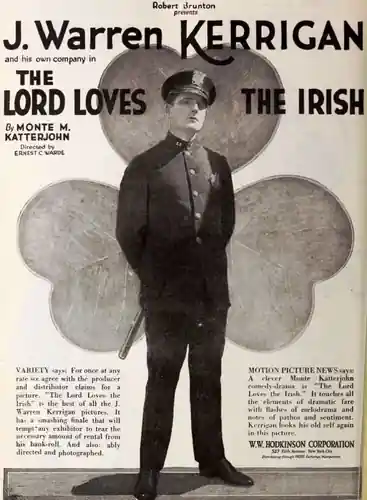
Examining "The Lord Loves the Irish" through a modern lens, one can appreciate its construction as a quintessential silent-era melodrama. The performances, particularly J. Warren Kerrigan's portrayal of Miles, would have relied heavily on exaggerated facial expressions and gestures, a necessity in conveying emotion without dialogue. Fritzi Brunette’s Sheila would have embodied the spirited, independent woman, a popular archetype emerging in the early 20th century. The film's reliance on intertitles to convey dialogue and exposition is a defining characteristic of the period, requiring audiences to engage actively with the narrative on screen. The visual storytelling, therefore, would have been paramount, with directors utilizing mise-en-scène and camera placement to maximum effect, guiding the viewer's eye and emotional response. The themes explored within the film—ambition, class mobility, the immigrant experience, and the eternal struggle between good and evil—were highly relevant to American society at the time. The influx of Irish immigrants, particularly to cities like New York, was a significant social phenomenon, and stories like Miles Machree’s would have resonated deeply with a diverse audience, offering both entertainment and a reflection of contemporary struggles and aspirations.
The character arc of Miles Machree is arguably the most compelling aspect of the film. He transforms from a contented, almost passive individual into an active agent of change, a man who not only adapts to a new world but actively shapes his destiny within it. His journey from the tranquil fields of Glengarry to the gritty streets of New York, from a simple farmer to a courageous policeman and eventually a respected figure in the banking world, is a powerful narrative of self-discovery and upward mobility. Sheila Lynch, too, is a significant character, not just as a romantic interest but as the catalyst for Miles’s transformation. Her initial disdain for his lack of ambition, followed by her eventual recognition of his inherent worth and heroism, forms the emotional backbone of the story. The film subtly explores the class distinctions of the era, contrasting Miles’s humble origins with Sheila’s privileged background and Dexter’s deceptive sophistication. Malachi Nolan serves as an intriguing bridge figure, representing the established Irish-American community, whose influence and connections are vital for newcomers like Miles. His dual role as saloon keeper and alderman speaks volumes about the intertwined nature of community, business, and politics in early 20th-century urban centers.
The counterfeiting plot, while a common device in crime dramas, is effectively employed here to create external conflict and showcase Miles’s burgeoning capabilities. It elevates the narrative beyond a simple romance, injecting elements of suspense and danger. The film, in its depiction of this criminal underworld, offers a glimpse into the anxieties surrounding financial integrity and the darker side of urban expansion during the period. The involvement of the Secret Service further grounds the story in a sense of realism, even amidst the melodramatic flourishes. Comparing "The Lord Loves the Irish" to other films of its era, one might draw parallels with narratives focusing on societal transitions or the perils of urban life. For instance, films like "The Land of Promise" (1917) often explored similar themes of immigration and the challenges faced by individuals seeking a new life in America, albeit sometimes from different social strata. The romantic entanglements and social pressures could also find echoes in dramas such as "Woman and Wife" (1918), where character choices are often dictated by societal expectations and personal aspirations. While not a direct comparison, the blend of romance and crime also bears a thematic kinship to films that delve into the darker aspects of human nature and societal corruption, even if the explicit themes differed. The overall dramatic arc of a seemingly ordinary individual rising to prominence through extraordinary circumstances is a timeless narrative, frequently revisited in various forms throughout cinematic history.
The film’s title itself, "The Lord Loves the Irish," suggests a benevolent, almost divine favor bestowed upon its protagonist and, by extension, his people. It imbues Miles’s journey with a sense of destiny, implying that his success is not merely a result of his own efforts but also a reflection of a higher purpose. This religious undertone would have resonated strongly with audiences of the time, many of whom held strong spiritual beliefs. The resolution, where Miles achieves both professional success and personal happiness, reinforces this idea of a just universe, where virtue is ultimately rewarded. The tragic demise of Dexter serves as a moral lesson, a swift and unequivocal punishment for his deceit and criminal actions. The film, in this regard, functions not just as entertainment but also as a moralistic fable, reinforcing societal values of honesty, hard work, and the triumph of good over evil. The narrative craftsmanship of Monte M. Katterjohn, the writer, is evident in how these diverse elements are woven together to create a cohesive and engaging story, one that moves from pastoral tranquility to urban intrigue with a clear sense of purpose.
In conclusion, "The Lord Loves the Irish" stands as a compelling example of early 20th-century filmmaking, a testament to the enduring power of silent cinema to tell intricate stories. It offers a rich narrative that explores themes of personal ambition, cultural assimilation, and moral fortitude, all wrapped within a classic melodramatic framework. The film’s ability to transport viewers to a specific historical moment, while simultaneously engaging with universal human experiences, is its lasting legacy. It reminds us that even without spoken dialogue, the power of visual storytelling, emotive performances, and a well-crafted plot can transcend time, offering insights into the dreams, struggles, and triumphs of those who came before us. It is a cinematic journey worth rediscovering, a vibrant piece of history that continues to speak volumes about the human spirit and the relentless pursuit of a better life, no matter the obstacles. The film, in its quiet power, reminds us that the foundational elements of compelling drama have remained remarkably consistent, adapting only in their presentation rather than their core essence.
IMDb —
1925
Community
Log in to comment.