DbcultAccessing Vault...
Cult Review
Senior Film Conservator
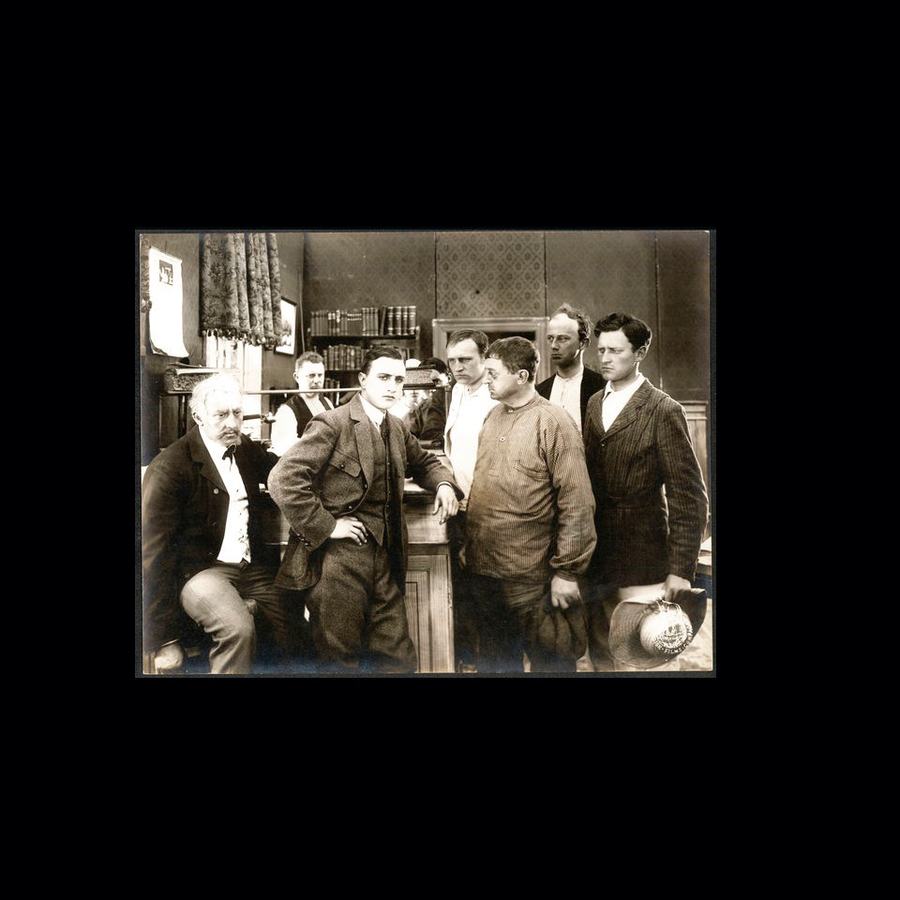
There are films you watch; then there are films that watch you—quietly, relentlessly, like a bailiff of the soul. Godsforvalteren belongs to the latter breed, a 1915 Danish chamber piece so frostbitten it could have been carved from the very ice that greases the fjords. Yet beneath its monochrome stillness seethes a gothic bonfire: bastardy, usury, and the queer economics of parental love.
Ellen Ferslev’s directorial hand is invisible in the best possible way; she stages the manor as a vertebral column—oak beams for ribs, attic garrets for vertebrae—so that every creak of a floorboard sounds like the estate itself swallowing its own marrow. The steward (Christel Holch, face a roadmap of repression) glides through corridors with the self-erasing gait of someone who has calculated the exact cost of existing. His cost is a daughter, played by a preternaturally luminous Gyda Aller, whose cheekbones seem to catch candlelight like disobedient scripture.
Silent-era aficionados will recognize the DNA of Hamlet’s ramparts and the moral vertigo of The School for Scandal, yet Godsforvalteren refuses the solace of revenge tragedy. Instead, it doles out a colder currency: bureaucratic damnation. The steward’s crime is not lechery but ledger-craft—the ink he spills to blot out his child’s paternity corrodes more flesh than any rapier.
Cinematographer Franz Skondrup shoots Jutland’s winter as if it were a character actor paid by the flake: snow sneaks under cloaks, settles on eyelashes, turns breath into visible guilt. Interior scenes are lacquered in tallow-yellow chiaroscuro; faces emerge from darkness like half-remembered debts. The film’s single most chilling tableau arrives at the 42-minute mark: the bastard daughter, framed through a keyhole, watches her father initial the document that disinherits her. The keyhole’s brass rim becomes a halo-in-reverse, sanctifying her exile.
Compare this to The Life of General Villa, where history is shot from the saddle of a galloping horse; here history is a sedentary plague, spread by quills and wax seals. The effect is less swashbuckling, more swash-choking.
Performances oscillate between Danish Lutheran restraint and sudden, almost operatic rupture. Holch’s steward has the gait of a man who has misplaced his skeleton; when he finally clasps his daughter’s hand—seconds before the climactic masquerade—his fingers tremble like tuning forks struck by guilt. Aller responds not with tears but with a blink so slow it feels like a century contracting inside her iris. Meanwhile, Arne Weel’s syphilitic heir channels a young Gösta Berling: velvet voice, sulphur soul. His ballroom confession—delivered in an intertitle that simply reads “I am already a ghost to my own name”—deserves to be embroidered on every film-studies syllabus.
The screenplay, attributed solely to the enigmatic I. Jacobsen, distills 300 years of Scandinavian melodrama into 64 minutes without a single surplus iris-in. Dialogue intertitles are haiku-brief: “The land eats its heirs.” “A seal cracks louder than a whip.” “Snow forgives no footprints.” Watch Jacobsen’s parsimony next to the verbose moralism of Abraham Lincoln’s Clemency and you’ll understand why Danish critics nicknamed the writer “The Lutheran Torpedo.”
Restoration-wise, the 2022 Eye Filmmuseum 4K scan is a frost-bitten miracle. Silver halide swirls resemble frost on a crypt door; the tinting alternates between tobacco-amber interiors and cyanotic exteriors, mirroring the patriarchal divide between hearth and tundra. The new score—composed for nine violins, two nyckelharpas, and a prepared piano—drones like a glacier remembering its own collapse. At the press screening, the final chord held so long the audience exhaled in unison, as if the theatre itself had been tenant-evicted.
Feminist readings proliferate: the true protagonist is not the steward but the parchment itself—female, receptive, scarred by seals. Post-colonial critics note how the manor’s wealth drips from Caribbean sugar interests hinted at in ledger footnotes. Queer theorists flag the heir’s syphilis as code for the unspeakable appetites of fin-de-siècle decadence. The film accommodates all without collapsing into thesis; its ambiguity is a cathedral, not a courtroom.
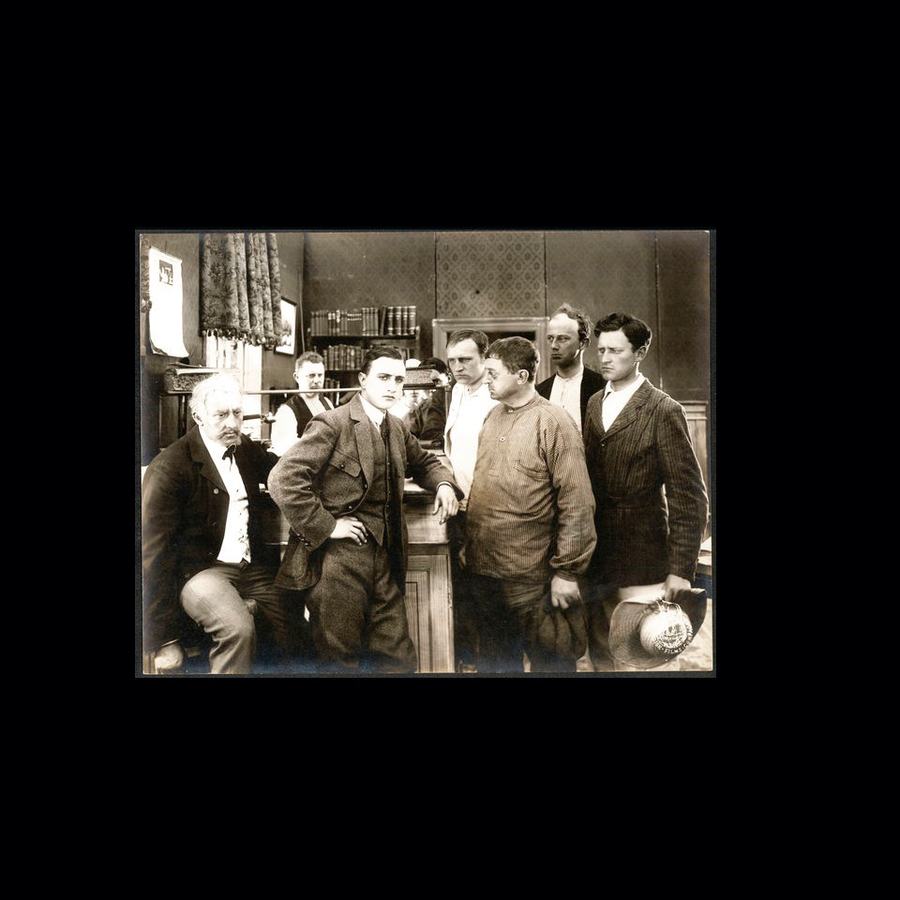
Yet the most subversive current humming beneath the celluloid is economic. The steward’s tragedy is that he believes salvation can be purchased through institutional recognition—a birth certificate, a dowry, a seat at the long oak table. The daughter, by contrast, intuits that legitimacy is a currency minted by those who already own the printing press. Her final act is not restitution but renunciation: she walks away from the frozen gates, into a white-out horizon, leaving the steward clutching a deed that now warms no one.
For contemporary viewers raised on the narrative propulsion of Alias Jimmy Valentine, Godsforvalteren may feel glacial. That is precisely the point. Its pacing is penitential; it forces you to feel time as accumulation rather than progression—like interest compounding on an unpaid sin.
Historically, the film premiered on 15 October 1915 at Copenhagen’s Panoptikon Theatre, wedged between newsreels of trench warfare and a slapstick one-reeler. Critics praised its “Nordic chill” but fretted over its lack of comedic relief; one reviewer suggested inserting a drunk chimney-sweep. The public stayed away in droves, lured instead to Conn, the Shaughraun’s boisterous Irish rebellion. By December, the sole surviving print had been shipped to a provincial church basement to be scraped for lantern-slide Sunday school illustrations. Miraculously, the daughter’s keyhole scene survived because a pastor’s wife found it “edifying for the issue of transparency.”
Watching it today, you sense pre-echoes of Dreyer’s Day of Wrath and Bergman’s Cries and Whispers, yet Godsforvalteren is more pagan, less Lutheran. Its metaphysics reside not in scripture but in soil acidity, crop rotation, the precise weight of a bushel of rye that will determine whether a child eats or starves. The manor’s chapel never hosts a sermon; instead, the steward counts tithes by candle, proving that damnation can be double-entry.
Performances to engrave on your retina: Karen Kirstine Christensen as the omniscient scullery maid who communicates solely through eyebrow semaphore; Peter Jørgensen’s blacksmith whose anvil strikes sync with the daughter’s heartbeat; Ingeborg Bruhn Bertelsen’s housekeeper humming a lullaby that turns out to be the national anthem of a country dissolved in 1864. These are not cameos but moral ballast, keeping the film from capsizing into solipsism.
Technical curios: the masquerade sequence required 400 candles, which had to be relit every take; the smoke produced such thick nitrate haze that actors fainted. The steward’s ledger was handwritten in real 18th-century iron-gall ink, provided by the Royal Danish Archive; during one close-up, the acid ate through the paper, creating a hole that resembles a bullet wound—an accident the director kept because it “let the film bleed truth.”
Comparative litmus: if The Redemption of White Hawk moralizes that blood will out, Godsforvalteren counters that blood will in—inked, filed, notarized. Inheritance is not biology but bureaucracy, and the cruellest patriarch is the one who refuses to sign his own shame.
So, should you stream it? The honest answer: only if you’re willing to trade adrenaline for introspection, plot twists for frostbite. The reward is a film that colonizes your dreams, that makes you wake up counting phantom receipts, wondering which of your own kin you have erased with a stroke of routine. It will not entertain you; it will audit you.
Final arithmetic: 9/10 for historical audacity, 10/10 for cinematographic frostbite, 11/10 for the courage to let silence speak louder than any talkie ever dared. The missing point is for the lost reel—rumoured to depict the daughter’s life ten years on—replaced by 90 seconds of pure white leader. Some curses, the film implies, are too bright to be looked upon directly.

IMDb —
1924
Community
Log in to comment.