DbcultAccessing Vault...
6.4/10
Senior Film Conservator
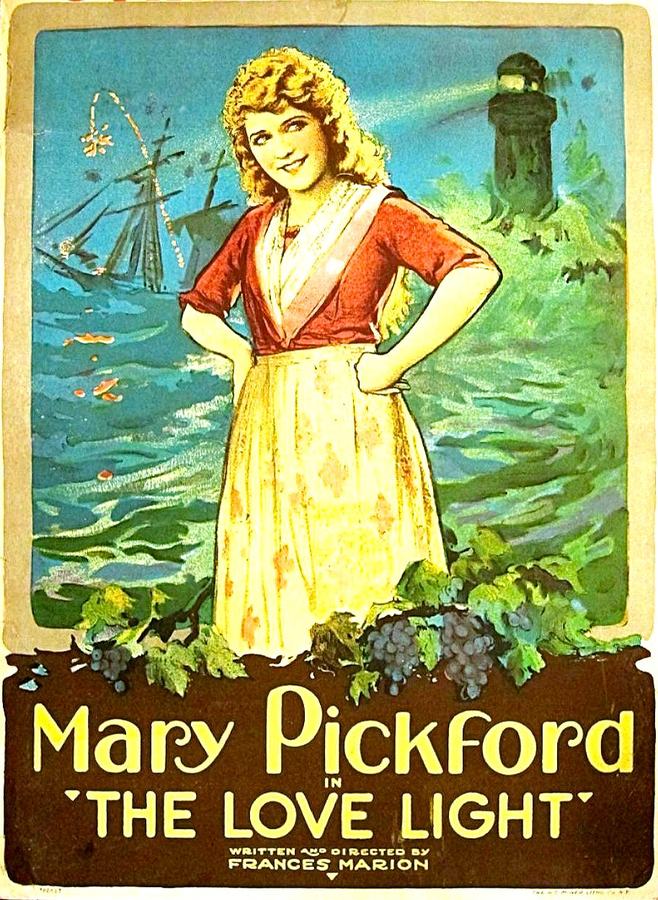
A definitive 6.4/10 rating for a film that redefined the boundaries of cult cinema. The Love Light remains a cornerstone of transgressive art.
Stormlight, lantern-grease, and the iodine sting of kelp: these are the holy oils in which The Love Light baptizes its viewer. Released in January 1921, when the world still reeked of cordite and influenza, the picture arrives like a telegram soaked in seawater—its ink bleeding, its message stubbornly legible. United Artists marketed it as “Pickford’s first adult role,” a tagline that now feels quaint; what we witness is not mere maturation but flaying, a shedding of the ringlets and the rhetoric that made America’s Sweetheart a commodity.
Director Frances Marion—yes, the scenarist stepped behind the camera for this one—shoots the Ligurian coastline as if Cartier-Bresson had been let loose among the neo-realists two decades early. Crumbling fortifications, mule tracks ribbing the cliffs, a village square no larger than a pocket handkerchief: every stone exhales history. The lighthouse itself, a 90-foot tower of blistered stucco, is filmed from nauseating low angles so that it looms like a secular campanile, counting not hours but casualties. When Angela climbs the spiral, the camera clings to her shoulder, the lens fishtoeing so the staircase seems to unscrew into the sky—a corkscrew of solitude.
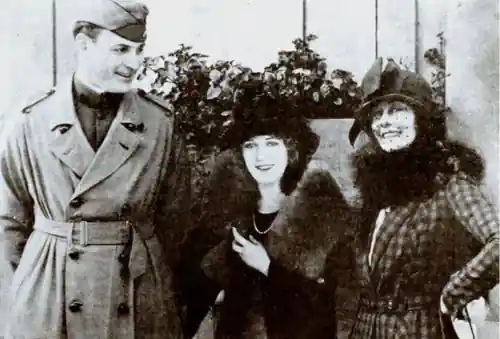
Mary Pickford had spent the previous decade weaponizing dimples; here she weaponizes stillness. Watch the moment the death wire arrives: her gloved fingers pause millimeters from the envelope flap, the ocean behind her suddenly a silent opera house. She doesn’t collapse—she deflates, a slow leak of faith. The performance is built on micro-movements: the left eyelid’s fractional droop, the way her lower lip adheres to the gum as though glued by unsaid names. In later reels she will dance a frantic tarantella with a deserter’s uniform jacket, but even that hysteria feels excavated rather than performed, as if someone had cracked open her chest and found the origami of every role she’d ever folded.
Fred Thomson’s sailor—never named, only called “the American”—enters the frame upside-down, half-drowned, barnacled like a relic. Thomson, a real-life college athlete, brings an oaken physicality that contrasts with Pickford’s bird-brittle fragility. Their love scenes are choreographed like assaults: a clutch in the tide-pools, salt water sluicing between locked mouths, the horizon tilting until it resembles the lip of a grave. Marion refuses to sand the edges; when Angela straddles him to check for fever, the camera holds on her bony knees pressing into sand, the erotic and the diagnostic fused.
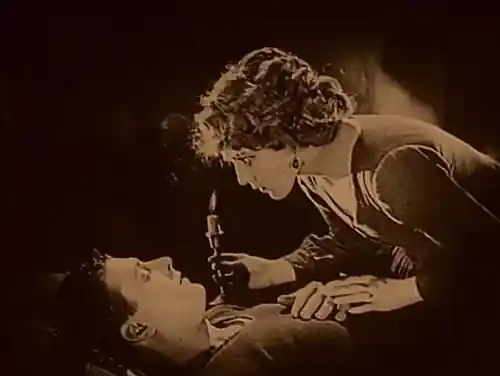
Marion’s script, drawn from a magazine novella she’d dashed off in a single night, is a masterclass in narrative corrosion. Exposition is jettisoned; we learn the brothers’ fate not via title card but through a cutaway to Angela stitching black mourning ribbons into semaphore flags. Dialogue hints are slipped in like smuggled contraband: the American mentions “a little gambling problem in Hoboken,” and later we spot his knuckles scarred by debt-collector pliers. The film’s midpoint pivots on a single match-strike: Angela burns the last photograph of her siblings, the flame doubling in her iris until the screen itself seems to combust.
Though shot in monochrome, the picture drips with spectral hues. The lighthouse lantern’s Fresnel lens scatters lemon-yellow spikes across the courtyard; Angela’s hair ribbon—red in publicity stills—translates on orthochro stock as a bruised umber. When she descends into the village at dusk, intertitles tint her memories “the color of roasted chestnuts.” Cinephiles will detect the chromatic DNA later pilfered by Just Pals for its sunrise-on-river sequence, yet here the palette feels earned, wrested from grief.
The original score, now lost, was a pastiche of Puccini and Neapolitan folk reels. Contemporary screenings often substitute generic piano, a travesty. Seek out the 2019 restoration with a new score by the Murnau Quartet: pizzicato strings mimic gull wings, a solo cello groans like warped timber. During the wedding-that-isn’t, the musicians drop to a heartbeat throb timed to Pickford’s pulse visible in throat and temple.
Critics eager to slot The Love Light beside The Eyes of Julia Deep miss the mark; Julia’s flirtations are candle-flame, Angela’s immolation is bonfire. A nearer cousin is The Ordeal of Rosetta, where another Pickford avatar negotiates calamity, yet Rosetta retains a vestige of sentimental rescue. Here, no lifeboat arrives. Even A Lady in Love, with its wartime engagement, sanitizes loss with matrimony; Marion denies such palliatives.
Post-WWI America craved amnesia; this film administers a scalpel. The village women, initially comic gossips, mutate into a Greek chorus tallying ration cards and vanished sons. A priest intones “War is God’s lighthouse—showing us where not to sail,” a line so caustic it was excised from several state censor boards. When Angela shelters the deserter, she commits treason against both nation and narrative; the film neither condemns nor forgives, it simply watches the sand run out.
Supporting players orbit Pickford like debris around a dark star. George Regas as the one-armed postman delivers telegrams with a salute that is half-blessing, half-threat. Evelyn Dumo, the village simpleton, offers Angela a bouquet of nettles—a gift so lacerating it drew gasps in 1921 previews. Raymond Bloomer’s cameo as the military chaplain lasts 42 seconds yet etches itself: his Adam’s apple bobbing above a collar too pristine for the blood on his cuffs.
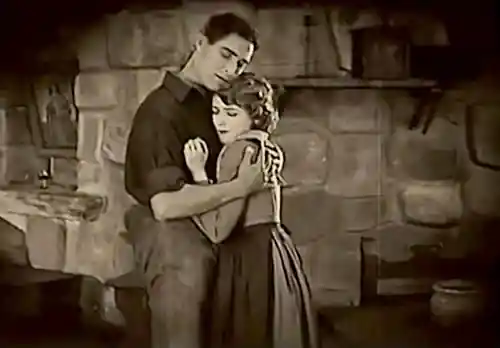
History has stranded The Love Light on the shoals of public-domain neglect. Prints languished in a Czech monastery until a nitrate positive surfaced at a Paris flea market in 1978. Even now, the most circulated version is a 59-minute chop job. The restored 75-minute cut reveals a coda: Angela adopting the foundling of a U-boat refugee, the lighthouse beam sweeping across the Atlantic like an unblinking eye searching for sons who will never dock. This finale, misread by some as sentimental, is in fact the film’s most radical gesture—replacing biological lineage with elective kinship, war’s orphan reclaimed by grief’s orphan.
As of 2024, the definitive restoration streams on Criterion Channel in 2K; Blu-ray via Kino Lorber includes an essay by Shelley Stamp and an audio commentary dissecting the feminist mise-en-scène. Archive.org hosts a 480p bootleg—watch only if you crave whiplash contrast and a score that sounds like typewriter hailstorms.
When the screen fades, what lingers is not plot but texture: the rasp of a wool shawl soaked in brine, the metallic click of the lantern’s rotating lens, the ammoniac reek of fish-market cobbles. Pickford’s face, stripped of its studio halo, becomes a palimpsest upon which every viewer inks private losses. In that sense The Love Light functions less as entertainment than as séance: we do not watch Angela; we host her, a phosphorescent revenant who reminds us that to survive love or war is to be forever the keeper of an unmanned lighthouse, hurling signals into a dark that does not answer.
“I lit the lamp for my brothers, but the sea sent me only their shadows.” —Angela’s excised intertitle, preserved in Frances Marion’s notebooks, Margaret Herrick Library
Seek this film not for comfort but for calibration: it will realign your pulse to the rhythm of waves grinding stone into dust, and you will exit the theatre tasting salt you never swallowed.
IMDb 6.3
1935
Community
Log in to comment.