DbcultAccessing Vault...
Cult Review
Senior Film Conservator
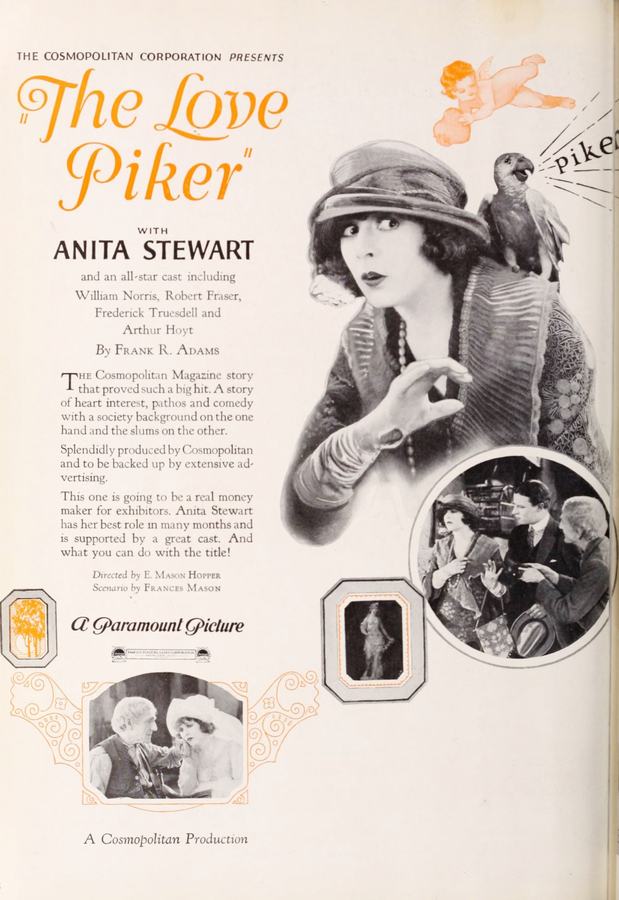
When the dust of the Roaring Twenties settles over the silver screen, few films capture the delicate dance between opulence and indigence as deftly as The Love Piker. Directed by a yet‑to‑be‑named visionary of the silent era, the picture weaves a tapestry of social stratification, moral reckoning, and the quiet heroism of ordinary people. The narrative thrust is anchored by two protagonists whose trajectories intersect under the most unlikely of circumstances: a traffic stop that spirals into a lifelong covenant.
Anita Stewart, embodying the effervescent Hope Warner, delivers a performance that oscillates between the frivolous sparkle of a privileged youth and the sobering gravitas of a woman confronting her own prejudice. Her initial portrayal—an exuberant, fast‑driving socialite—evokes the restless energy of the 1920s flapper, yet the camera never reduces her to a mere caricature. Instead, Stewart’s nuanced gestures—an involuntary pause before tearing the invitation, a lingering glance at the tenement’s grim façade—speak volumes about an internal moral calculus.
Opposite Stewart, Robert Frazer inhabits Martin Van Huisen with a quiet, steel‑threaded resolve. Frazer’s eyes, often fixed on the horizon, betray a man who has measured his life in bridges and foundations, both literal and figurative. His background—a childhood steeped in scarcity, a career built upon sheer determination—renders him the perfect foil to Hope’s gilded existence. The chemistry between Frazer and Stewart is not merely romantic; it is a collision of worldviews that forces each character to reevaluate entrenched biases.
Carl Gerard’s portrayal of Peter Van Huisen, the aging father who inhabits a crumbling tenement, adds a poignant layer of intergenerational sorrow. Gerard imbues Peter with a weary dignity, his stooped posture and trembling hands echoing the weight of decades spent on society’s margins. The decision to have Hope tear up his invitation serves as a catalytic moment, exposing the fragility of her aristocratic veneer.
The screenplay, penned by Frances Marion and Frank R. Adams, is a study in structural elegance. The opening act—a brisk, almost comedic police encounter—sets a rhythm that accelerates into a more measured, contemplative middle section where love blossoms amidst class tension. The climax, marked by Hope’s midnight dash to the tenements, subverts the expected melodramatic resolution, opting instead for a quiet, character‑driven redemption.
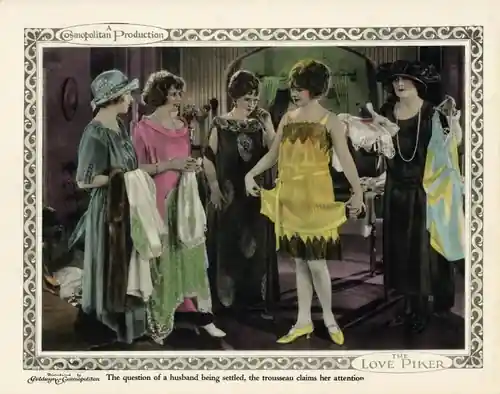
Themes of socioeconomic disparity and moral awakening are woven throughout, reminiscent of the social critiques found in The Scales of Justice and the tender humanity of Diane of the Follies. Yet, The Love Piker distinguishes itself by refusing to demonize either class; instead, it presents both wealth and poverty as environments capable of fostering both cruelty and compassion.
Visually, the film is a masterclass in chiaroscuro. The cinematographer employs stark contrasts—bright, sun‑drenched exteriors of Hope’s mansion juxtaposed against the dim, cramped interiors of the Van Huisen tenement. This visual dichotomy underscores the narrative’s central conflict. Moreover, the use of intertitles is sparing yet potent, allowing the actors’ physicality to convey emotion where words would otherwise intrude.
The editing, while adhering to the era’s conventional continuity, occasionally indulges in a rhythmic montage during the race scene, a brief homage to the kinetic energy of The Iron Trail. Such moments inject a kinetic pulse that propels the story forward without sacrificing its emotional core.
Beyond the leads, supporting actors deliver textured performances that enrich the film’s social tapestry. Betty Francisco, as Hope’s snobbish confidante, embodies the entrenched aristocracy, her sharp diction and disdainful glances serving as a foil to Hope’s eventual growth. Winston Miller, portraying a youthful friend of Martin, provides moments of levity that prevent the drama from tipping into melodramatic excess.
The ensemble’s chemistry is further amplified by the subtle direction of background characters—tenement dwellers who, through fleeting glances and muted gestures, convey a collective yearning for dignity. This attention to peripheral storytelling aligns The Love Piker with the ensemble sensibilities of The Bramble Bush, where community narratives intertwine with personal arcs.
Although a silent film, the accompaniment—often performed live in theatres—features a piano score that oscillates between jaunty ragtime motifs during the roadster chase and somber, minor‑key passages during the tenement sequences. The musical juxtaposition mirrors the visual contrast, reinforcing the emotional stakes without a single spoken line.
Released in 1923, The Love Piker arrived at a moment when American cinema was grappling with the aftermath of World War I and the burgeoning consumer culture. Its exploration of class fluidity anticipates the later social realist movements of the 1930s, positioning it as a precursor to films like The Millionaire Vagrant. The film’s subtle critique of aristocratic aloofness resonates with contemporary audiences, offering a timeless meditation on the perils of social oblivion.
Moreover, Frances Marion’s involvement as co‑writer underscores the film’s progressive underpinnings. Marion, one of Hollywood’s first prominent female screenwriters, imbues Hope’s character with an agency rarely afforded to women of the era. The heroine’s decision to abandon her own wedding in favor of moral rectitude marks a radical departure from the passive damsels typical of early cinema.
When measured against its contemporaries, The Love Piker stands out for its balanced treatment of romance and social commentary. While Who Am I? leans heavily into psychological intrigue, and Boston Blackie's Little Pal prioritizes crime‑driven suspense, this film deftly intertwines personal affection with broader societal critique. The result is a layered narrative that rewards repeated viewings.
In sum, The Love Piker is a cinematic tableau that transcends its silent‑film constraints, offering a resonant exploration of love’s capacity to bridge entrenched divides. Its meticulous direction, compelling performances, and thematic depth render it an essential study for aficionados of early American cinema. Whether you are drawn to the film for its romantic allure, its social insight, or its historical significance, you will find that each viewing peels back another layer of its intricate construction.
For those seeking a film that marries aesthetic elegance with moral gravitas, this work remains a luminous example of the silent era’s untapped potential. Its legacy endures, reminding us that true affection often demands the courage to confront uncomfortable truths—and that redemption, however delayed, is always within reach.
IMDb —
1934
Community
Log in to comment.