DbcultAccessing Vault...
3.6/10
Senior Film Conservator
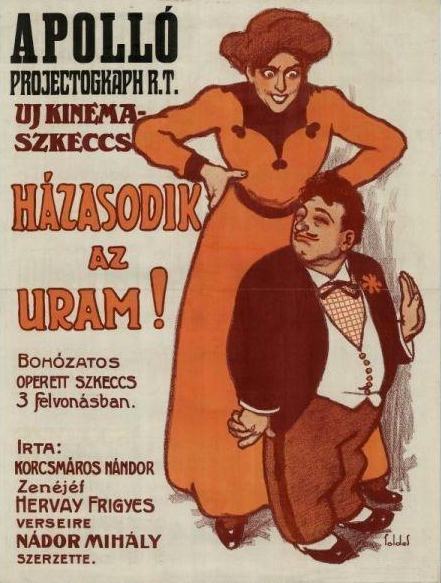
A definitive 3.6/10 rating for a film that redefined the boundaries of cult cinema. Házasodik az uram remains a cornerstone of transgressive art.
Imagine a pre-war Budapest where courtship is auctioned like day-old pastries, and you already taste the acrid sugar of Házasodik az uram—literally “My Husband Is Getting Married,” a title that stumbles off the tongue with the same tipsy belligerence as its groom.
The film, shot in late 1912 and released the following spring, belongs to that brief Hungarian golden minute when studios cranked out sly domestic comedies before history barged in wearing boots. Directors Frigyes Hervay and Nándor Korcsmáros—better known for melodramas—here swerve into bedroom farce, trusting the camera to hold its breath while doors slam, identities swap, and the bourgeoisie gobble their own tails.
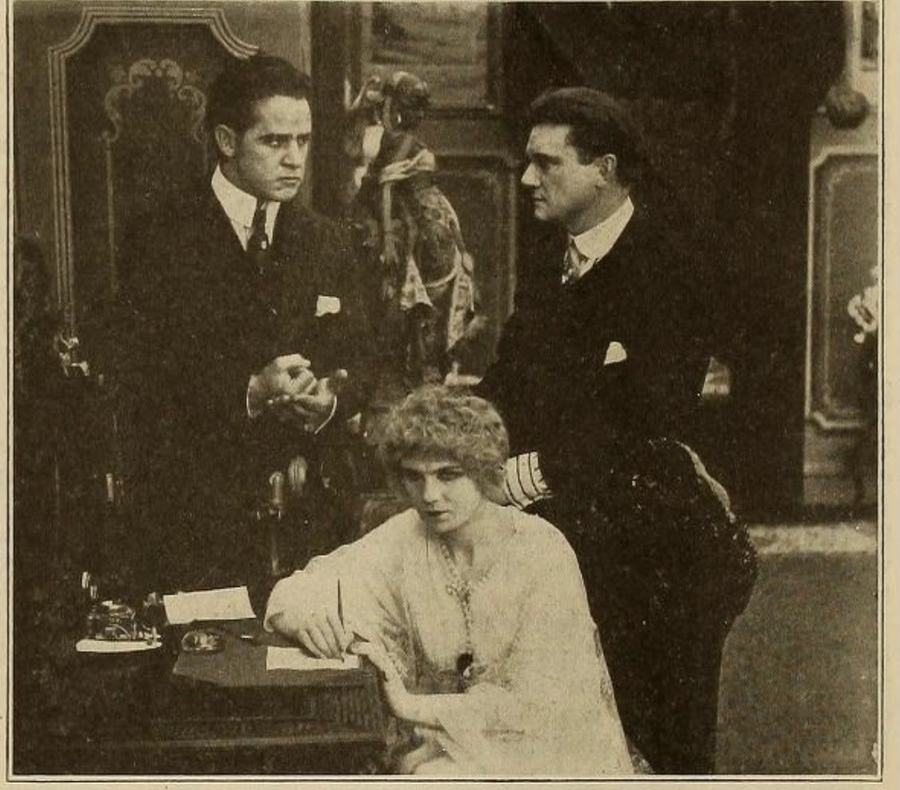
Gerö Mály’s Antal Sipos—side-whiskered, ledger-obsessed, convinced romance is a clerical error—advertises for a bride “of sound finances and silent disposition.” The joke lands immediately: the man who files emotions in triplicate will be ambushed by chaos wearing perfume. Adél Marosi’s Rózsi Varga answers the ad armed with nothing but audacity and a hatpin sharp enough to deflate pomposity. She claims to be a baroness in reduced circumstances, enlists her allegedly dead aunt (a raucous Lili Hajnóczy) to play chaperone, and invites herself to Sipos’s townhouse for a “contract viewing.”
What follows is a 52-minute danse macabre of social pretense. Gyula Szöreghy appears as the groom’s best friend, a military man whose medals clank louder than his conscience; he recognizes Rózsi from a previous masquerade but keeps quiet, hoping to blackmail a weekend in the country. Meanwhile the aunt, supposed to stay decorously deceased, keeps resurrecting for slapstick interludes—once wielding a tuba, once hiding inside a grandfather clock whose pendulum beats time with her hiccups.
By the third reel the house resembles a carousel crashed by anarchists: wives, maids, governesses, and a schnauzer in a wedding veil whirl through corridors. The marriage contract, initially drafted in iron-clad clauses, is amended with footnotes in lipstick. In the final shot the camera retreats from the threshold: Sipos and Rózsi, garments torn, eyes glittering, sign nothing but a blank sheet which they tear in half—two equal pieces of absolution.
Cinematographer József Bécsi lights scenes like a mischievous Caravaggio: candlelight pools on faces while corridors sink into Stygian black, so every exit feels like a potential kidnapping. Intertitles—sparse, sardonic—land like thrown gloves: “He searched for a dowry and found a circus.” The camera seldom moves, yet the frame bustles; doors become theatrical proscenia, their brass knobs glinting like bribed critics.
Costuming deserves its own aria. Sipos begins in funereal black, ascot starched to rigor mortis; by midnight he’s stripped to shirtsleeves, cravat undone, monocle fogged—a bourgeois Atlas shrugging not the world but merely expectation. Rózsi’s gowns mutate from modest polka-dot to flamboyant tulip-red, signaling the slow triumph of appetite over reputation.
Mály’s comic timing is surgical; he elongates syllables in intertitles so arrogance hangs in mid-air like a chandelier about to drop. Watch his left eyebrow—an autonomous organism that registers mortgage rates and heartbreak with equal altitude. Marisi counters with elastic physicality: a shrug becomes a manifesto, a wink detonates like a small incendiary device. Their chemistry sparks precisely because they loathe the roles they must play; each glance exchanges the secret promise to burn the script later.
Among supports, Szöreghy’s cavalry officer twirls a mustache that deserves separate billing, while Hajnóczy’s “corpse” overacts with Shakespearean gusto—proof that in silent cinema resurrection is only a matter of too much powder and insufficient shame.
Made during Hungary’s cinematic boom—when Az utolsó bohém also flirted with cafés and poets—this comedy flaunts a city drunk on its own modernity. Streetcars clang past the hero’s window; newspapers hawk classified brides beside stock prices. The subtext is glacial: marriage markets mirror bourse speculation, affection reduced to futures trading.
Compare its DNA to Danish farce Balletdanserinden, where ballet slippers replace wedding veils, or to the Australian bush frenzy of The Fatal Wedding—both share a caffeinated tempo, yet Hungary’s version adds Mitteleuropa gloom: even jokes arrive wearing mourning veils.
Under the clowning lurks a scalpel. Rózsi’s manipulation of marital law exposes how legal codes corset women; her mock-barony parodies the dowry system that auctioned daughters like gilt-edged securities. Sipos, stripped of illusion, stands revealed as another commodity—his salary the true bride-price. The film chuckles while it disembowels, a court jester biting royals mid-laugh.
Yet it stops short of feminist manifesto. The final torn page suggests equality, but the camera lingers on Rózsi’s smile—half victory, half concession—acknowledging that even mock-marriage leaves fingerprints on the soul.
Prints vanished during World War I, presumed celluloid casualties of artillery or bureaucric indifference. A nitrate duplicate surfaced in 1989 in a Pécs cellar, fused with reels of agricultural footage—goats grazing on what critics now call “the first act.” The Hungarian National Film Archive restored it in 4K, tinting night scenes bruise-violet and dawn scenes tobacco-amber; the resulting palette feels like champagne laced with soot.
Score reconstruction commissioned contemporary composer Márton Vizy, whose gypsy-klezmer ensemble accents chase scenes with frantic czardas, then lets single violin mourn during the contract shredding—an aural reminder that every farce contains a requiem in its belly.
Trace its footprints across the decade: Swedish comedy Dockan eller Glödande kärlek borrows the revolving-door bedroom, while French satire What 80 Million Women Want imports the notion that courtship is labor negotiation. Even Griffith’s The Eternal Law, though biblical in scope, pinches the visual gag of veils mistaken for ghosts.
Yet few descendants match the Hungarian film’s merciless brevity; at under an hour it compresses whole marriage industrial complex into a hiccup, leaving bruises shaped like laughter.
Házasodik az uram is a Fabergé grenade: ornate, compact, detonating under the polite veneer of courtship. Its satire remains surgically sharp—swap dowries for dating-app algorithms and the plot could debut tomorrow on a streaming platform. Watch it for Mály’s eyebrow choreography, for Marisi’s anarchic grace, for the way candlelight turns hypocrisy into shadow-puppet ballet. Watch it, above all, as a reminder that every era believes its romantic rituals are modern—until history slips on a banana peel wearing a bridal veil.
Score: 9/10 — A time-capsule that bites, still drawing blood a century after the wedding was canceled.
IMDb 6.1
1927
Community
Log in to comment.