DbcultAccessing Vault...
Cult Review
Senior Film Conservator
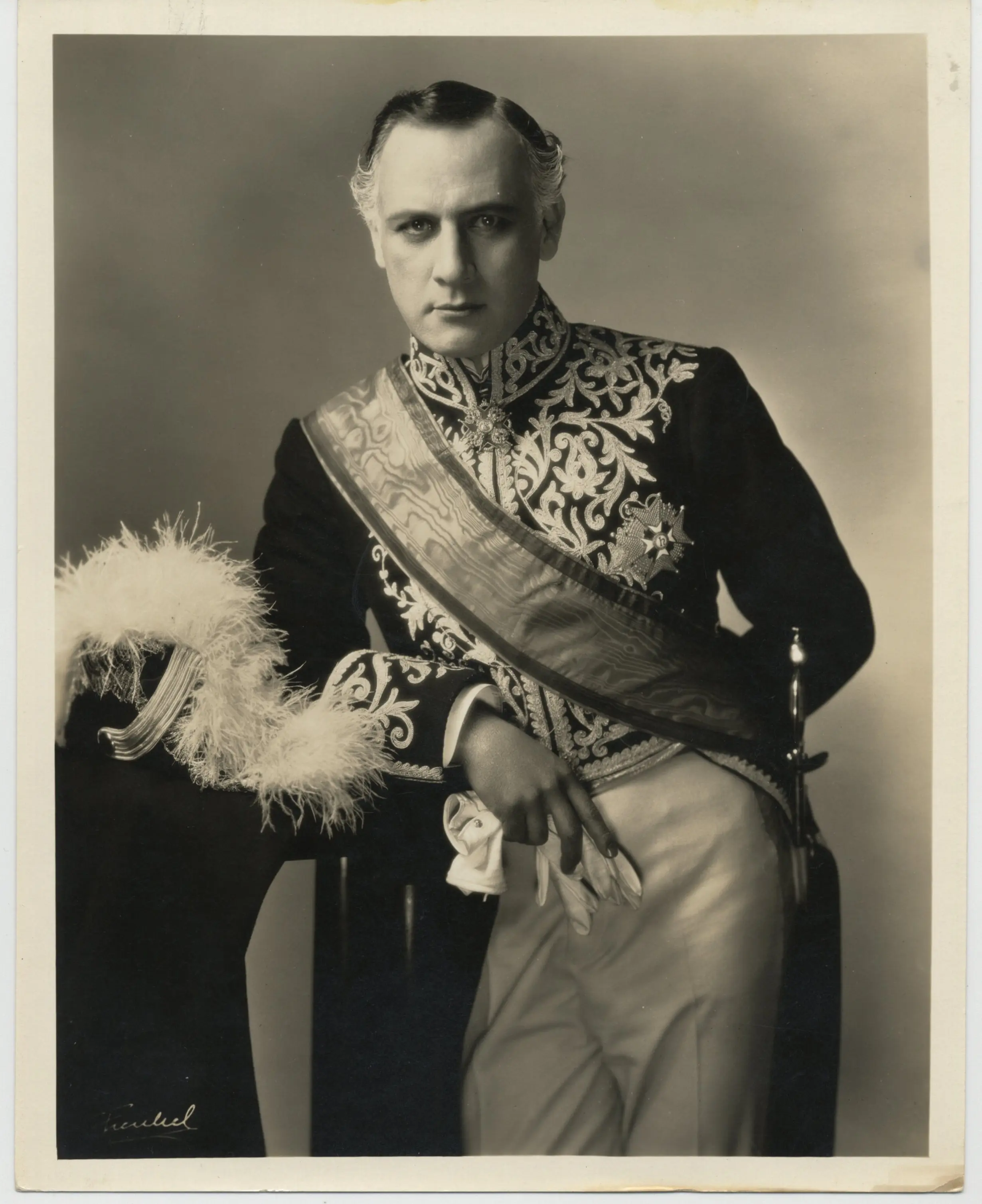
Is The Love Thief worth your time in the modern era? Short answer: yes, but only if you appreciate the theatricality of the 1920s and the specific charm of the Ruritanian romance genre. This film is for the romanticist who finds beauty in grand gestures and the silent film buff looking for a bridge between melodrama and political thriller; it is definitely not for viewers who demand gritty realism or fast-cut action sequences.
The film exists in that peculiar cinematic space where the stakes are high but the emotions are even higher. It works because the chemistry between Norman Kerry and Greta Nissen transcends the lack of dialogue, relying instead on a visual language of longing and defiance. However, it fails because the antagonist, Prince Karl, is a one-dimensional caricature of villainy that lacks the nuance found in other contemporary works like Greed. You should watch it if you enjoy the 'Ruritanian' subgenre of royal romance and political intrigue.
1) This film works because the central romance is built on a genuine misunderstanding that feels emotionally earned rather than merely convenient.
2) This film fails because the third-act resolution relies on a 'substitution' plot that requires a massive suspension of disbelief, even by silent film standards.
3) You should watch it if you are a fan of Norman Kerry’s screen presence or the high-society aesthetics of mid-20s Hollywood.
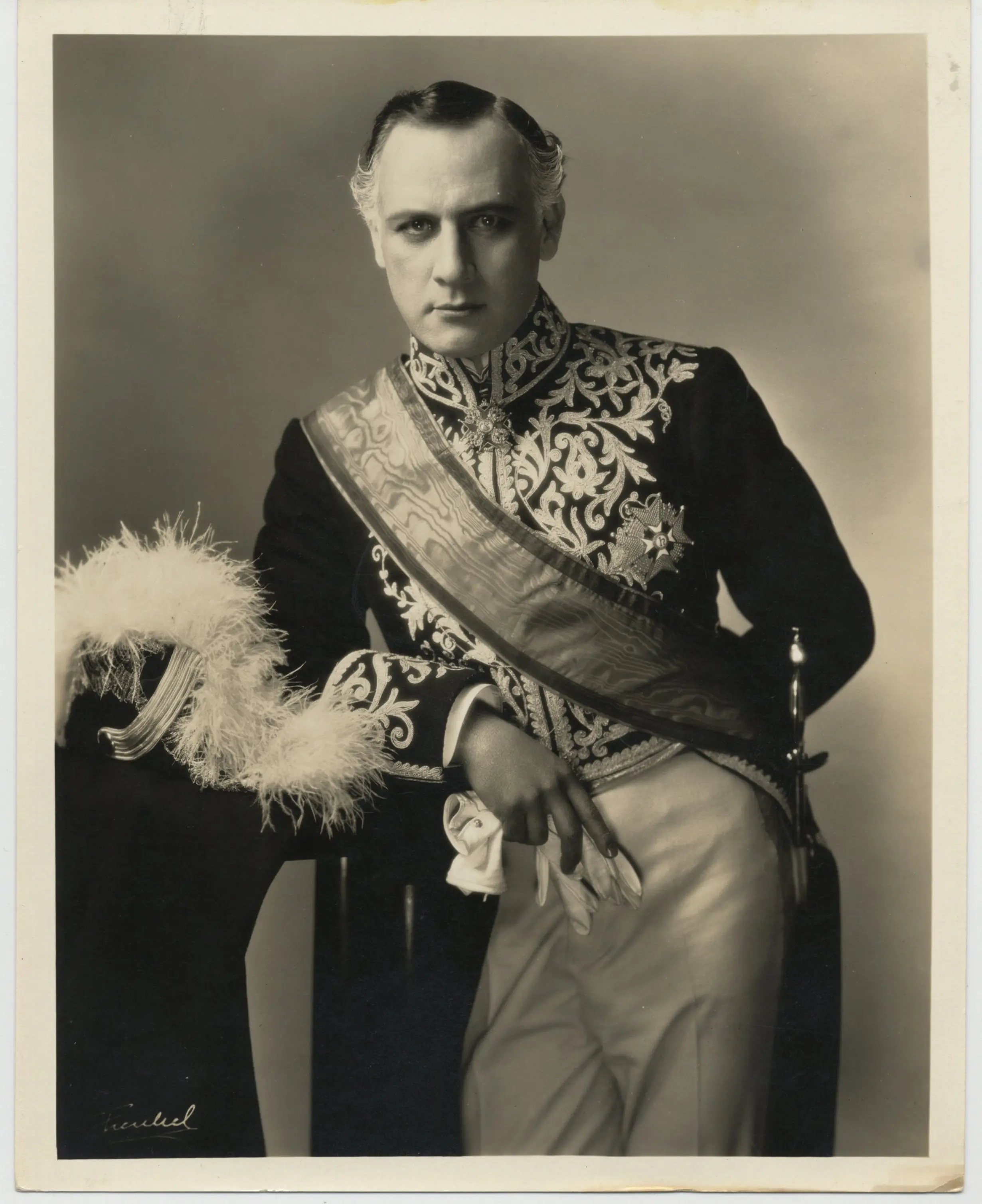
The plot of The Love Thief is a classic exploration of the conflict between personal happiness and the weight of the crown. When we first see Boris, he isn't a stiff royal; he’s a man of action who finds the protocols of Moraine stifling. This sets up the central tension perfectly. Unlike the brooding atmosphere of Wuthering Heights, the tone here is initially light, almost flirtatious, before the political shadow of Prince Karl darkens the frame.
The garden scene is the film's structural anchor. Here, the cinematography uses soft focus and dappled light to create a dreamlike space where Flavia can shed her 'stately dignity.' When Boris accosts her, thinking she is a commoner, we see a rare moment of vulnerability. It’s a scene that works. But it’s flawed. The mistake is so obvious to the audience that it borders on the absurd, yet Kerry plays it with such earnestness that you almost buy into the delusion.
Prince Karl’s intervention introduces a darker, more cynical layer. His plot to force Boris into abdication isn't just about power; it's about breaking a man's spirit. The scene where Boris refuses to fight the regent—choosing disgrace over pointless bloodshed—is surprisingly modern. In 1926, this was a bold character choice. Most heroes were expected to draw their swords at the first insult. By having Boris refuse, director John McDermott suggests a different kind of strength, one that is often overlooked in silent cinema.
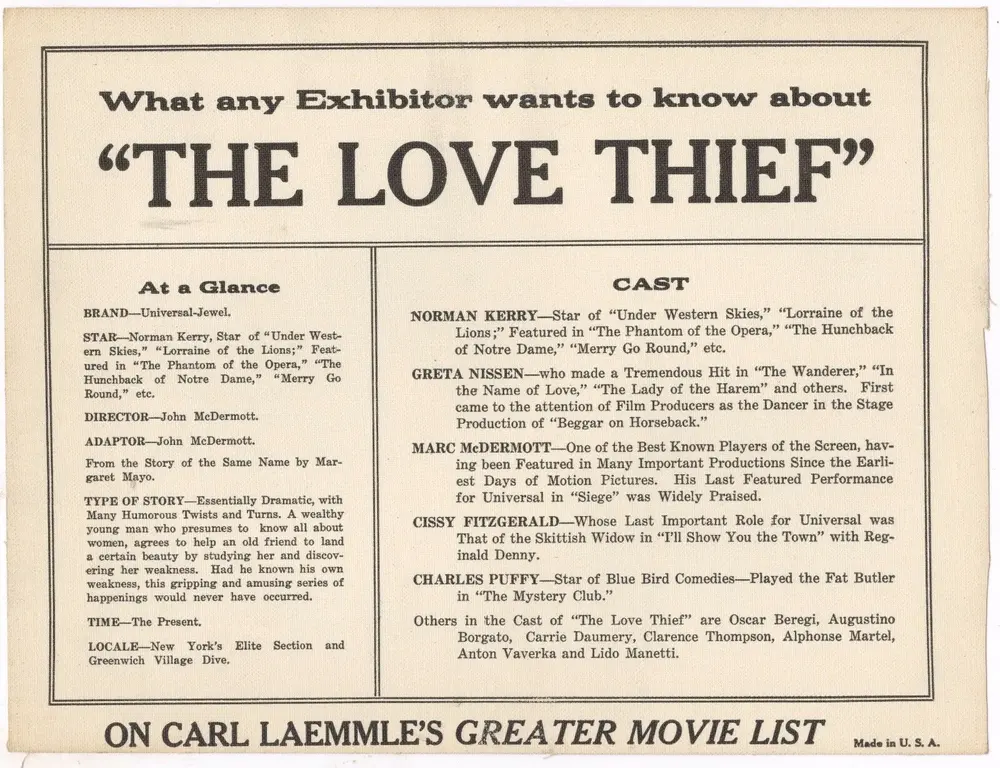
Norman Kerry was a titan of the silent era for a reason. He possessed a physical gravitas that filled the frame without the need for over-the-top gesticulation. In The Love Thief, he balances the 'flirtatious Boris' with the 'disgraced prince' with remarkable fluidity. Watch the moment he is stripped of his honors; his eyes convey more than a dozen intertitles could. It is a performance of restraint in a genre known for its excess.
Greta Nissen, as Flavia, provides the perfect foil. While Boris is the fire, she is the cool, calculating ice that eventually melts. Her decision to marry the 'imbecile prince' Michael to save Boris is the film's emotional peak. It’s a debatable opinion, but I believe Nissen actually carries the emotional weight of the film better than Kerry. Her face during the wedding preparation—a mask of duty hiding a core of grief—is haunting. It reminds one of the intensity found in Les Vampires, though in a vastly different context.
The supporting cast, particularly Marc McDermott as Karl, is less successful. McDermott plays the villain with a mustache-twirling energy that feels out of sync with the more grounded leads. His performance is a reminder that silent film was still shaking off its vaudeville roots. However, the chemistry between the two leads is so potent that it largely overshadows these broader characterizations.
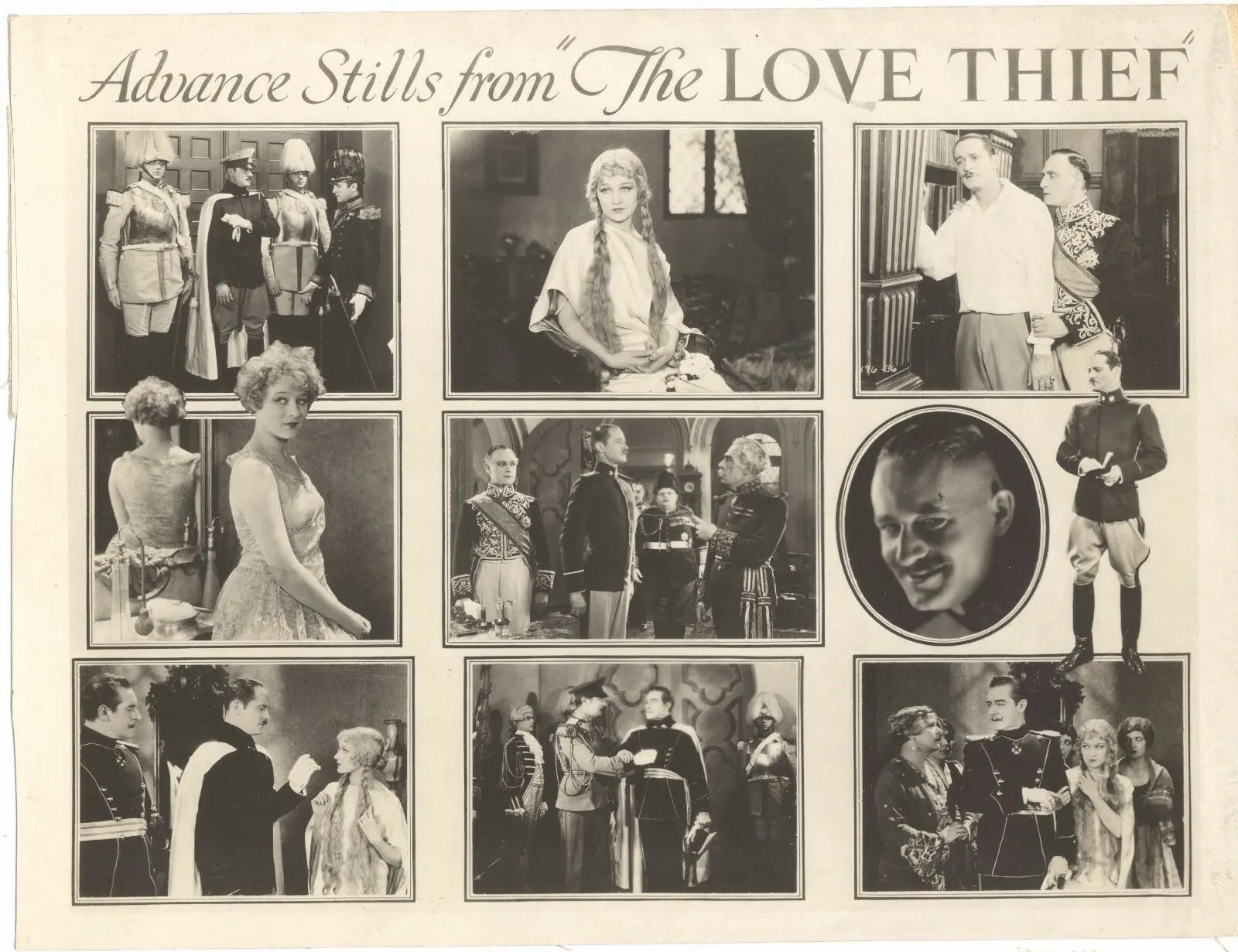
Visually, The Love Thief is a product of its time, but with flashes of brilliance. The use of depth in the palace halls creates a sense of being trapped within a gilded cage. The pacing is deliberate, taking its time to build the romance in the first half so that the political fallout in the second half feels like a genuine betrayal. It doesn't have the frenetic energy of Ambrose in Turkey, and that’s a good thing. It allows the themes to breathe.
One specific moment stands out: the wedding ceremony. The lighting shifts from the warm tones of the garden to a cold, stark white. The substitution of Boris for Michael is handled with a series of quick cuts and clever framing that hides the switch from the other characters while keeping the audience in the loop. It’s a masterclass in visual storytelling. The regent's duplicity being exposed by Flavia is the final catharsis, and though the ending is clean—perhaps too clean—it satisfies the emotional arc established in the opening frames.
The film also makes excellent use of shadow. During Boris's period of disgrace, he is often filmed in partial darkness, his silhouette reflecting his diminished status. This expressionistic touch elevates the film above standard studio fare. It’s not quite the psychological depth of Greed, but it shows a director who understands how to use the camera to tell a story that words cannot.
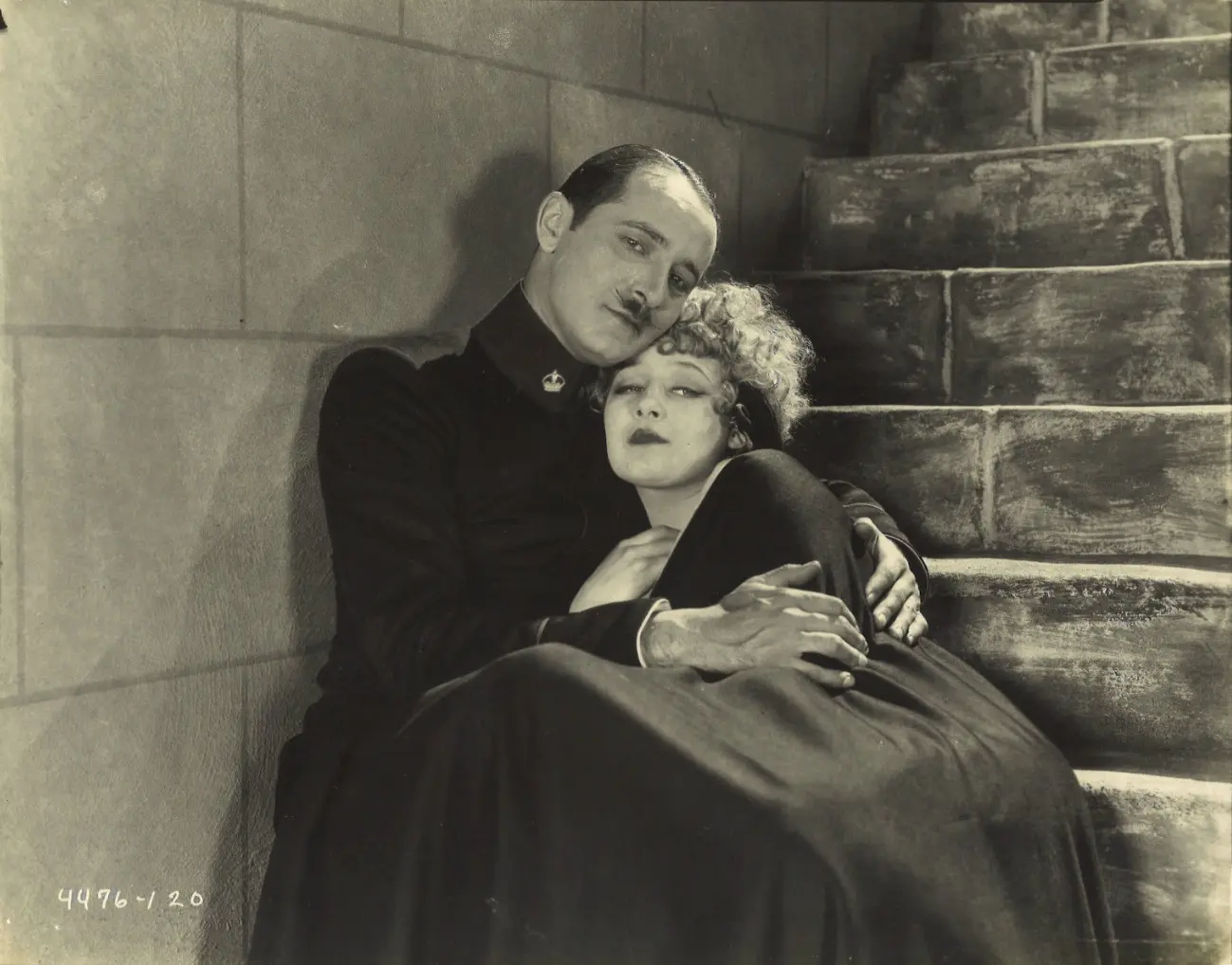
Yes, The Love Thief is worth watching for anyone interested in the evolution of the romantic thriller. It provides a fascinating look at how silent cinema handled complex political themes through the lens of a personal love story. While some of the plot devices are dated, the core performances remain compelling. It is a beautiful example of the 'Ruritanian' style that dominated the early 20th century.
Pros:
The garden scene is a highlight of silent era romantic staging. Norman Kerry delivers one of his most nuanced performances. The film successfully balances lighthearted romance with high-stakes political drama.
Cons:
The 'imbecile prince' trope is handled with a lack of sensitivity that may jar modern audiences. The final resolution happens very quickly, leaving some of the political fallout unaddressed. Some of the intertitles are overly expository.
The Love Thief is a charming, if occasionally clunky, artifact of the silent era. It succeeds because it leans into its own artifice, creating a world where love can indeed thwart a war. While it doesn't reach the heights of the absolute masterpieces of 1926, it remains a highly watchable and emotionally resonant film. The ending is clean. Too clean. But in the world of Moraine and Norvia, that’s exactly what the audience needs. It’s a solid 7/10 for silent film aficionados and a must-see for fans of Norman Kerry.
IMDb 7.5
1935
Community
Log in to comment.