DbcultAccessing Vault...
Cult Review
Senior Film Conservator
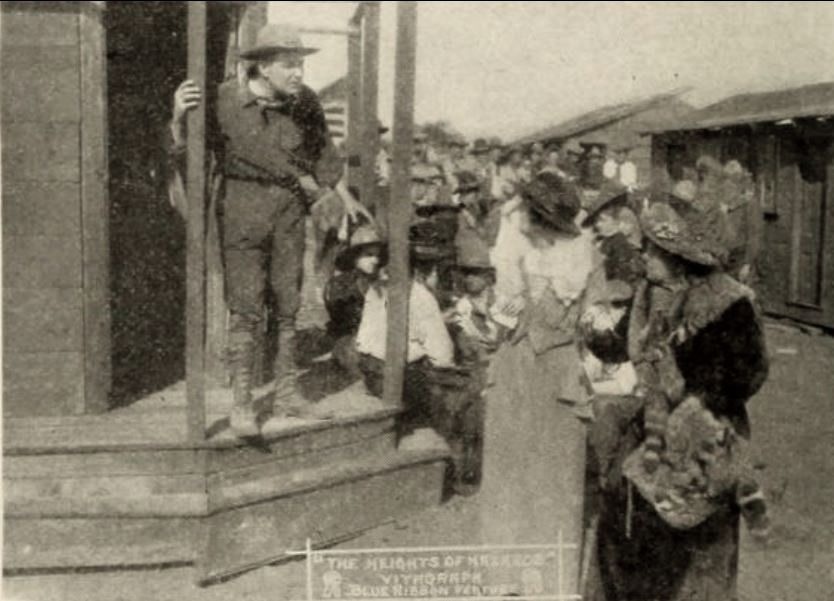
Picture the scene: a Gatsby-tier ballroom glitters under Art Deco chandeliers; flappers shimmy through confetti snowstorms while a string quartet wrestles with Saint-Saëns. Into this champagne mirage strides Miss Olivia Martindale, pearls glowing like miniature moons against her clavicle, declaring—“There is no longer any romance in American life.” The line lands like a guillotine. Gentlemen choke on cigars; matrons flutter fans as though fighting heatstroke. Olivia, equal parts Joan of Arc and bored debutante, demands a suitor willing to ascend literal cliff-faces of peril for her affection, the way forty-niners once braved avalanches and grizzlies for nuggets the size of teeth.
Cut to the estate’s cypress-lined drive where a Stutz Bearcat growls, headlamps slashed like predatory eyes. A masked man—part Phantom, part prospector—bundles Olivia into the cockpit, tires shrieking across moon-slick gravel. The abduction is so swift, so cinematic, it feels less like felony and more like fate swapping dance cards. Destination: the Bermuda Apartments, a new-money tower overlooking the Hudson, its façade still smelling of wet paint and ambition.
Inside the penthouse, the stranger unveils himself: Billy Williams, millionaire miner, clad in tuxedo so crisp it could slice bread. He presents Olivia with two objects—a police whistle and a pearl-handled derringer—then politely requests she skip the hysterics. The gesture is a masterstroke of seductive etiquette: here are the tools of your liberation, now choose to stay. She does, phone call to frantic relatives included, and the film pivots into a campfire tale told under electric sconces.
Over brandied coffee Billy recounts his mythic west: nights when mercury plummeted so low pickaxes shattered like candy glass; saloon duels fought over tattered newspaper photographs of society belles—Olivia’s face, clipped and cherished, guiding him like Polaris. The camera (insofar as intertitles allow) lingers on her pupils dilating, fear transmuting into wonder. By the time he confesses he’s wrested a fortune from granite and greed, she’s already picturing herself beside him, a queen of frontier myth.
When dawn ignites the skyline, Billy launches his final offensive: a proposal equal parts poetry and prospector’s deed. Olivia, adrenaline fizzing, capitulates. Cue embrace—the first honest collision of skin and sentiment all night. Naturally the door explodes inward on cue: Papa Martindale, apoplectic, flanked by maids clutching hatboxes like riot shields. Olivia, cheeks flushed, completes the coup by introducing her fiancé—whose surname she must still solicit in front of agog patriarch. Curtain falls on a wink rather than a wedding.
“The film kidnaps the audience as deftly as Billy abducts Olivia—only we never want the ransom paid.”
For a 1919 Vitagraph one-reeler shot on leftover sets, “The Heights of Hazard” punches leagues above its weight class. Director Charles Kent understands that silence magnifies gesture; he frames Eleanor Woodruff’s profile against lacquered mahogany so her eyes become twin searchlights. When Billy narrates blizzards, Kent floods the set with dry ice and backlights it so shadows gust like tumbleweeds across damask wallpaper—a budget Méliès trick that turns drawing-room opulence into Sierra Madre desolation.
Intertitles, penned by Cyrus Townsend Brady and Eugene Mullin, eschew the usual declamatory mush for razor-sharp epigrams: “Love plucked nuggets from frozen earth; I merely followed the map she unwittingly drew.” Each card arrives timed like a percussion hit, bridging prairie vastness to urban soirée without jarring tonal whiplash.
Modern viewers, armed with #MeToo radar, may flinch at a plot hinged on kidnapping. Yet the film flips the power dynamic faster than a cardsharp dealing aces. From the moment Billy hands Olivia the pistol, the narrative’s center of gravity slides into her palm. She controls the whistle, the phone call, the eventual yes. The abduction becomes less a brute assertion and more an audition for mythic masculinity—a ploy she herself scripted at dinner.
Contrast this with Her Own Way (1920), where the heroine flees patriarchal chains via locomotive, or Blue Grass, where women trade thoroughbreds for social leverage. Olivia doesn’t flee; she curates chaos, then rewrites the epilogue.
“In 1919, a woman choosing her captor is radical; choosing him because he fulfills a self-authored fairytale is nuclear.”
Eleanor Woodruff delivers micro-expressions that travel from scorn to curiosity to surrender in a single unbroken take. Watch her knuckles whiten around the derringer, then relax as Billy’s voice—conveyed only through intertitles—melts the steel of her skepticism. Opposite her, Charles Richman radiates a panther-and-poet charisma: eyes aglow with copper-dust memories, posture relaxed as if danger were an old drinking buddy.
The chemistry combusts not via grand clinches but through spatial choreography. When Billy circles the penthouse narrating, Olivia pivots in counter-orbit, the pair forming binary stars bound by centrifugal longing. It’s tango without music, courtship as astronomy.
Archival records suggest original screenings featured live violin obbligato—a swirl of Romantic era cadenzas that crescendoed when Billy confesses his Sierra ordeals. Imagine the juxtaposition: tremolo strings underscoring a woman weighing a pistol and a whistle. That tension—weapon versus wedding bells—turns the apartment into a crucible where genres collide: western ruggedness distilled into drawing-room crucible, then decanted back into frontier promise.
While Hollywood toyed with abduction-as-courtship, European silents explored darker labyrinths. The Student of Prague (1913) doppelgängers its protagonist until identity splinters; Borgkælderens mysterium traps heroines in medieval oubliettes. None grant their captive the pistol-and-whistle veto. Even Sumerki zhenskoy dushi lingers on female despair rather than agency. Thus The Heights of Hazard stands as a rare trans-Atlantic outlier: peril wrapped in consent, danger delivered with democratic caveats.
Post-WWI crowds, jittery from pandemic and Prohibition’s shadow, craved escapism laced with moral loopholes. Heights offered both: the thrill of criminal trespass and the reassurance of Edwardian etiquette. Newspapers hailed it as “Cinderella in reverse—Prince Charming storms the palace, glass slipper in hand.” Trade magazines praised its snappy 18-minute runtime, perfect for double bills. The film vanished for decades, resurfacing only when a mislabeled canister labeled “Bermuda Kidnap” turned up in a Newark basement in 1987.
Because it weaponizes wish-fulfillment responsibly. Because it lets a woman author her captivity myth then pocket the key. Because its aesthetic thrift—mahogany, candle, shadow—outshines CGI orgies a century later. Because in an age of dating-app fatigue, the notion that grand narrative might still ignite inside 18 minutes feels both nostalgic and narcotic.
Watch The Heights of Hazard for the same reason we still read Jane Austen on subways: to remember that romance, at its apex, is a perilous negotiation—a pistol, a whistle, and the audacity to use neither.
Verdict: 9/10—a pocket-sized fireworks display of gender brinkmanship that kidnaps cynicism itself.
IMDb —
1917
Community
Log in to comment.