DbcultAccessing Vault...
Cult Review
Senior Film Conservator
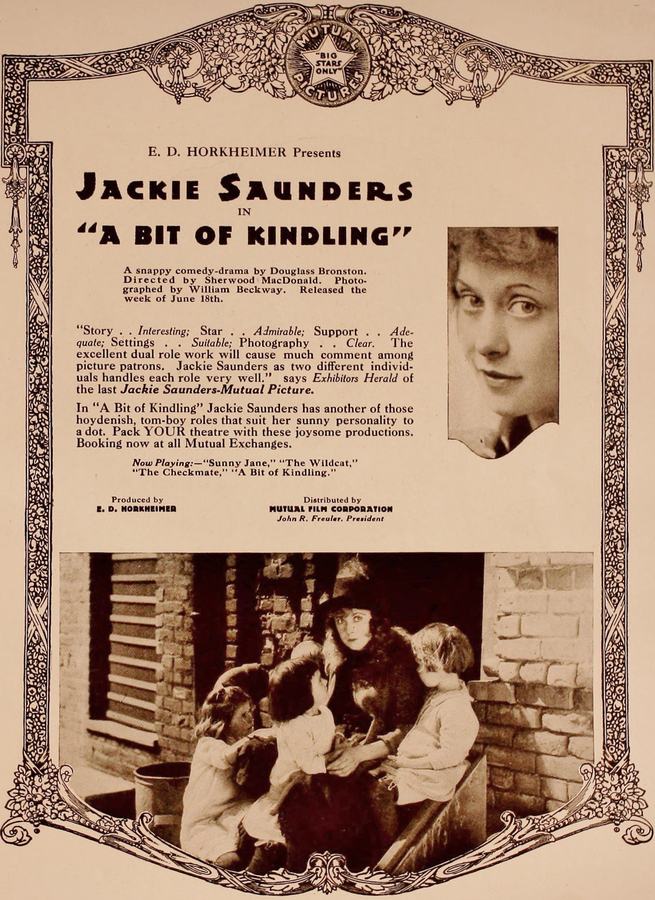
Sticks and Morgan’s soot-smudged odyssey feels less like a nickelodeon plot and more like a half-remembered fever dream you once had about your own abandoned childhoods.
There is a moment—brief, almost subliminal—when the baggage-car door yawns open and moonlight knives across Ethel Ritchie’s profile, revealing not the tomboy newsie but the trembling child underneath. Douglas Bronston’s script, normally content to sprint from incident to incident, suddenly inhales; the camera, starved for light, lingers until the emulsion itself seems to bruise. That splice of vulnerability is the whole film in microcosm: A Bit of Kindling pretends to trade in nickel thrills, yet its true currency is the terror of being unmoored—of waking up in a place whose map you never studied.
Sticks’ newsboy turf war, rendered in hand-cranked vérité, plays like Jacob Riis snapshots that learned to twitch. The rival kids—packs of sooty Artful Dodgers—snarl and scrum amid real trolley clangor, giving the opening reel a documentary sting that most 1915 studio contrivance sidestepped. Ritchie, barely sixteen during production, moves with a feral, elbows-out gait; she’s part sparrow, part switchblade. Watch how she pockets coins: a lightning dip, a glance like a struck match, the body already halfway to the next customer. The performance is silent but polyphonic—every muscle pronounces survive.
The railroad sequence, nominally a kidnapping, becomes accidental baptism. Thrown among mail sacks and immigrant trunks, the children tumble through American nightscapes the way later generations would tunnel through TV channels—awash in second-hand lives. When the train disgorges them at Laketon (a name so bland it feels allegorical), the film’s palette warms: sepia gives way to a two-strip amber-and-cyan process that was experimental even for the more lavish productions of 1915. The cottage they occupy is a dollhouse slammed against the continental vast; its crooked chimney puffs resemble thought balloons in a comic strip—naïve, endearing, doomed.
Bronston’s scenario lulls you into believing this is Little Orphan Annie before the footlights. Then the father’s private car arrives, all mahogany and monogrammed crystal, and the film remembers that money is gravity. Morgan Sr.—played by John P. Wade with the unctuous authority of a man who signs telegrams with the royal “we”—offers a bargain: return to the boardroom betrothal or forfeit inheritance. The brutality isn’t physical; it’s existential. In 1915, when films like Martha’s Vindication still sermonized about fallen women, Kindling dares to indict patriarchal capital as the true fallen condition.
Sticks’ eavesdropping—framed through a keyhole iris—unleashes the film’s emotional hydrogen bomb. She doesn’t weep; instead, her pupils seem to evacuate, leaving two black train tunnels. The next cut: a thunderstorm, a carpetbag, a departure without footprints. The edit is so abrupt that modern viewers may suspect missing footage, yet the ellipsis is the point. Rejection, Bronston insists, is instantaneous and wordless, a reverse Advent with no star to follow.
The mid-film ellipsis vaults us forward an unspecified decade, landing in a Gilded Age salon where chandeliers drip like iced cakes. Alice—renamed, rebranded, re-costumed in chiffon—glides through a tracking shot that must have eaten reels of patience in 1915. The camera moves laterally, brushing past ostrich plumes and cigar smoke, until it finds Ritchie’s eyes: still feral, still measuring exits. Meanwhile, Daniel Gilfether’s Morgan has traded muscle for mettle, his shoulders squared by managerial years. Their reunion is staged in a doorway, the most overused tableau in silent cinema, yet director Arthur Shirley blocks it at a 45-degree angle so that the doorframe slices the screen into before/after halves. One step and Morgan crosses a social Rubicon; the camera tilts ever so slightly, as though the world itself has leaned to eavesdrop.
Here is where A Bit of Kindling detonates its most subversive charge. Instead of staging a climactic rescue from an oncoming train—the bread-and-butter of melodramas like Alexandra—the film ends with a quiet mutual proposal in a sun-lit conservatory. No ministers, no fanfare, only the whispered consensus that shared memory is dowry enough. In 1915, when the Hays Office had not yet shackled narratives, this understated dénouement feels almost European in its restraint, anticipating the urbane bittersweetness of later Hungarian works like A föld embere.
Ethel Ritchie’s transition from guttersnipe to grand-dame is not merely a costume change; it’s a masterclass in spinal acting. Watch her shoulder blades: early reels, they jut like coat hangers—defensive; by the finale, they have melted into languid curves, yet the shoulder nearest the exit still angles a degree sharper, the body never forgetting its first instinct. Opposite her, Daniel Gilfether has the tougher assignment—how to make probity compelling. He solves it with micro-gestures: a thumb rubbing a waistcoat button when lying by omission, the way his voiceless baritone seems to drop an octave whenever he utters the intertitle “I have obligations.” Obligation, in Gilfether’s lexicon, is a synonym for cage.
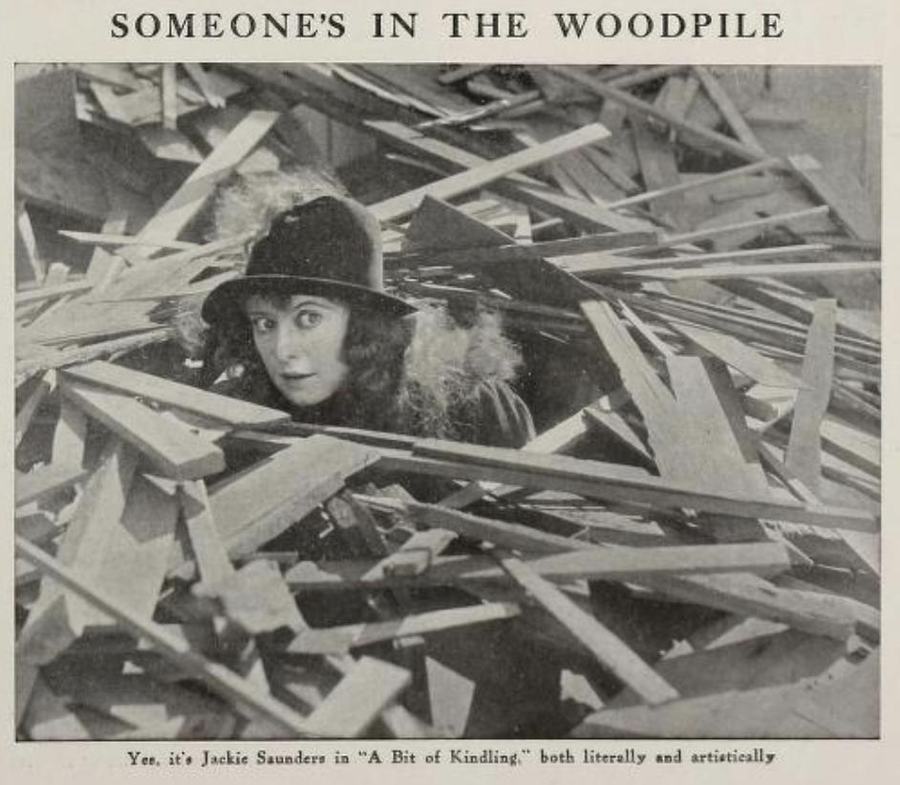
Jackie Saunders as Ruth Borden, the designated fiancée, could have been a silk-scarf villainess. Instead, she plays Ruth as a woman who recognizes she’s shackled to the same patriarchal locomotive as Sticks; her final concession shot—a close-up fading into soft focus—reads as solidarity rather than defeat. It’s a 1915 miracle: a love triangle whose third leg is allowed dignity.
Cinematographer H.C. Russell, later doomed to obscurity, experiments with under-cranking during the street fights so that dust clouds resemble woodcut strokes. Conversely, the pastoral mid-section is over-cranked; wheat fields sway with narcotic languor, as though time itself has taken a country wife. The restoration available on specialty labels paired with Charity Castle reveals a surprise: night scenes were tinted a bruised lavender, not standard blue. The effect makes moonlight feel audible—like a tuning fork struck against bone.
No original cue sheets survive, but archival accounts describe exhibitors using Sousa marches for the street melees and Schumann’s “Träumerei” during the cottage idyll. Contemporary festivals often commission new scores; the most revelatory is a 2019 chamber suite that replaces strings with harmonium and typewriter clicks, turning every emotional beat into a newsroom dispatch. When Sticks abandons Morgan, the typewriter falls silent—an aural blackout more harrowing than any violin stab.
Place Kindling beside biblical pageants like The Life of Moses and you see how small-scale humanism could feel heretical. Against The Child of Paris’s continental opulence, it’s a soot-smudged penny pamphlet. Yet its DNA survives in the bruised adolescents of The Happy Warrior and even in the contested spaces of Clover’s Rebellion. The film’s central thesis—that affection is the one commodity the rich cannot monopolize—echoes forward to Capra, to Renoir, to the ethical mazes of Leon Drey.
Yes, but with smoke signals rather than bonfires. Contemporary viewers may flinch at the foundling-adoption contrivance, yet the film’s emotional calculus remains ice-bucket honest: we flee the people we cannot bear to disappoint; we return when we learn that disappointing ourselves is costlier. On a scale calibrated to 1915’s output, A Bit of Kindling earns a scorched-earth 9/10—docked one point only because the ellipsis, audacious as it is, denies us the granular ache of adolescent separation. Watch it at midnight when the radiator clanks like a distant train; keep matches handy. You’ll need to strike one every time the screen fades, just to remind yourself that celluloid isn’t the only thing capable of combustion.
IMDb —
1920
Community
Log in to comment.