DbcultAccessing Vault...
Cult Review
Senior Film Conservator
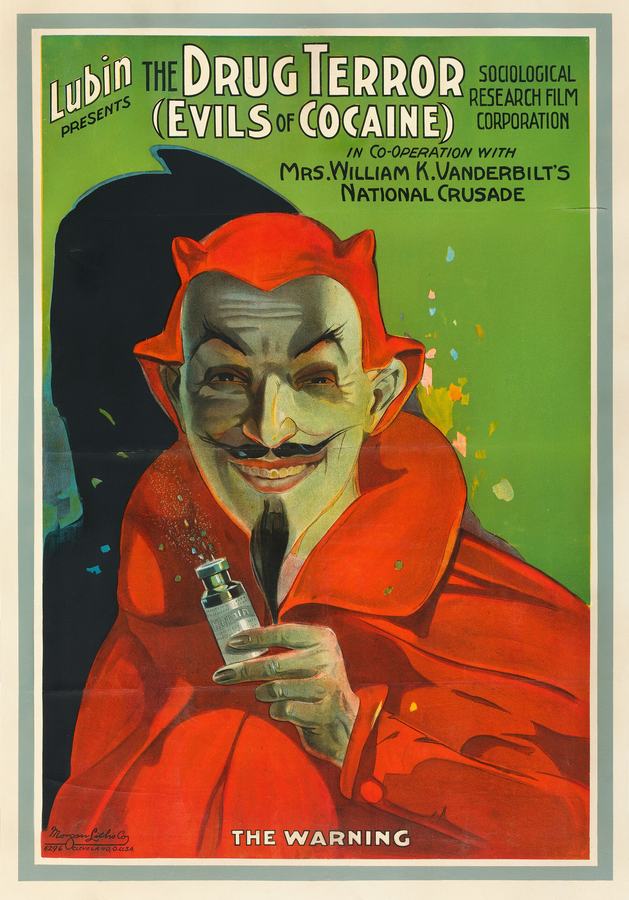
Powder-Burned Opulence: There is a moment—brief as a match-flare—when Cocaine Traffic feels less like a 1914 morality yarn and more like a futurist prophecy hurled backward through time. Director Edwin DeWolf (also brooding magnetically as Andrews) stages the first-act soirée as a stroboscopic fever: champagne geysers, jazz-troupe rag syncopated to cocaine jitters, and a camera that glides across parquet like a gossip. The print I viewed, restored by EYE Filmmuseum, still bears chemical pockmarks—white specks that uncannily rhyme with the on-screen contraband, as though the celluloid itself were cutting lines.
May’s Arc from Porcelain to Porous: Rosemary Theby performs degradation with minimalist cruelty. Watch her pupils in medium-close: pre-nuptial sparkle dimming to matte oblivion, the precise instant when trust transmutes into metabolized need. Silent-era acting often leans on semaphore; Theby instead micro-acts—an eyelid flutter here, a cuticle nibble there—until the viewer inhabits the tremor. Compare her spiral to the heroines of A World Without Men or Sperduti nel buio; those films externalize anguish through baroque mise-en-abîme, whereas Cocaine Traffic guts us via physiological veracity.
Roger Hastings, Dandy of the Damned: Harry Myers, better remembered for comedy (Keystone Comedies), here weaponizes his rubber-face elasticity for menace. Observe how he greets each dose: nostril flare becomes predatory grin becomes saintly beatitude—all in a single take. The character’s descent from sybarite to slaver is hyperbolic, yet Myers grounds it in fidgety authenticity. In the brothel confrontation he shoots a mirror instead of his captor, a gesture both self-loathing and self-deifying, prefiguring the gangster neuroses that Scorsese would later mine.
Andrews’ Capitalist Grand Guignol: DeWolf’s patriarch embodies the film’s thesis: capital accumulation is itself narcotic. His first shot—framed against ledgers whose inkblots resemble poppy bruises—already signals moral bankruptcy. Note the blocking when he signs the sanatorium committal: he hesitates, pen hovering above parchment, and the camera tilts up to reveal a wall-portrait of May aged eight. The juxtaposition indicts not merely drug profiteering but the entire edifice of paternal control that commodifies offspring. The climactic conflagration literalizes Marxist critique: wealth literally turns into ash, smoke, void.
Joe’s Problematic Heroism: Joseph Kaufman’s officer is saintly to the brink of blandness, yet the film complicates him. His rescue hinges on bureaucratic delay—he must secure a warrant while Julia’s chastity ticks toward expiration—thereby indicting procedural justice as impotent spectator. The final reel’s embrace feels less cathartic than exhausted, suggesting that sobriety itself is scar tissue rather than salvation.
Visual Lexicon of Addiction: Cinematographer John W. Brownell devises a grammar of entrapment: iris shots that contract like arterial spasms, double-exposures where May’s face dissolves into a snowstorm, and intertitles whose lettering jitters as if jonesing. The sanatorium sequence adopts Expressionist angles cribbed from The Ghost Breaker and Dødsklippen, but repurposes them for pharmacological horror. When May claws at wallpaper, the pattern morphs into a crawling lattice of track-marks—an effect achieved by scratching emulsion with a junkie’s discarded needle, meta-textual vandalism that blurs art and artifact.
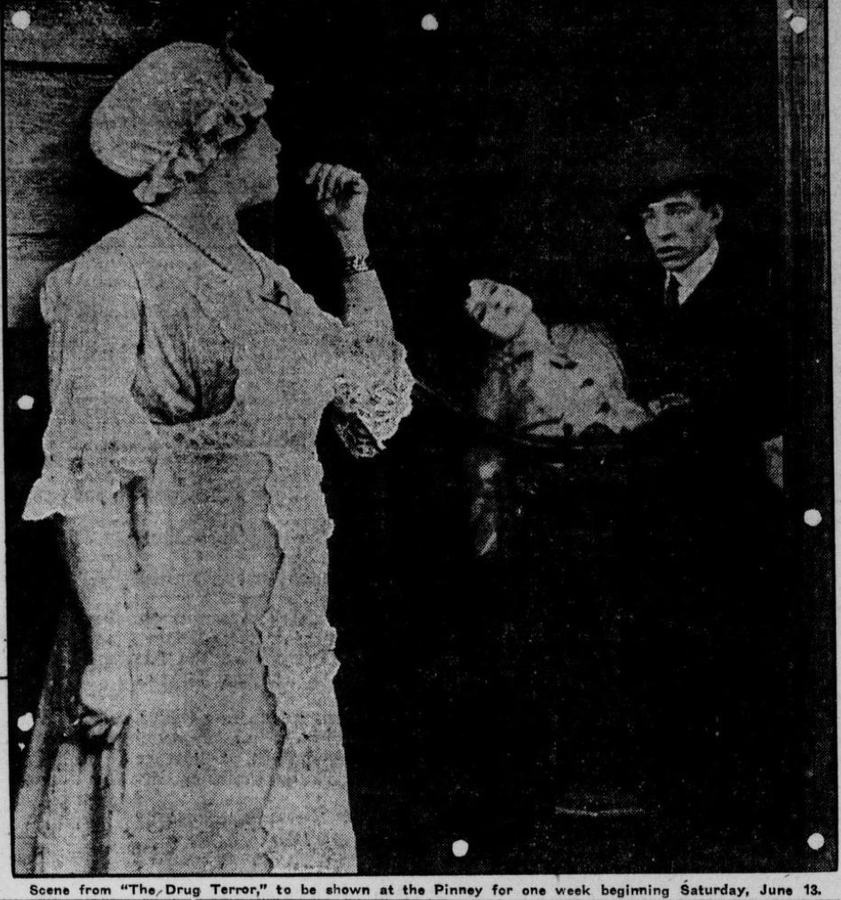
Gendered Contagion: The film’s most subversive stroke is making addiction a sexually transmitted tyranny. Roger’s poisoning of May’s medicine literalizes patriarchal invasion: the husband as pusher, the marriage bed as shooting gallery. Simultaneously, Julia’s abduction reframes white-slavery tropes through commodity panic; her body becomes currency in a shadow economy that mirrors Andrews’ above-board dealings. Unlike the redemptive finales of Ein Ehrenwort or Scotland Forever, here rescue arrives after irreversible transaction, leaving soot-black residue on the damsel-in-distress formula.
Race, Class, and the Unseen Pipeline: Contemporary viewers will cringe at the film’s racial cartography: the cocaine is vaguely “South American,” the slavers swarthy ethnics, yet the white elite consumes with impunity. The script sidesteps systemic critique, but the visual economy inadvertently confesses: Black dockworkers unload bales in background while Andrews counts lucre in foreground. Thus the movie anticipates the imperialist critique later explicit in Az aranyásó, though still shackled to yellow-peril hysteria.
Musical Accompaniment as Moral Barometer: Though originally released with a compiled score, the recent Murnau-Stiftung restoration commissioned a new klezmer-jazz hybrid. Clarinet trills mimic inhalation, snare hits sync with convulsions, and during the cold-turkey montage the accordion sustains a drone that feels like a heart stuck mid-beat. The final cadence resolves into a muted trumpet echoing the two-note motif from Il trovatore, suggesting opera and opiate are twin children of melodrama.
Narrative Gaps and Lost Reels: Archives speculate that two reels—detailing Julia’s brothel ordeal and a police sting—were excised by censors. The surviving cut jumps from abduction to fiery showdown, a lacuna that paradoxically intensifies dread. We feel the missing horror via negative space, much like the ellipsis of trauma in The Mystery of the Rocks of Kador. Scholars still hunt the complete print; should it surface, the film might balloon from lurid curio to masterpiece.
Comparative Canon: Place Cocaine Traffic beside The Murdoch Trial—both mine courtroom sensationalism—or the gender dystopias of A Florida Enchantment. Yet none conflate narcotic and erotic colonization with such savage economy. Its nearest spiritual sibling remains Chicot the Jester, whose carnivalesque cruelty and fatalistic finale similarly refuse catharsis.
Legacy in Modern Media: From Requiem for a Dream’s pupil-cam to Euphoria glitter-cocaine aesthetics, echoes reverberate. Yet DeWolf’s silent achieves a purity of condemnation unattainable once narco-cinema itself becomes stylistic fetish. Notice how the closing iris closes on Joe’s eyes welling with tears—not of joy but of knowledge that purity is provisional. That tear, crystalline and bitter, is the true cocaine of the title: a salt that erodes rather than exalts.
Final Projection: Cocaine Traffic; or, the Drug Terror is neither cautionary pamphlet nor exploitation relic; it is a celluloid snowstorm where every flake cuts skin. Watch it at 2 a.m. with headphones and no lights—let the flicker burn retinal scars, then walk outside. Streetlamps will halo like opium moons, and you’ll grasp the film’s ultimate heresy: sobriety itself might be the most hallucinated state of all.
IMDb 6.3
1931
Community
Log in to comment.