DbcultAccessing Vault...
Cult Review
Senior Film Conservator
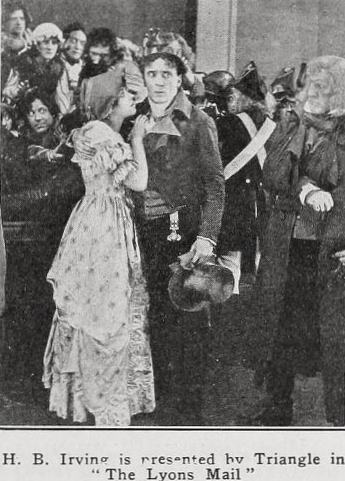
There's a particular kind of dread that only the silent era could evoke, an almost primal fear communicated through exaggerated gestures and stark lighting. In this venerable tradition, The Lyons Mail (1916), an adaptation of Charles Reade and Benedict James's enduring play, stands as a monumental achievement, a harrowing exploration of identity, justice, and the capriciousness of fate. It's a film that doesn't just tell a story; it plunges you into a nightmarish scenario where the very fabric of one's existence is shredded by an unfortunate twist of resemblance. At its core, the narrative is deceptively simple: an innocent man, Joseph Lesurques, is tragically mistaken for a notorious highwayman, Dubosc, who happens to be his uncanny double. Yet, from this premise springs a labyrinthine descent into judicial horror that resonates with a chilling authenticity, even over a century later.
H.B. Irving, taking on the demanding dual role of both the virtuous Lesurques and the villainous Dubosc, delivers a performance that is nothing short of tour de force. His ability to distinguish these two characters, not merely through costume or makeup, but through subtle shifts in posture, gaze, and the very energy he projects, is utterly captivating. As Lesurques, he embodies a gentlemanly grace, a man of integrity whose world is systematically dismantled by an unforeseen calamity. His agony, his bewilderment, and his desperate pleas for justice are rendered with a profound pathos that tugs relentlessly at the viewer's heartstrings. Conversely, as Dubosc, Irving is a creature of pure malevolence, a cunning and ruthless brigand whose every smirk and calculating glance radiates menace. The sheer dexterity required to inhabit these diametrically opposed personalities within the same narrative framework, often in rapid succession, showcases a mastery of the acting craft that few could rival, then or now. It's a performance that anchors the entire film, lending credibility to its most improbable premise.
The film's exploration of the justice system is particularly poignant, serving as a stark reminder of its inherent flaws and vulnerabilities. When Lesurques is apprehended and brought before the courts, the sheer weight of circumstantial evidence, exacerbated by the mistaken identity, becomes an insurmountable barrier. Eyewitnesses, convinced they saw Lesurques commit the heinous crime, offer damning testimonies. The film masterfully portrays the psychological torment of being accused of a crime one did not commit, especially when all logical avenues of defense seem to close off. There's a palpable sense of claustrophobia as Lesurques's world shrinks, his reputation tarnished, his family's pleas falling on deaf ears. This theme of judicial fallibility finds echoes in later cinematic explorations of wrongful conviction, though perhaps none quite capture the raw, silent desperation as effectively as this film does through Irving's nuanced performance.
The supporting cast, while overshadowed by Irving's dual brilliance, contributes significantly to the film's immersive atmosphere. Nancy Price, as Lesurques's distraught daughter, offers a portrayal of unwavering filial loyalty and escalating despair. Her anguish is a powerful counterpoint to her father's stoicism, amplifying the tragedy of the situation. Wyndham Guise, Charles Vane, and Tom Reynolds, among others, fill out the ensemble with believable depictions of concerned relatives, misguided witnesses, and the various cogs in the judicial machine. Their collective performances create a credible world against which Lesurques's personal hell unfolds, ensuring that the audience remains invested in the human cost of this cruel deception.
Beyond the performances, The Lyons Mail excels in its directorial choices and visual storytelling. The film, a product of a nascent cinematic language, employs techniques that, even by today's standards, are remarkably effective in building suspense and conveying complex emotional states. The use of close-ups to highlight facial expressions, the strategic framing to emphasize isolation or confrontation, and the rhythm of the editing all contribute to a compelling narrative flow. The film understands the power of the unspoken, allowing Irving's expressions and gestures to carry the brunt of the emotional weight. The tension builds incrementally, each scene adding another layer of despair to Lesurques's predicament, creating an almost unbearable sense of impending doom.
The historical context of silent cinema is crucial to appreciating the film's artistry. Without dialogue, filmmakers had to rely entirely on visual cues, intertitles, and the actors' physical prowess to convey plot and emotion. The Lyons Mail is a shining example of this craft at its peak. The sets, though perhaps modest by today's standards, effectively evoke the period, immersing the viewer in 19th-century France. The costumes are meticulously detailed, further enhancing the authenticity of the setting. The film's ability to maintain a gripping pace and emotional intensity for its entire runtime, purely through visual means, is a testament to the skill of its creators and the inherent power of the medium in its early form. It's fascinating to consider how films like The Fugitive, released around the same period, also grappled with themes of pursuit and mistaken identity, but The Lyons Mail distinguishes itself through its specific focus on the judicial system's tragic failings rather than just the escape itself.
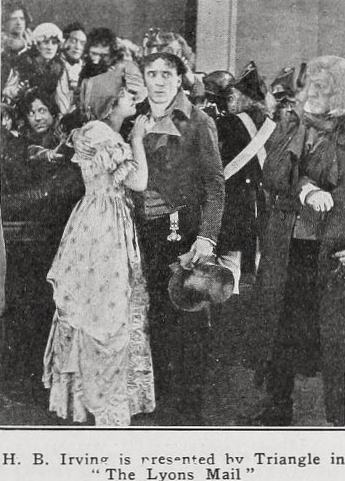
The thematic richness of The Lyons Mail extends far beyond simple plot mechanics. It delves into profound questions about identity: what makes a person who they are, and how easily can that identity be stripped away by external circumstances? The film posits a terrifying vulnerability inherent in human existence, suggesting that one's fate can be irrevocably altered by a mere coincidence of physical appearance. This philosophical undercurrent elevates the film from a mere melodrama to a profound meditation on free will versus predestination. Lesurques's struggle is not just against the law, but against an almost cosmic injustice, a cruel jest played by the universe.
Furthermore, the film subtly touches upon societal anxieties of the time. The fear of crime, the reliance on eyewitness testimony, and the slow, often unforgiving wheels of justice were all potent concerns. The Lyons Mail taps into these fears, crafting a narrative that is both deeply personal and broadly resonant. It serves as a cautionary tale, urging a critical examination of how justice is administered and the potential for irreversible errors. While other films of the era, such as The Clue, might have focused on unraveling a mystery to *find* the culprit, The Lyons Mail's tragedy lies in the misidentification, and the subsequent, almost inevitable, march towards an innocent man's doom.
The film's climax, without giving too much away for those yet to experience its power, is a masterclass in emotional devastation. It leaves an indelible mark, forcing the audience to confront the arbitrary nature of suffering and the devastating consequences of human error. The resolution, or lack thereof, for Lesurques, is not a neat tying up of loose ends, but a stark, uncompromising portrayal of injustice that lingers long after the credits roll. This refusal to offer a saccharine ending is one of the film's greatest strengths, cementing its status as a work of profound dramatic realism, despite its silent-era conventions.
In conclusion, The Lyons Mail is far more than a historical curiosity; it is a timeless piece of cinema that speaks to universal human fears and moral dilemmas. H.B. Irving's dual performance remains a benchmark for acting prowess, and the film's narrative construction is a testament to the enduring power of a well-crafted story. It reminds us that truth can be stranger, and far more tragic, than fiction. For anyone interested in the evolution of film, the art of silent storytelling, or simply a profoundly moving drama, The Lyons Mail is an essential viewing experience. It's a film that demands your attention, rewards your patience, and leaves you pondering the fragility of identity and the blind spots of justice long after the final frame fades to black. Its powerful narrative and compelling performances ensure its place not just in cinematic history, but in the pantheon of truly great dramatic works. The raw emotional impact, conveyed so effectively without a single spoken word, is a testament to the genius behind its creation and a powerful reminder of cinema's ability to transcend its own limitations.
The film's narrative structure, though based on a stage play, translates seamlessly to the screen, demonstrating an intuitive understanding of cinematic pacing. The director deftly handles the interplay between the domestic scenes of Lesurques's family, steeped in anguish, and the more dynamic sequences involving Dubosc's criminal exploits and the ensuing investigation. This contrast amplifies the dramatic tension, creating a sense of urgency and dread that propels the story forward. It's a testament to the early filmmakers' ingenuity in adapting theatrical works for a new visual medium, finding ways to expand the scope and impact through camera movement, editing, and mise-en-scène.
The lasting influence of The Lyons Mail cannot be overstated. Its exploration of mistaken identity and the ensuing legal quagmire has resonated through countless subsequent films and literary works. It’s a foundational text in understanding how melodrama can be elevated to profound tragedy through meticulous character development and an uncompromising portrayal of human suffering. The film doesn't shy away from the harsh realities of its premise, offering no easy answers or convenient escapes for its protagonist. This unflinching honesty is what gives it its enduring power, making it relevant not just as a historical artifact, but as a compelling piece of dramatic art that continues to provoke thought and emotion in contemporary audiences. It's a stark reminder that some narratives, particularly those rooted in the injustice of human experience, possess a universal resonance that transcends the limitations of their time or technological constraints.
In an era where cinema was still finding its voice, The Lyons Mail spoke volumes. It demonstrated the power of the moving image to convey complex moral dilemmas and evoke deep emotional responses. The film's meticulously crafted scenes, the nuanced performances, and the underlying philosophical questions it raises combine to create an experience that is both intellectually stimulating and deeply moving. It stands as a beacon of early cinematic achievement, a film that not only entertained but also challenged its audience to consider the fragility of reputation and the profound responsibility of justice. Its legacy is not just in its historical significance, but in its continued ability to stir the soul and provoke contemplation on themes that remain as relevant today as they were over a century ago.
IMDb 6.4
1936
Community
Log in to comment.