DbcultAccessing Vault...
Cult Review
Senior Film Conservator
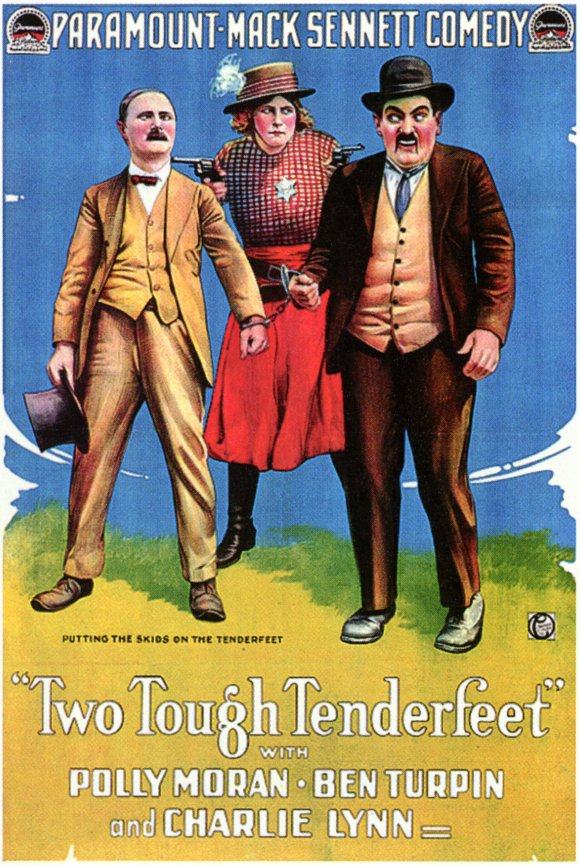
Stepping back into the raucous, freewheeling days of early cinema, one often encounters gems that, despite their brevity, encapsulate an entire era's comedic sensibilities. Such is the case with 'Two Tough Tenderfeet,' a film that doesn't just offer laughs but serves as a fascinating lens through which to view the foundational elements of physical comedy and the nascent art of cinematic storytelling. It’s a riotous romp, a testament to the ingenuity of filmmakers who, with limited technology, managed to craft narratives that resonated deeply with audiences eager for escapism and mirth. This isn't a film that seeks to plumb the depths of human emotion or offer profound social commentary; rather, its ambition lies squarely in delivering unadulterated, boisterous entertainment, and in that, it succeeds with an almost effortless charm.
The premise, deceptively simple, sets the stage for escalating chaos: two protagonists, clearly plucked from a life of urban comfort, find themselves marooned in an unforgiving desert landscape. Their very nomenclature, 'tenderfeet,' immediately signals their inherent unsuitability for the rugged trials ahead. This immediate juxtaposition—the refined against the raw—is a comedic goldmine, a trope that silent cinema, with its reliance on visual cues and exaggerated performances, exploited to its fullest. The desert itself becomes a character, an antagonist far more unpredictable than any human villain, populated by a menagerie of threats both genuinely dangerous and delightfully absurd. It’s a testament to the film's imaginative spirit that it conjures a world where lions prowl alongside 'wild men' and even the humble jack rabbit becomes a source of comic peril. This kaleidoscopic array of dangers ensures a relentless pace, each encounter designed to push our hapless heroes further into the realm of the ridiculous.
The journey of these two men is a masterclass in escalating comedic tension. From the moment they are thrust into the arid expanse, their every move is a testament to their inexperience. They stumble, they bungle, they react with a wide-eyed terror that is both genuinely felt by the characters and utterly hilarious to the viewer. This isn't merely about surviving the elements; it's about surviving their own incompetence, a far more challenging feat. The film's genius lies in its ability to take genuinely threatening scenarios – encounters with apex predators, confrontations with unknown human tribes – and infuse them with an undeniable comedic rhythm. The lions, for instance, are not just fearsome beasts but catalysts for elaborate physical gags, often involving frantic chases and improbable escapes. The 'wild men' are less menacing and more a source of chaotic misunderstanding, their primitive ways clashing comically with the tenderfeet's bewildered attempts at communication. Even the jack rabbits, in their sheer numbers and unpredictable movements, contribute to the sense of overwhelming, bewildering peril.
Throughout these trials, the film leverages the expressive power of silent film acting. Every wide-eyed stare, every frantic gesture, every exaggerated grimace tells a story. The absence of dialogue forces a heightened reliance on physical performance, and the cast delivers with aplomb. It's a style of acting that demands a certain theatricality, a larger-than-life approach that might seem over-the-top by modern standards but was perfectly suited to the medium. The visual gags are meticulously choreographed, relying on precise timing and often ingenious practical effects to achieve their humorous impact. One might draw a parallel to the intricate physical comedy found in other era-defining works like Throwing the Bull, where the sheer physicality of the performances drives the narrative as much as any plot point. Both films understand that laughter often springs from the spectacle of human folly in the face of overwhelming odds.
Just when our protagonists might believe their arduous desert journey has prepared them for anything, they arrive at a frontier settlement that redefines the very concept of 'toughness.' This transition is where the film truly shines, subverting expectations and delivering its most potent comedic punch. The desert, with its primal threats, was a challenge of survival; the settlement, however, presents a challenge of social standing and perceived grit. Here, the tenderfeet's hard-won desert experience is rendered moot, their tales of lion escapes and wild men encounters met with a dismissive shrug by a populace whose daily existence is a far more brutal, unvarnished reality. This is a community forged in the crucible of genuine hardship, where resilience isn't an occasional necessity but a way of life. The film cleverly flips the script, demonstrating that the 'toughness' earned through extraordinary circumstances pales in comparison to the inherent, everyday mettle required to thrive on the frontier.
The humor here stems from the clash of cultures, the urban sensibilities of our heroes against the hardened pragmatism of the frontier folk. It's a comedic exploration of relative experience, where the extraordinary becomes ordinary and the extraordinary feats of one group are simply par for the course for another. This societal re-evaluation of 'toughness' is a surprisingly sophisticated comedic device for a film of its era, moving beyond simple slapstick to a more character-driven humor. It’s a nuanced observation on how different environments cultivate different forms of strength, and how perceptions of bravery are entirely subjective. The film doesn't just ask us to laugh at the tenderfeet's predicament; it invites us to consider the very definition of resilience, albeit through a thoroughly entertaining lens.
The success of 'Two Tough Tenderfeet' rests heavily on the shoulders of its talented ensemble cast, each bringing a distinct flavor to the comedic stew. Bert Roach, a familiar face in silent comedies, often played the amiable, slightly bewildered everyman, and here he embodies the epitome of the 'tenderfoot.' His reactions are priceless, a blend of genuine fear and bewildered resignation that grounds the more outlandish gags. His expressive face is a canvas for the film's humor, allowing audiences to connect with his plight even amidst the absurdity. Alongside him, Hank Mann, another stalwart of slapstick, brings his characteristic physical prowess to the role. Mann was known for his energetic performances and ability to execute elaborate comedic stunts, and his presence undoubtedly elevates the film's more action-oriented gags. The dynamic between Roach and Mann is crucial; they operate as a classic comedic duo, their contrasting personalities creating a natural rhythm for the film's humor.
And then there's the inimitable Ben Turpin. Turpin, with his famously crossed eyes, was a comedic force unto himself. His unique visual characteristic wasn't just a gimmick; it was an integral part of his persona, allowing for gags that were entirely his own. In 'Two Tough Tenderfeet,' his appearance in the frontier settlement likely serves as a visual punchline, his distinctive gaze adding another layer of eccentricity to the already colorful cast of characters. His comedic style was often more surreal, a delightful departure from the more grounded physical comedy of his peers. One might compare his singular visual humor to the more dramatic, yet equally iconic, visual presence of stars in films like Camille or Anna Held, where a performer's unique aura defined their cinematic identity, albeit for vastly different purposes. Turpin's legacy is a reminder of how individual quirks could be harnessed for universal laughter in silent cinema.
The film also benefits from the robust presence of supporting players. Polly Moran, known for her boisterous, often maternal or formidable characterizations, would have added a grounding, no-nonsense element to the frontier settlement, likely serving as a foil to the tenderfeet's naivete. Her performances were always vibrant, injecting a dose of earthy realism into the often exaggerated world of silent comedy. Billy Gilbert, though perhaps more famous for his later sound film career and his signature sneeze, would have contributed to the ensemble's overall comedic texture, even in a minor role. His early work is a fascinating glimpse into the formative years of a true comedic legend. The contributions of actors like Jack Cooper, Paddy McGuire, Heinie Conklin, Laura La Varnie, Roxana McGowan, and Wayland Trask, while perhaps less prominent, were essential in building out the bustling, chaotic world of the film, particularly the vibrant, often unruly, atmosphere of the frontier town. These character actors were the backbone of countless shorts, their faces and mannerisms instantly recognizable and integral to the comedic fabric.
Beyond the performances, 'Two Tough Tenderfeet' showcases the burgeoning cinematic techniques of its time. The pacing, crucial for silent comedy, is likely brisk, moving rapidly from one gag to the next to maintain audience engagement. Editing would have been sharp, designed to maximize the impact of each visual joke. The use of intertitles would have been judicious, providing necessary plot points or character dialogue with a brevity that allowed the visual humor to dominate. While the director isn't explicitly credited, the film's coherent comedic vision speaks to a clear authorial hand guiding the production. The cinematography, though perhaps rudimentary by today's standards, would have been functional and effective, framing the action to emphasize the physical comedy and the expansive desert landscapes. In an era where films like The Builder of Bridges or The New South were exploring more dramatic or socially conscious narratives, 'Two Tough Tenderfeet' reminds us of the power of pure, unadulterated entertainment. It revels in its own lightheartedness, never pretending to be anything more than a vehicle for laughter, a stark contrast to the weighty themes often found in films like Paradise Lost.
The film's enduring appeal lies in its fundamental understanding of human nature: our propensity for hubris, our vulnerability in unfamiliar surroundings, and our capacity for resilience, however comically displayed. It taps into universal themes of adventure, danger, and the clash of civilizations, all filtered through a lens of high-energy slapstick. Unlike the more somber explorations of human struggle in films like The Stronger Love or the moral complexities of Honor's Cross, 'Two Tough Tenderfeet' offers a simple, cathartic release through laughter. It's a reminder that sometimes, the most profound cinematic experiences are those that simply make us smile. The film's portrayal of the frontier also offers a glimpse into a romanticized yet often brutal period of American history, albeit one seen through a comedic filter. This perspective differs significantly from the more serious historical portrayals found in films such as Fighting Bob or even the character-driven drama of The Vixen. It solidifies its place not just as a comedic artifact, but as a cultural document of its time.
'Two Tough Tenderfeet' stands as a delightful example of early silent comedy, a genre that, despite its technical limitations, possessed an incredible vitality and inventiveness. It’s a film that eschews grand pronouncements or deep psychological insights in favor of pure, unadulterated fun. It celebrates the absurdity of life, the unexpected twists of fate, and the inherent humor in human struggle. The film's legacy is not just in its individual gags or performances, but in its contribution to the evolving language of cinematic comedy. It helped lay the groundwork for countless future films that would explore similar themes of fish-out-of-water scenarios, physical peril, and the clash of different worlds. While it might not possess the dramatic weight of Blind Man's Holiday or the nuanced character development of Happiness, its purpose is entirely different: to make us laugh, heartily and without reservation. Its approach to storytelling, focusing on broad strokes and immediate impact, also contrasts with the more intricate narratives that might be found in films like Los misterios de Barcelona, demonstrating the diverse range of storytelling approaches even within the silent era.
In its essence, 'Two Tough Tenderfeet' is a cinematic chuckle, a buoyant exploration of resilience through ridicule. It reminds us that even in the face of lions, wild men, and the overwhelming contempt of grizzled frontiersmen, there's always room for a good laugh. It's a charming relic, a vibrant snapshot of a bygone era of moviemaking that continues to entertain and remind us of the simple, universal power of a well-executed gag. The film, much like the characters it portrays, proves that true toughness isn't always about brute strength, but sometimes about the ability to keep going, even when everything around you is utterly, hilariously absurd. It's a testament to the enduring appeal of well-crafted physical comedy and the timeless allure of a good adventure, no matter how comically fraught. The film's straightforward narrative, focused on action and reaction, differentiates it from the more focused character studies seen in films like The Cub or The Princess of Patches, solidifying its place as a quintessential example of early comedic escapism.
IMDb 3.3
1913
Community
Log in to comment.