DbcultAccessing Vault...
Cult Review
Senior Film Conservator
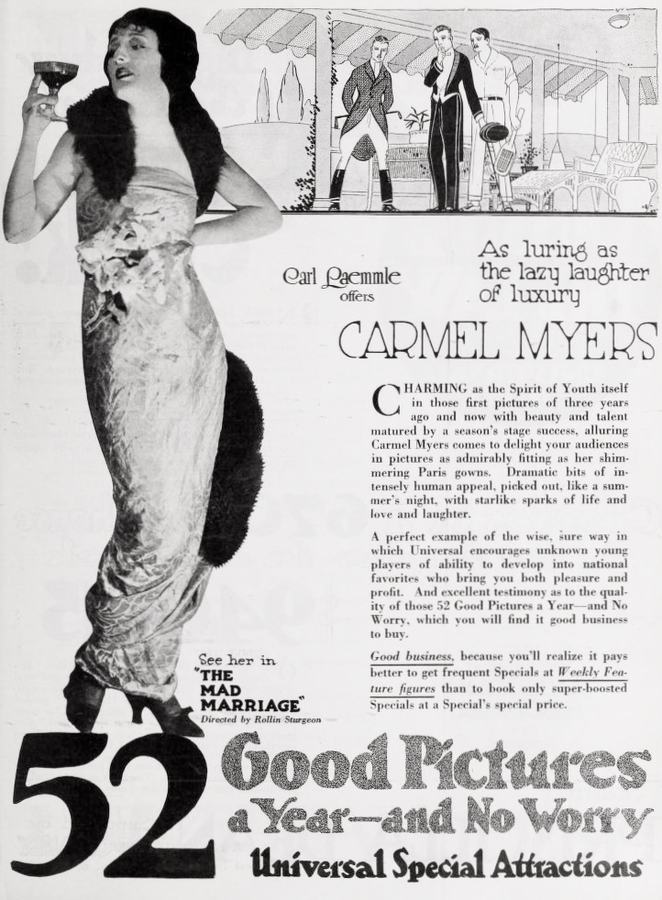
The 1921 silent feature The Mad Marriage serves as a fascinating, if occasionally harrowing, time capsule of the early 20th-century American zeitgeist. Directed by Rollin S. Sturgeon and penned by the formidable Marion Fairfax, the film navigates the treacherous waters of artistic ego and the burgeoning independence of the Modern Woman. In an era where cinema was beginning to move beyond mere slapstick and simple morality plays—think of the frantic energy in Stop, Look and Listen—this film opts for a more surgical examination of the domestic contract.
At its inception, the marriage between Jerry (Truman Van Dyke) and Jane (Carmel Myers) is portrayed not as a romantic fusion of souls, but as a logistical arrangement. Jerry, a Greenwich Village painter whose self-importance is as vast as his canvases, seeks a wife who functions like a high-end piece of studio furniture: present, aesthetically pleasing, but fundamentally unobtrusive. Jane Judd, initially cast as the humble 'studio helper,' accepts this arrangement with a quietude that Jerry mistakes for docility. Unlike the more conventional romantic entanglements seen in Rosemary, there is a chilling modernity to their bargain.
The film’s visual language reinforces this isolation. Sturgeon utilizes the cramped, shadow-drenched interiors of the Village to mirror the psychological confinement of the characters. While films like Midnight Madness might lean into the frantic pulse of the city, The Mad Marriage focuses on the stillness of the studio, where the air is thick with unsaid grievances and the smell of turpentine. Carmel Myers delivers a performance of remarkable restraint; her Jane is a woman living a double life, her intellect simmering beneath a veneer of domestic compliance.
The narrative pivot occurs during a grand pageant, a sequence that showcases the film’s impressive costume design and Jerry’s superficial mastery of form. However, the pageant is merely the proscenium for a deeper betrayal. It is here that Jane’s collaboration with Christiansen (Arthur Edmund Carewe) begins to bear fruit. Christiansen represents everything Jerry is not: an intellectual peer who recognizes Jane’s agency. Their secret work on a play is a radical act of rebellion against the 'non-interference' clause of her marriage. While Jerry designs costumes to dress the outside of people, Jane is writing dialogue that strips them bare.
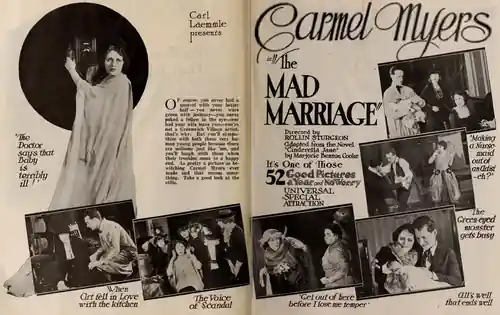
This subversion of the 'helpmate' trope is where the film gains its teeth. In many contemporary films, such as A Jewel in Pawn, female characters are often victims of circumstance or economic hardship. Jane, however, is a victim of an intellectual ceiling. When her play becomes a success, the shift in power dynamics is palpable. Jerry’s reaction is not one of husbandly pride but of existential threat. His jealousy is not merely romantic; it is the jealousy of an artist who realizes his 'muse' has become his superior.
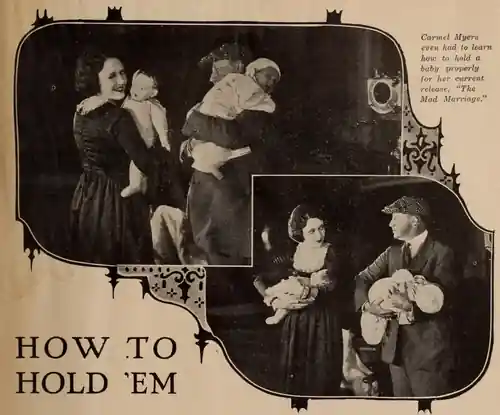
As the tension reaches a crescendo, the film leans into the tropes of the era’s melodrama. Jerry’s offer of a divorce, delivered with a mix of wounded pride and theatricality, feels like a scene out of Stop That Wedding, yet it is grounded in a much darker psychological reality. The introduction of their child’s illness as a plot device to force reconciliation is a narrative choice that might feel manipulative to modern audiences, but within the context of 1921, it served as the necessary 'great equalizer.' The child becomes the bridge between their disparate worlds—the studio and the stage.
In the harrowing scenes of the child’s fever, the film discards its bohemian pretensions. The high-contrast lighting shifts from the moody chiaroscuro of the artist’s loft to the stark, unforgiving light of the sickroom. It is here that we see the influence of European techniques, perhaps a nod to the expressionist leanings found in Es werde Licht! 3. Teil. The fragility of life strips away Jerry’s vanity, forcing him to see Jane not as a helper or a rival, but as a partner in the most fundamental human struggle.
Carmel Myers is the undisputed soul of The Mad Marriage. Known for her versatility, she brings a nuanced interiority to Jane that was rare for the period. Her chemistry with Arthur Edmund Carewe provides a spark of intellectual eroticism that contrasts sharply with the cold, transactional scenes with Truman Van Dyke. Van Dyke, for his part, plays the 'struggling artist' with a believable, if grating, pomposity. He captures the essence of a man who is terrified of being ordinary, a theme explored with different tonal results in The Spirit of the Conqueror.
The supporting cast, including Lydia Yeamans Titus and Nola Luxford, provides a necessary texture to the Village atmosphere, though they often feel like background sketches compared to the central trio. The cinematography by Rollin Sturgeon himself (who often wore multiple hats) is surprisingly sophisticated. He uses the camera to entrap Jane within the frames of Jerry’s paintings, a visual metaphor for her initial role in his life. As she gains independence, the camera movements become more fluid, mirroring her liberation.
Looking back through a century of cinema, The Mad Marriage stands as a precursor to the modern 'prestige drama.' It tackles themes of professional jealousy and gendered expectations that remain startlingly relevant. While the ending may lean toward a sentimental resolution that feels somewhat at odds with the cynical realism of its first half, the journey remains compelling. It lacks the absurdist humor of Bican Efendi vekilharç or the pure physical comedy of Feet and Defeat, but it replaces those elements with a heavy, atmospheric dread that is uniquely its own.
The film’s exploration of the 'helper' role is particularly poignant. In the early 1920s, the idea that a woman could be both a mother and a successful playwright was still a radical proposition. By having Jane achieve success 'secretly,' the film highlights the societal pressures that forced women to hide their light to preserve the male ego. In this regard, it shares a thematic DNA with Marooned Hearts, which also deals with the emotional isolation of the misunderstood soul.
Technically, the film is a triumph of set design. The recreation of Greenwich Village feels authentic rather than caricatured. The studios are cluttered with the detritus of creativity—half-finished sketches, discarded brushes, and the omnipresent haze of tobacco. This tactile quality grounds the melodrama, making the stakes feel personal and immediate. It is a far cry from the polished, often sterile environments of films like Powder.
In summary, The Mad Marriage is a vital piece of silent cinema that deserves more than a footnote in film history. It is a complex, often uncomfortable look at the cost of creative ambition and the fragile structures of human relationships. While it uses the language of its time—the grand gestures, the title cards, the sudden illnesses—it speaks to universal truths about the struggle to be seen and valued for one’s own mind. Whether compared to the historical gravity of The Cradle of the Washingtons or the theatrical flair of Figaros Hochzeit, this film carves out its own niche as a psychological character study that was years ahead of its time.
For the modern viewer, the film offers a chance to see Carmel Myers at the peak of her powers and to witness a narrative that refuses to offer easy answers. It is a story of two people who had to lose everything—their pride, their privacy, and nearly their child—to finally see each other clearly. It is, in every sense of the word, a mad marriage, and an unforgettable cinematic experience.
IMDb 4
1928
Community
Log in to comment.