DbcultAccessing Vault...
7/10
Senior Film Conservator
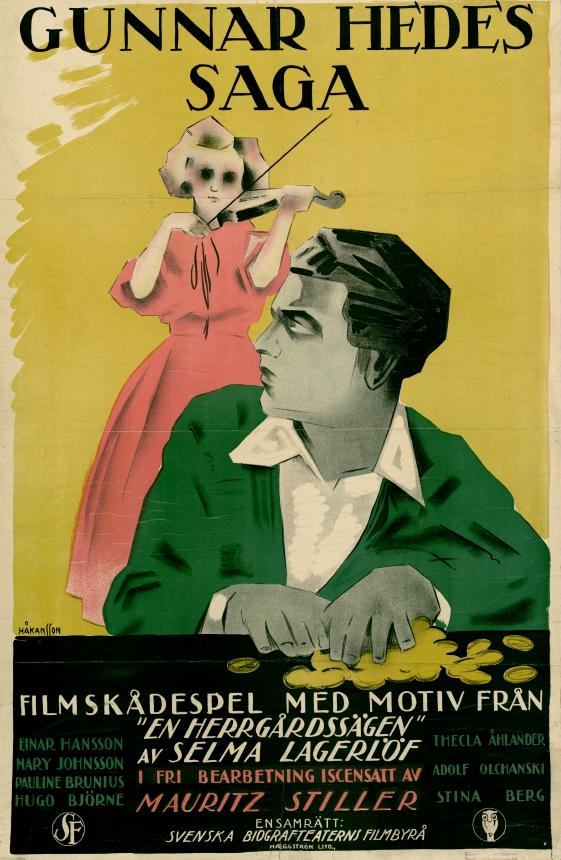
A definitive 7/10 rating for a film that redefined the boundaries of cult cinema. The Blizzard remains a cornerstone of transgressive art.
When Mauritz Stiller, guided by Selma Lagerlöf’s lyrical prose, set his lens upon the stark Arctic vistas of early 20th‑century Sweden, he captured more than a simple tale of inheritance; he distilled a cultural paradox where art collides with agrarian duty. Gunnar Hede, portrayed with aching vulnerability by Einar Hanson, is a character sculpted from the very ice that surrounds him—cold, unyielding, yet shimmering with an inner fire that refuses to be extinguished.
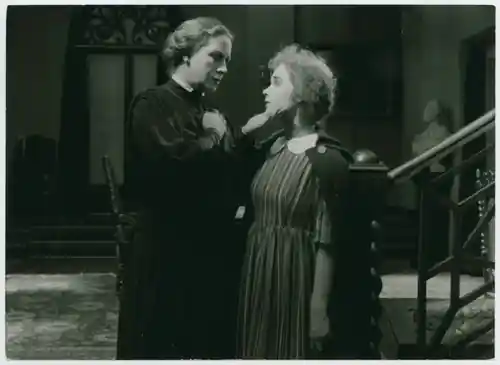
Stiller’s black‑and‑white canvas is punctuated by a strategic use of contrast, allowing the viewer to feel the biting chill without a single hue. The director’s choice to frame the herd against a horizon that seems to dissolve into oblivion mirrors Gunnar’s own disintegration of identity. When the accident occurs—an abrupt tumble into a fissure—Stiller employs a rapid montage, each cut a jagged icicle that slices through the narrative, echoing the protagonist’s shattered psyche.

Ingeborg Strandin, as Gunnar’s steadfast sister, provides a grounding counterpoint; her eyes convey a stoic resilience that balances Hanson’s frantic desperation. Albert Christiansen, embodying the patriarchal expectations of the family, is a looming presence whose silence speaks louder than any dialogue could. The supporting ensemble—Mary Johnson, Stina Berg, and the seasoned Pauline Brunius—populate the film with a chorus of whispers, each voice a gust of wind across the snow.

At its core, The Blizzard interrogates the friction between personal yearning and communal duty. Gunnar’s internal symphony—his desire to master the violin—clashes with the cacophony of familial expectation. This tension resonates with contemporary audiences, reminiscent of the existential dilemmas explored in Livets Omskiftelser and the moral quandaries of The Unknown Quantity. The film does not offer a tidy resolution; instead, it leaves Gunnar suspended in a liminal space, his future as uncertain as the drifting snow.

Stiller’s narrative unfolds with a deliberate cadence, mirroring the slow, inexorable march of the reindeer herd. The opening sequences linger on the expansive white plains, establishing a sense of isolation that becomes a character in its own right. The pacing accelerates only at the moment of the accident, where the editing becomes frantic, mirroring Gunnar’s disoriented mind. This rhythmic modulation is reminiscent of the tension built in The Undercurrent, yet Stiller retains a uniquely Nordic austerity.

The absence of spoken dialogue compels Stiller to rely on visual poetry. Close‑ups of Gunnar’s eyes—wide, haunted, flickering—convey his internal turmoil more eloquently than any intertitle could. The use of natural lighting, especially the low‑angle sun casting elongated shadows across the ice, creates a chiaroscuro effect that underscores the protagonist’s moral ambiguity. The camera often lingers on the reindeer's breath, a visual metaphor for the fragile line between life and death.
Released in the early 1920s, The Blizzard emerges at a time when Swedish cinema was asserting its identity on the world stage. The collaboration between Lagerlöf—a Nobel laureate—and Stiller—a visionary director—produced a work that not only entertains but also documents a vanishing way of life. The reindeer trade, once a cornerstone of Sami and Swedish economies, is portrayed with reverence, preserving a cultural memory that modern audiences might otherwise overlook.
While The Blizzard stands alone in its stark Scandinavian aesthetic, parallels can be drawn to the atmospheric tension of Broken Blossoms and the psychological descent explored in Day Dreams (1922). Both films employ a muted palette to accentuate emotional desolation, yet Stiller’s focus on familial obligation adds a uniquely Nordic layer of duty versus desire.
Although a silent film, the original screenings were accompanied by a live violin score, an intentional homage to Gunnar’s unfulfilled musical ambitions. Modern restorations often pair the visuals with a minimalist piano composition, preserving the melancholic echo of the protagonist’s internal concerto. The recurring motif—a solitary violin note that fades into the wind—serves as an auditory reminder of what Gunnar relinquished.
Today, film scholars cite The Blizzard as a seminal work that bridges literary adaptation and visual storytelling. Its preservation in the Swedish Film Institute’s archives ensures that future generations can study its nuanced portrayal of identity crisis. Contemporary critics often reference the film when discussing the evolution of Scandinavian noir, noting its early use of environmental harshness as a narrative catalyst.
In the final frames, Gunnar stands atop a snow‑capped ridge, the wind whipping his coat, his gaze fixed on an unseen horizon. The camera pulls back, revealing the endless white expanse—a metaphor for both possibility and oblivion. Stiller leaves us with a lingering question: does the blizzard consume the soul, or merely reveal its hidden contours? The answer, like the film itself, is left to the viewer’s imagination, an invitation to contemplate the delicate balance between destiny and desire.
IMDb 6
1935
Community
Log in to comment.