DbcultAccessing Vault...
Cult Review
Senior Film Conservator
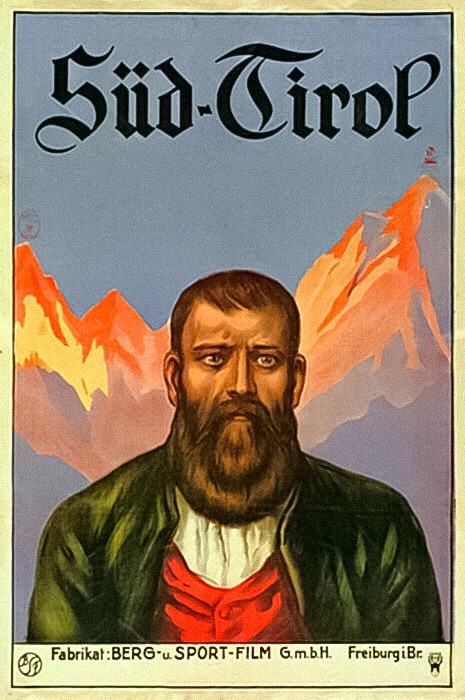
Südtirol – Ein Vorposten deutscher Kultur arrives not as a conventional documentary, but as a meticulously crafted meditation on the paradoxes that define a borderland. The opening sequence, shot in the amber glow of sunrise, immediately immerses the viewer in a world where stone, sky, and language intersect. The camera lingers on the frost‑kissed ridgelines, then pivots to the bustling piazza where Deodatus Tauern, played by the seasoned Deodatus Tauern himself, sifts through yellowed parchment. His narration, delivered in a measured baritone, reads like a poet’s marginalia, each sentence a brushstroke that paints the region’s layered past.
What distinguishes this film from other regional studies—such as the wistful nostalgia of Mireille or the gritty realism of Shattered—is its refusal to romanticise the alpine vista. Instead, it foregrounds the lived tension between an entrenched cultural identity and the inexorable forces of assimilation. The director employs a rhythmic editing style that mirrors the cadence of traditional Alpine folk music, allowing scenes of communal celebration to dissolve into moments of bureaucratic friction.
Luis Trenker, embodying the charismatic mountaineer‑philosopher, brings a kinetic energy that feels both mythic and palpably human. In one striking tableau, he scales a sheer cliff while reciting verses from the 19th‑century poet Clemens Brentano, his voice reverberating against the stone like an ancient hymn. This juxtaposition of physical ascent and lyrical ascent creates a visual metaphor for the film’s central thesis: the climb toward cultural self‑determination.
Hans Schneeberger, traditionally known behind the camera, steps into the foreground as a reflective chronicler. His sequences are distinguished by a chiaroscuro palette—deep shadows offset by the luminous yellow of alpine flora—that evokes the chiaroscuro of classic German expressionism, a nod to the visual language of The Flame. Schneeberger’s cinematographic eye captures the subtle gestures of everyday life: a child’s tentative grip on a wooden toy, an elderly woman’s weathered hands folding laundry, the silent communion of a choir rehearsing in a centuries‑old chapel.
The film’s structure unfolds in three distinct yet interlocking acts, each echoing a movement of a symphony. The first act establishes the geographical and historical context, employing archival footage interspersed with present‑day interviews. The second act delves into the personal narratives that embody the broader cultural conflict: a schoolteacher’s quiet rebellion against mandated Italian curricula, a vintner’s impassioned defence of indigenous grape varieties, and a young activist’s flash‑mob of traditional dances that erupts in the town square. The third act synthesises these strands, presenting a contemplative montage that juxtaposes the rustle of alpine leaves with the clatter of modern machinery, suggesting that the future may be a palimpsest rather than a clean slate.
The film’s dialogue, while sparse, is laden with subtext. When Deodatus remarks, "Our language is a river that has carved its own canyon," the line resonates beyond its literal meaning, hinting at the erosion and preservation inherent in any cultural landscape. This lyrical quality aligns the work with the poetic realism of The Case of Lady Camber, yet it retains a documentary’s grounding in factual texture.
Schneeberger’s lens captures the region’s chromatic dichotomy: the stark black of basaltic outcrops, the fiery orange of autumnal larch forests (#C2410C), and the crisp, sea‑blue expanse of the Dolomites (#0E7490). These hues are not merely aesthetic; they serve as visual metaphors for the film’s thematic concerns. The orange signifies the burning passion of cultural preservation, while the blue reflects the cool rationality of bureaucratic governance.
The use of natural lighting is masterful. Golden hour scenes bathe the market stalls in a honeyed glow, rendering the yellow of fresh apricots (#EAB308) almost incandescent. Night sequences, shot with a low‑key approach, reveal the constellations that have guided shepherds for centuries, underscoring the timelessness of the landscape.
A subtle yet omnipresent soundtrack weaves traditional Alpine instruments—zither, alpine horn, and dulcimer—into an ambient soundscape that never overwhelms the spoken word. The music swells during Trenker’s cliff‑top soliloquy, then recedes into a near‑silence as the camera follows a solitary snowshoe across a frozen lake, allowing the natural acoustics of wind and ice to dominate. This auditory restraint mirrors the film’s visual restraint, fostering an immersive experience that feels both intimate and expansive.
When placed alongside other works that explore cultural marginality—such as Daredevil Kate, which interrogates gendered expectations in a small town, or The Right to Happiness, which examines post‑war identity—the distinctiveness of Südtirol becomes evident. While Kate’s narrative is propelled by personal daring, Südtirol’s thrust is collective, anchored in a shared linguistic heritage. The film does not merely document; it interrogates the very notion of cultural frontiers, inviting viewers to consider whether a “Vorposten” (outpost) is a defensive bastion or a beacon of continuity.
Strengths abound. The film’s visual poetry, anchored by Schneeberger’s seasoned eye, renders each frame a tableau worthy of museum exhibition. The performances, particularly Trenker’s magnetic presence, imbue abstract concepts with palpable humanity. Moreover, the decision to interlace archival material with contemporary footage creates a temporal dialogue that enriches the narrative.
However, the film’s ambition occasionally overreaches. At times, the lyrical narration veers into abstraction, risking alienation of viewers unfamiliar with the region’s history. A more grounded exposition—perhaps a brief historical timeline—could have mitigated this opacity. Additionally, the pacing in the second act lags slightly during the vintner’s exposition, a segment that, while thematically relevant, feels overly expository compared to the kinetic energy of Trenker’s mountain sequences.
For cinephiles and scholars of cultural studies, Südtirol offers a fertile case study. Its nuanced portrayal of linguistic resilience resonates with contemporary discourses on minority rights within the European Union. The film’s meticulous archival research, combined with its artistic sensibility, positions it as a valuable pedagogical resource for courses on European history, film studies, and ethnography.
General audiences may find the film’s deliberate tempo and emphasis on visual symbolism challenging, yet rewarding. The absence of sensationalist dramatization allows the viewer to engage with the material on an intellectual plane, fostering reflection rather than mere consumption.
Südtirol – Ein Vorposten deutscher Kultur stands as a testament to the power of cinema to articulate the complexities of cultural identity. Its synthesis of stunning cinematography, evocative performances, and thoughtful narrative architecture renders it a landmark work in the canon of regional documentary filmmaking. While it may demand patience and a willingness to navigate its poetic density, the film ultimately rewards its audience with a profound meditation on the endurance of language, tradition, and the human spirit amidst the ever‑shifting contours of history.
Community
Log in to comment.