DbcultAccessing Vault...
Cult Review
Senior Film Conservator
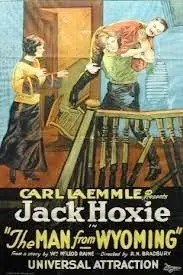
There is a specific, almost spectral quality to the silent Westerns of the mid-1920s that modern digital cinema struggles to replicate. In The Man from Wyoming, released in 1924, we see the apotheosis of this aesthetic. It isn't merely a story of good versus evil; it is a celluloid meditation on the transition of the West from a lawless expanse to a structured, albeit corruptible, society. Directed with a keen eye for spatial dynamics, the film leverages the rugged topography of the Wyoming landscape to mirror the jagged moralities of its inhabitants. While many associate the era with the slapstick antics found in The Essanay-Chaplin Revue of 1916, this Jack Hoxie vehicle operates on a much more somber, dramatic frequency.
The narrative architecture, penned by William MacLeod Raine and Isadore Bernstein, utilizes the historical friction between sheepmen and cattlemen as its foundation. This wasn't just a convenient plot device; it was a lived reality for many in the audience at the time. Ned Bannister, portrayed with a rugged, unpretentious magnetism by Jack Hoxie, represents the archetypal silent hero—a man of few words (literally) but immense physical presence. Hoxie, a real-life rodeo star, brings a level of authenticity to the saddle that puts modern stunt doubles to shame. His performance avoids the histrionic gesticulations common in the period, opting instead for a grounded, simmering intensity that feels remarkably contemporary.
Every great Western requires a villain whose avarice is as vast as the horizon, and William Welsh delivers this in spades as Halloway. Unlike the more supernatural or psychological antagonists seen in films like The Witching Hour, Halloway is a monster of mercantile ruthlessness. He isn't driven by madness, but by a cold, calculated desire for land and legacy. His framing of Bannister is a masterclass in opportunistic evil. By manipulating the existing tensions between the ranching factions, Halloway weaponizes the community's prejudices to serve his own ends. This thematic exploration of how those in power exploit social divisions is perhaps the most enduring aspect of the film.
The cinematic grammar used to depict Halloway’s machinations is surprisingly sophisticated. The use of shadow and low-angle shots creates a sense of looming dread whenever he is on screen. There is a visual weight to his presence that contrasts sharply with the airy, expansive shots of Bannister on the range. This dichotomy serves to illustrate the conflict between the natural freedom of the frontier and the encroaching, suffocating influence of corrupt industrial interests.
Lillian Rich, playing Helen Messiter, provides the film's emotional and moral compass. In an era where female characters were often relegated to secondary roles of distress, Rich’s Helen possesses a notable degree of agency. She arrives in Wyoming not as a passive victim, but as an investigator seeking the truth behind her uncle's demise. Her initial suspicion of Bannister is logical, fueled by the evidence Halloway has carefully planted. However, her journey from skepticism to realization is the narrative engine that drives the second act. Her performance shares a certain adventurous spirit with the protagonists of Ruth of the Rockies, showcasing a woman who is unafraid to navigate a male-dominated world to achieve justice.
The chemistry between Rich and Hoxie is palpable, even through the flickering grain of a century-old print. Their romance isn't a sudden, unearned development but a slow-burn realization born of shared peril and mutual respect. When Bannister saves Helen from Halloway’s predatory advances, it isn't just a heroic trope; it is the final piece of the puzzle that allows Helen to see the true nature of both men. It is a moment of clarity that strips away the artifice Halloway has constructed.
Technically, The Man from Wyoming is a testament to the ingenuity of silent era filmmaking. The cinematography captures the visceral dust and grit of the ranching life. There is a sequence involving a stampede—or at least the high-stakes movement of livestock—that possesses a kinetic energy rarely seen in the static dramas of the time. The editing, though primitive by today's standards, effectively builds tension during the climactic confrontation. We see a precursor to the modern thriller in how the film intercuts between Bannister’s efforts to clear his name and Halloway’s tightening grip on the Messiter estate.
One cannot discuss this film without mentioning Scout the Horse. In the 1920s, a Western star was only as good as his mount, and Scout is as much a character as any human in the cast. The bond between Bannister and his horse serves as a silent shorthand for the protagonist's purity of spirit. It is a trope that would become a staple of the genre, but here it feels fresh and integral to the plot. The animal's intuition often mirrors the audience's own feelings toward the unfolding drama.
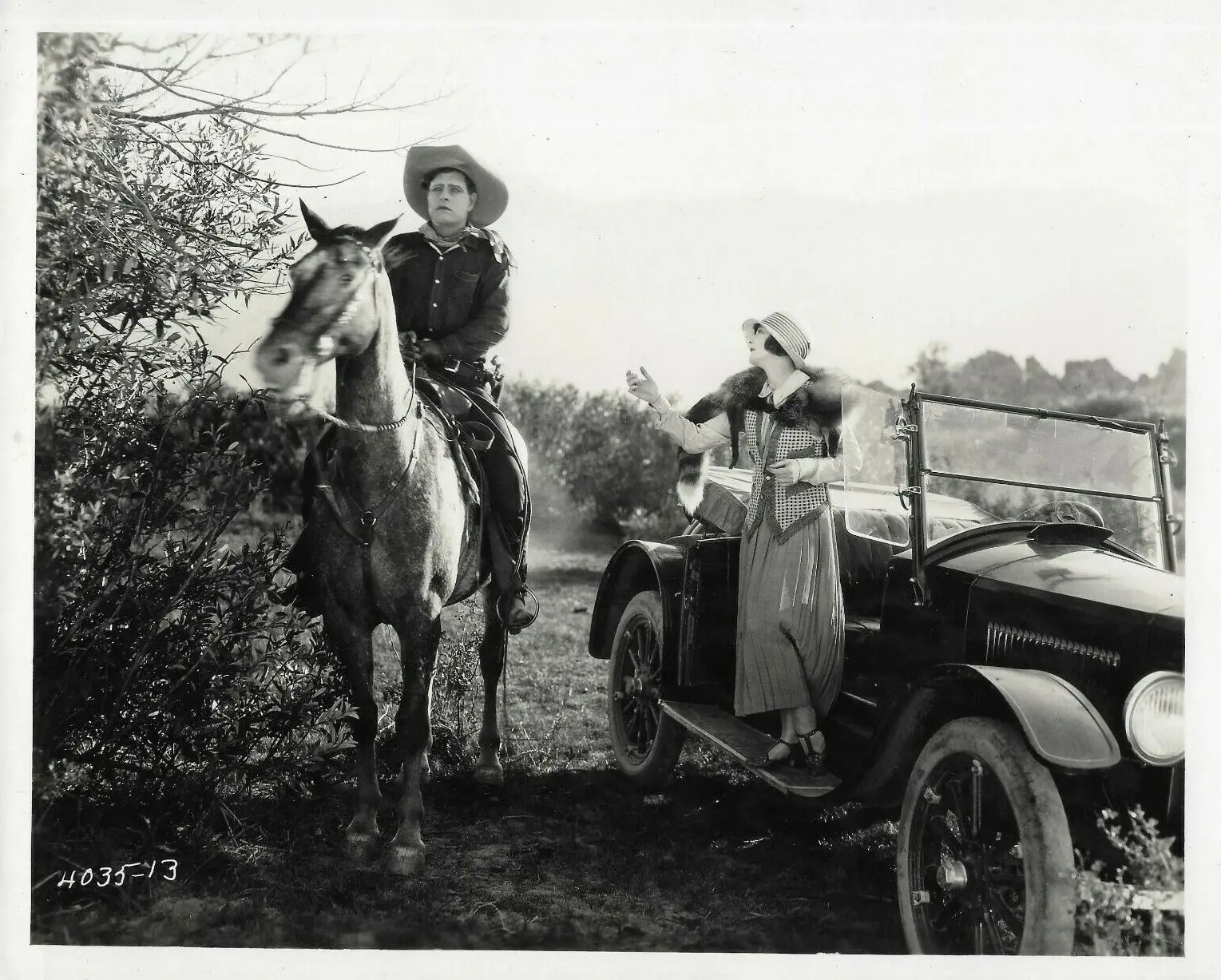
When placing The Man from Wyoming alongside its contemporaries, its grounded realism becomes even more apparent. While international cinema was experimenting with expressionism—think of the moody atmospheres in Colomba or the social critiques of Blandt Samfundets Fjender—the American Western remained focused on the fundamental struggle for identity in a new world. It shares a thematic DNA with God's Law and Man's, specifically in how it examines the friction between personal morality and the written (or unwritten) laws of the land.
Interestingly, the film avoids the more overtly melodramatic pitfalls of titles like A Soul Enslaved or the lighthearted fluff of Distilled Love. Instead, it maintains a gritty verisimilitude. The depiction of the sheep-cattle war isn't sanitized; it highlights the economic desperation that often fueled such violence. This focus on the material conditions of the West gives the film a weight that elevates it above mere matinee fodder.
Jack Hoxie’s career is an interesting study in the evolution of the screen cowboy. Often overshadowed by the likes of Tom Mix or William S. Hart, Hoxie brought a specific brand of athletic grace to the screen. In The Man from Wyoming, he proves he can handle the dramatic heavy lifting as well as the stunt work. His portrayal of Bannister as a man falsely accused resonates with the universal fear of being silenced by a corrupt system. This theme of the 'outcast hero' is one that would be explored with more nuance in later decades, but Hoxie’s performance provides the blueprint. Even in smaller, more obscure films like Half Breed, we see the seeds of this stoic, misunderstood protagonist that Hoxie perfected here.
The supporting cast also deserves recognition. Lon Poff and Ben Corbett provide the necessary texture to the world, filling out the ranks of the ranch hands and townsfolk with faces that look like they were carved out of the very granite of the Rockies. George Kuwa’s presence reminds us of the diverse, if often stereotyped, reality of the frontier. While the film doesn't escape all the cultural biases of 1924, its ensemble feels more like a living community than a collection of stock characters.
The production design and location scouting for this film are exemplary. The wide-open spaces are not just backgrounds; they are active participants in the drama. The wind-swept plains and the looming mountains create a sense of scale that makes the human conflicts feel both epic and intimate. There is a scene where Bannister is pursued through a rocky canyon that is choreographed with such precision it rivals the action sequences in A Motorcycle Adventure, despite the vastly different modes of transport. The sheer physicality of the environment adds a layer of peril that no studio set could ever replicate.
Furthermore, the costuming and props reflect a commitment to historical accuracy that was often overlooked in the silent era. The heavy wool coats of the sheepmen, the worn leather of the cattlemen’s chaps—these details contribute to the immersive quality of the film. It feels less like a movie and more like a window into a vanished era. This commitment to detail is what separates a masterpiece from a mere genre exercise like Molly of the Follies or the more theatrical The Heart of a Girl.
The resolution of The Man from Wyoming is as satisfying as it is inevitable. The establishment of Bannister’s innocence isn't just a plot point; it is a restoration of the natural order. The marriage between Bannister and Helen symbolizes the union of the competing interests of the West—the sheep and the cattle, the past and the future. It is a hopeful ending that suggests that even in a land defined by violence and greed, integrity can still prevail. The film’s final shots, bathed in the soft light of the Wyoming sun, leave the viewer with a sense of profound peace.
In the grand tapestry of silent cinema, this film stands as a vibrant, enduring thread. It avoids the cynicism of later revisionist Westerns while maintaining a level of grit that keeps it from feeling dated. For anyone interested in the roots of the American cinematic mythos, The Man from Wyoming is essential viewing. It is a reminder that before there were talkies, before there were special effects, there were stories of human resilience told through the power of the image alone. Much like the haunting melodies alluded to in I pesn ostalas nedopetoy, the visual song of Jack Hoxie’s Wyoming remains lingering and powerful long after the final frame has faded to black.
Reviewer's Note: While this film may be difficult to find in a pristine state, any surviving print is a treasure. It represents a bridge between the raw beginnings of the genre and the polished epics that would follow in the 1930s. If you have the chance to see it, do not pass it up. It is a masterclass in silent storytelling that puts many modern blockbusters to shame with its simplicity and heart. It is far more than a simple Western; it is a piece of living history.
IMDb —
1935
Community
Log in to comment.